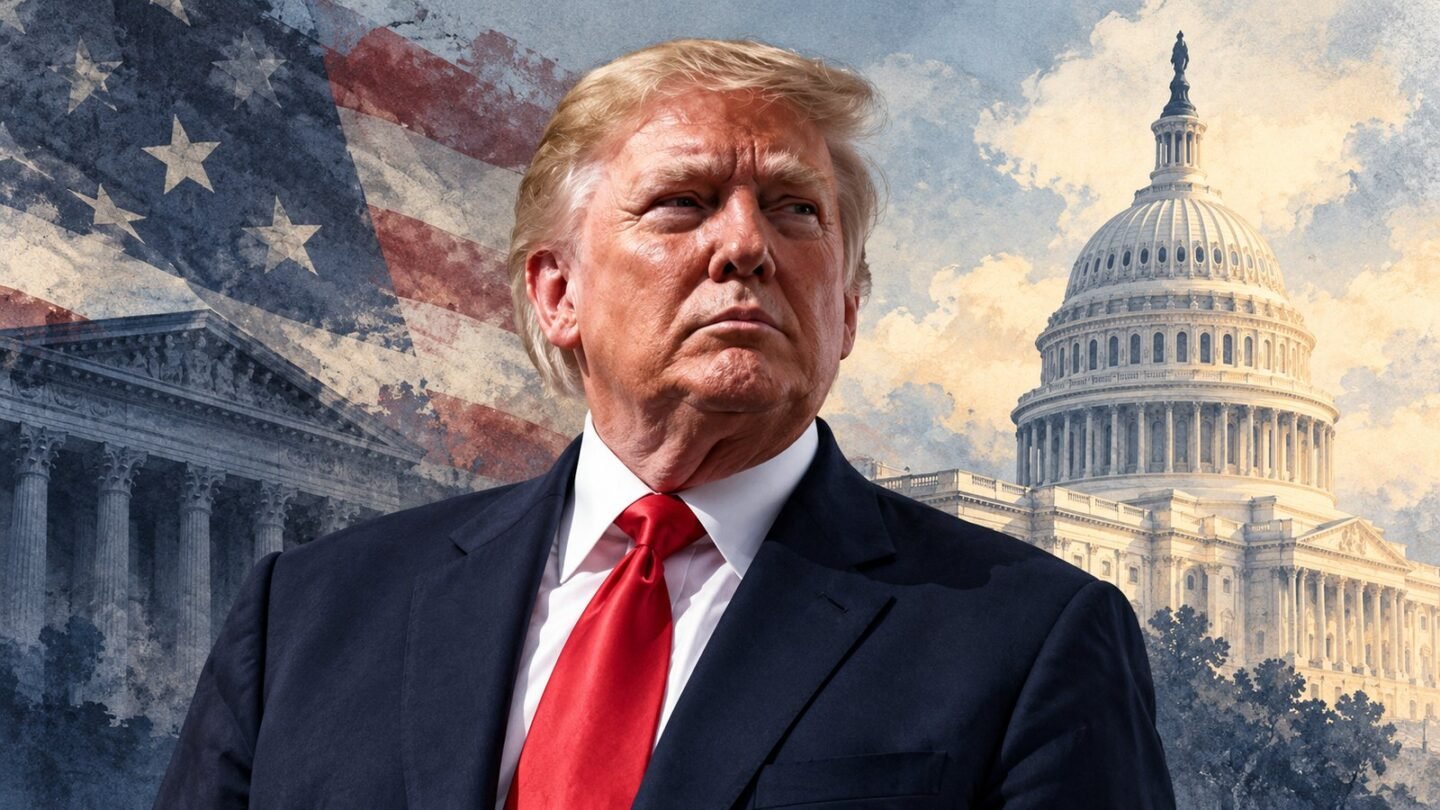
Trump’s presidential legacy raises two different questions ahead of the November 3, 2026, midterm elections: what the record establishes about his conduct, and how Americans should judge his place in history. Congressional findings, an expert survey and recent polling offer evidence, but they do not measure the same thing.
A House investigation documented efforts to overturn the 2020 election. Separately, the 2024 Presidential Greatness Project ranked Donald Trump last among 45 presidents. An October 2026 AP-NORC survey found that 64% of registered voters disapproved of his job performance and 36% approved.
Those findings should be read with their limits. The congressional report presents investigative conclusions; the ranking records scholarly assessments made before his second term; and the approval poll measures current views of his performance. None makes every part of a broad political argument an established fact.
Presidential legacy and the January 6 record
The House select committee’s final report, released in December 2022, described a coordinated effort by Trump and his allies to reverse his 2020 defeat. Its findings included pressure on state officials and Vice President Mike Pence, along with efforts involving alternative electoral slates.
The committee concluded that Trump continued pursuing changes to the outcome despite being told that his fraud claims were unsupported and that Pence lacked authority to reject certified electoral votes. The attack on the Capitol interrupted Congress’s electoral count on January 6, 2021.
These findings provide a documented basis for examining threats to the peaceful transfer of power. They should be attributed to the investigation rather than described as a criminal verdict. The committee’s conclusions and a court’s determination of criminal guilt are different forms of judgment.
Impeachment ended in acquittal
The House impeached Trump on January 13, 2021, on an allegation of inciting insurrection. His Senate trial ended on February 13 with 57 senators voting guilty and 43 voting not guilty.
Conviction required a two-thirds majority, so the result was acquittal. The official Senate vote record establishes both the majority supporting conviction and the failure to reach the constitutional threshold.
Trump rejected the case. In his statement after the verdict, he portrayed the impeachment as political persecution and asserted his support for the rule of law and peaceful debate. That statement records his defense; it does not independently resolve the evidence about his conduct.
How experts ranked his presidential legacy
The 2024 Presidential Greatness Project, conducted by political scientists Brandon Rottinghaus and Justin Vaughn, placed Trump 45th, with an average score of 10.92 out of 100. James Buchanan ranked immediately above him.
The researchers invited 525 experts and received 154 usable responses. Participants rated presidents’ overall greatness, and the researchers averaged those scores to create the ranking.
Fieldwork took place from November 15 through December 31, 2023. That timing matters: the results cannot assess events during Trump’s second presidency. The original survey report supports a precise statement about those respondents’ judgments, rather than a claim that all historians agree.
Approval polling answers a separate question
AP-NORC’s October survey interviewed 1,119 adults from October 8–12 using NORC’s probability-based AmeriSpeak panel. Interviews were conducted online and by telephone. The overall adult sample’s margin of sampling error was plus or minus 3.9 percentage points.
The 36% approval and 64% disapproval figures describe registered voters. They should not be confused with the full adult sample or assigned its margin of error without qualification.
Approval measures satisfaction with a president’s performance. It does not establish how many respondents consider him a threat to democracy or rank him worst in history. A presidential legacy assessment asks a broader question; those claims would require questions directly addressing those subjects.
What voters will decide next
Hourly Times has also examined a separate court dispute over the administration’s voter-records policy. Such cases require attention to their specific findings rather than treating every election controversy as proof of a wider conspiracy.
The next scheduled federal general election is November 3, 2026. Its results will decide congressional races; they will not constitute a scientific presidential ranking or a legal verdict about January 6.