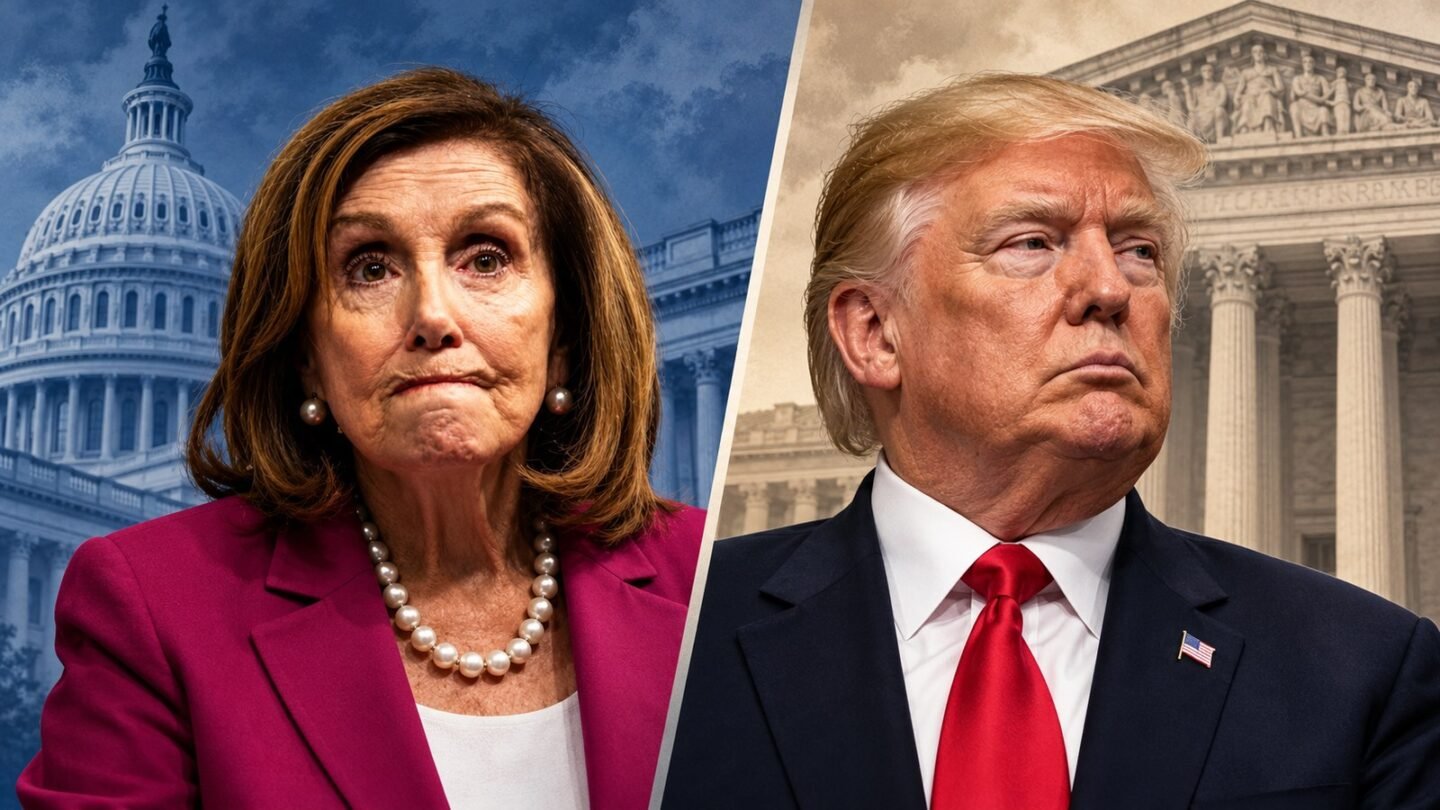
The Pelosi prison remark about Donald Trump dates to June 2019, when news organizations reported that she made it during a private meeting on Capitol Hill. It was a reported comment during an impeachment debate, rather than a new public statement or a judicial finding.
ABC News reported on June 6, 2019, that officials familiar with the conversation attributed these words to the then-House speaker: “I don’t want to see him impeached, I want to see him in prison.” The network credited Politico with first reporting the remark.
The wording in the supplied graphic replaces “him” with “Trump.” That identifies the subject, but it is not the exact wording reported by ABC News. The meeting occurred on June 4, 2019, and Pelosi’s spokesperson declined to comment on the reported prison remark.
Pelosi prison remark came during an impeachment dispute
Pelosi was facing pressure from fellow Democrats to begin impeachment proceedings. House Judiciary Committee Chairman Jerry Nadler argued that an inquiry could strengthen their position in disputes over access to administration documents and testimony, according to ABC News.
The report described disagreement over how Congress should proceed. It does not establish that Pelosi repeated the statement recently. Describing the old comment as a fresh demand would therefore require separate evidence.
The distinction also matters for the graphic’s question about imprisonment. A political preference is different from proof of a crime, and neither a lawmaker’s statement nor a reader poll determines a criminal sentence.
Trump’s New York conviction brought no prison sentence
A New York jury convicted Trump in May 2024 on 34 felony counts of falsifying business records. The prosecution concerned records used to conceal reimbursement of a hush money payment to adult-film actress Stormy Daniels before the 2016 presidential election. Trump denied wrongdoing and denied her account of a sexual encounter.
On January 10, 2025, Judge Juan Merchan imposed an unconditional discharge. The sentence carried no imprisonment, probation or fine. It preserved the conviction rather than reversing the jury’s verdict.
In the sentencing transcript published by ABC News, Merchan explained that protections attached to the presidency drove his decision. He distinguished those institutional protections from a justification for the crimes. Prosecutors also recommended an unconditional discharge because of Trump’s impending return to office.
Trump disputed the prosecution’s legitimacy at the hearing and maintained his innocence. His attorney, Todd Blanche, challenged both the legal basis of the case and the prosecution’s account, while confirming plans to appeal.
What the later court reporting established
Reuters reported on August 28, 2026, that U.S. District Judge Alvin Hellerstein rejected Trump’s effort to move the New York case into federal court. Hellerstein treated the underlying conduct as personal rather than official presidential activity.
According to that report, Trump was also seeking reversal through a New York state appeal, and his lawyers filed notice that they would appeal Hellerstein’s ruling. That procedural setback did not impose a new punishment or create a prison sentence.
The August report is the latest development independently verified for this review. It should not be described as proof that every possible appeal has ended.
The federal election case ended without a verdict
Trump separately faced federal charges concerning alleged efforts to overturn the 2020 election. Judge Tanya Chutkan dismissed that case on November 25, 2024, after special counsel Jack Smith requested dismissal following Trump’s reelection.
The request relied on Justice Department policy against prosecuting a sitting president. The dismissal was without prejudice, not a trial acquittal. It also was not a criminal conviction or a sentencing decision.
Hourly Times’ explanation of Smith’s report and the unresolved trial outcome provides further background. Prosecutors’ assessment of their evidence cannot substitute for a verdict.
Impeachment and imprisonment are separate processes
Under Article I of the Constitution, the House holds the impeachment power and the Senate tries impeachments. Impeachment judgments concern removal and possible disqualification; they do not themselves send someone to prison.
The Pelosi prison remark therefore needs its date and attribution whenever it is reused. Any change to Trump’s New York judgment would require further court action; the August 2026 report identified appeals as the next legal steps.