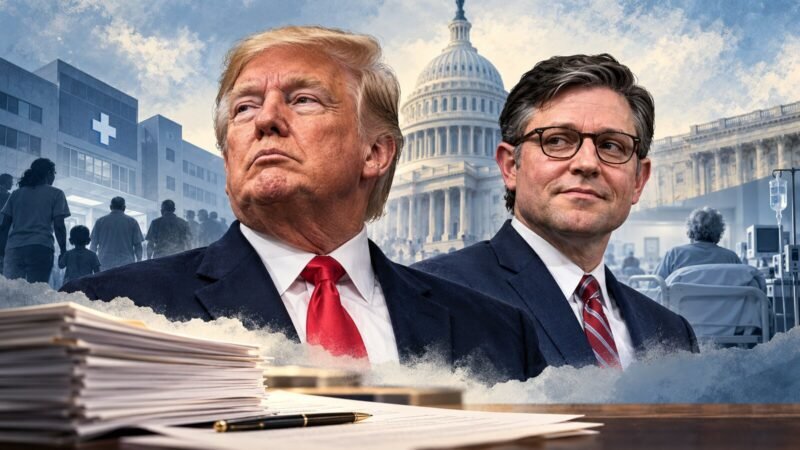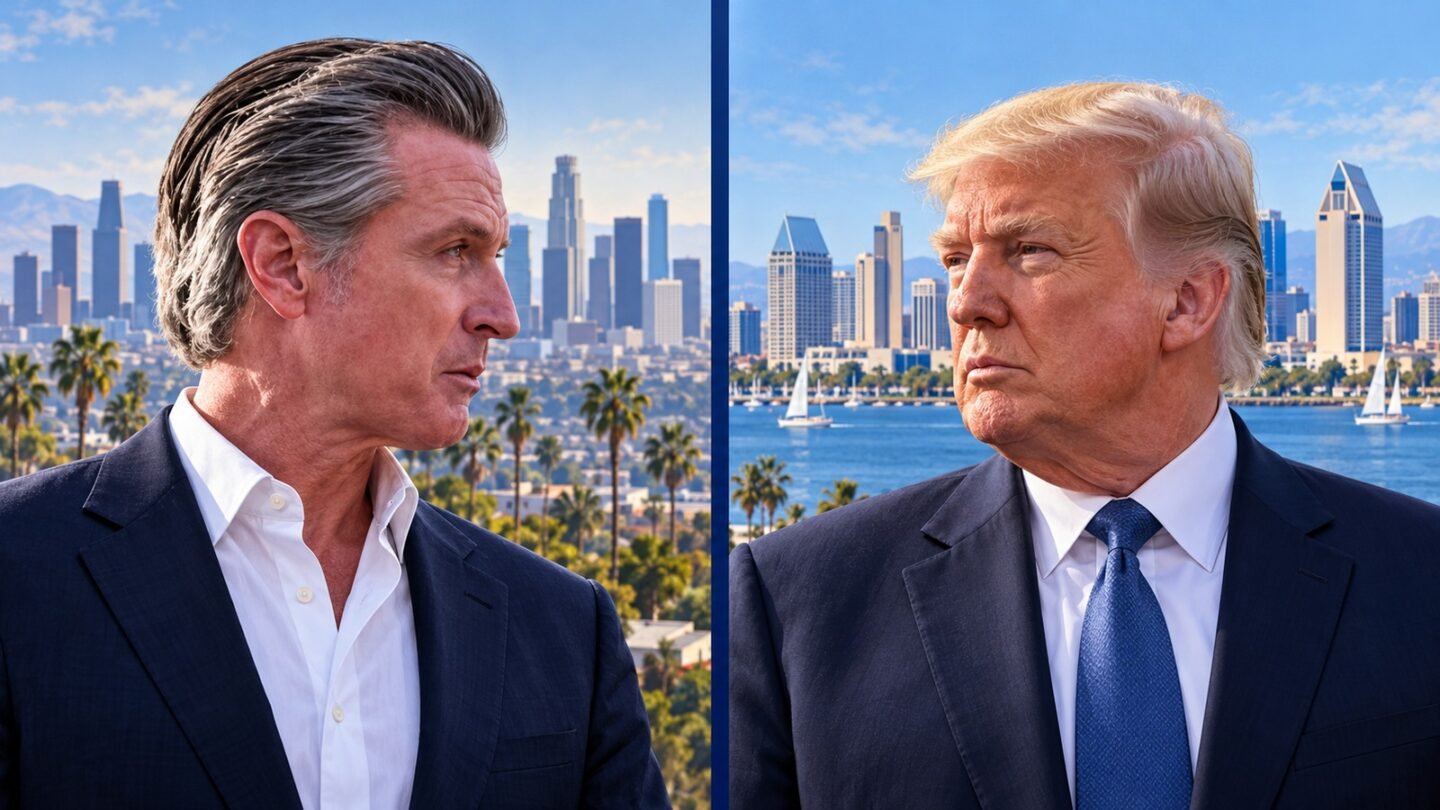
Gavin Newsom’s response to Trump Iran remarks is authentic, but the claim that the president invited an attack on American cities requires context. After Donald Trump mentioned Los Angeles and San Diego at an October 5, 2026, rally in Grand Island, Nebraska, California’s governor called him “deranged and dangerous.”
Trump’s words prompted criticism, a White House rebuttal and a California monitoring directive. However, the broader speech and his subsequent explanation do not support presenting an invitation to attack as an established fact.
The treason accusation also needs a separate legal assessment. Newsom used that characterization conditionally; his statement was not a criminal charge or a court finding.
What the Trump Iran remarks actually said
The October 5 rally transcript records Trump discussing the war, fuel costs and preventing Iran from obtaining a nuclear weapon. Earlier in the speech, he argued that the conflict would end soon and that prices would fall afterward.
When he returned to that subject, he described higher costs as a limited sacrifice for safety. He then said: “Let them take out Los Angeles. Let them take out San Diego.”
The wording was confusing and became the focus of the backlash. But reporting only those two sentences removes the surrounding argument about protecting the country and the economic cost of the war.
FactCheck.org concluded that the more plausible reading was that Trump considered higher gasoline prices a sacrifice worth making to prevent attacks. It did not read the passage as advocating an attack or accepting the destruction of the cities.
PolitiFact also published the surrounding remarks, including Trump’s earlier discussion of Iran’s nuclear ambitions and his claim that ending the war would bring prices down. Its context report should not be described as a court judgment or a determination of criminal intent.
Newsom’s criticism and California’s response
Newsom interpreted the remarks differently. His initial social media response accused Trump of saying foreign enemies should attack the two cities and included the criticism that he was “deranged and dangerous.” That accusation reflects the governor’s interpretation of the speech.
In an official October 6 statement, Newsom described the remarks as “dangerous — if not treasonous.” He said they placed major California cities and a naval hub at risk.
He directed the State Threat Assessment Center to monitor the situation in case foreign actors interpreted the comments as an invitation to target California. The directive confirms a precautionary response; it does not establish that Iran received instructions from Trump or planned an attack because of his remarks.
The distinction matters when describing the controversy. Newsom’s concern about how adversaries might interpret the language is different from verified evidence that the president deliberately encouraged an attack.
The White House rebuttal and Trump’s clarification
White House communications director Steven Cheung rejected the accusation. His explanation was that Trump had been describing threats American cities could face if Iran obtained nuclear weapons.
Trump revisited the issue at an October 7 rally in San Antonio, Texas. The transcript records him describing attacks on the California cities as a disastrous scenario and saying his administration would prevent it.
On October 8, Mediaite reported a further explanation from Trump on Truth Social. He said he had been comparing temporarily higher gasoline prices with the far greater consequences of attacks on major cities.
For related economic background, Hourly Times has covered oil prices and Trump’s proposed pause in the Iran conflict. That context helps explain the subject he was addressing without resolving every dispute about his rhetoric.
Why a treason label does not establish a crime
Article III, Section 3 of the Constitution defines treason narrowly: waging war against the United States or adhering to its enemies while giving them aid and comfort. It also sets specific evidentiary requirements for conviction.
Political criticism alone does not demonstrate those requirements. The sources examined do not establish that Trump committed treason or that these comments resulted in a treason charge.
The latest verified clarification reviewed here is Trump’s October 8 explanation. California’s October 6 directive documents monitoring, while the record does not establish an attack invitation, a criminal verdict or a prison sentence arising from these remarks.