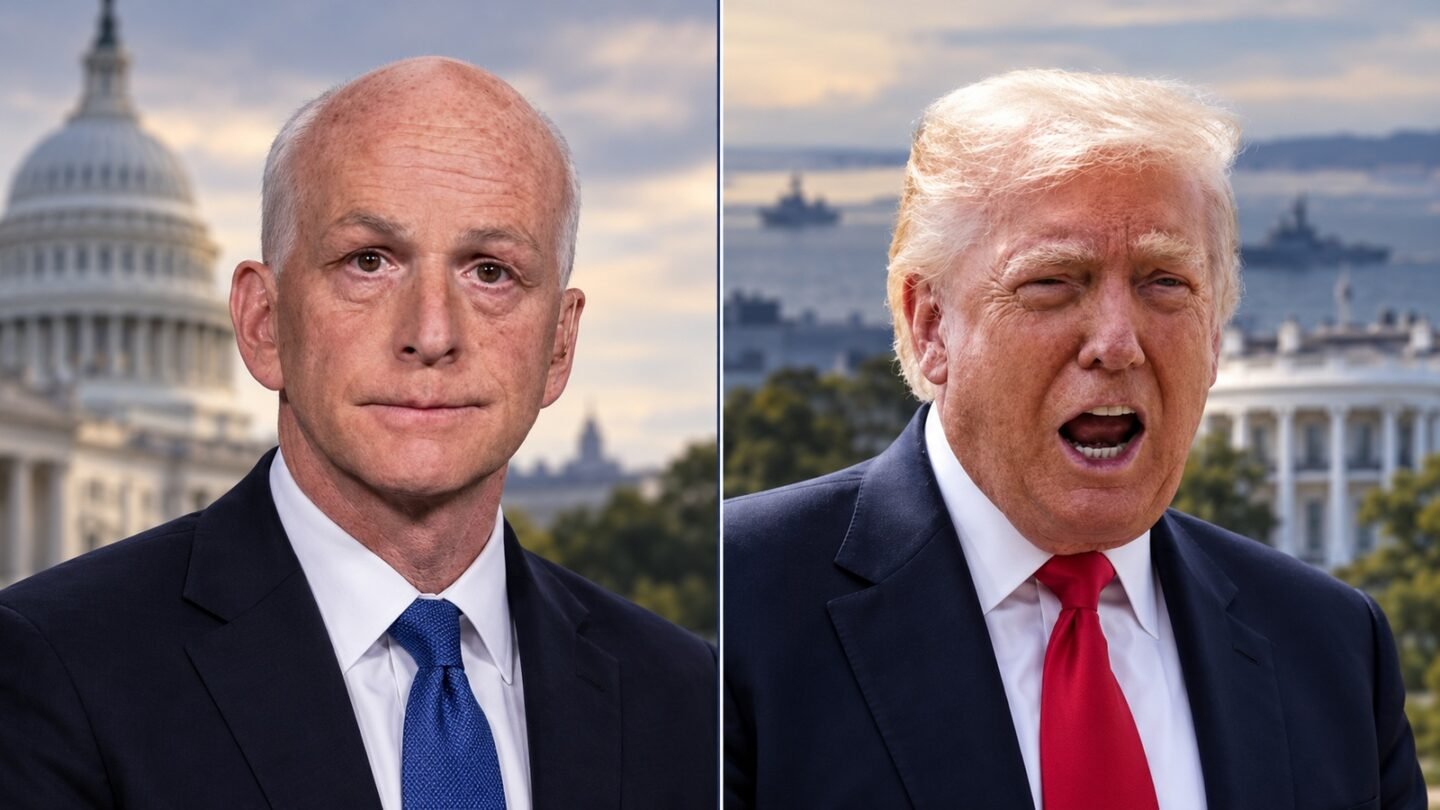
Rep. Adam Smith’s Trump alliance criticism included a blunt personal insult during an April 3, 2026, television appearance. According to Mediaite’s contemporaneous account, the Washington Democrat called President Donald Trump a “jackass” while arguing that his treatment of foreign partners was undermining cooperation.
The remarks were reported from an MS NOW interview amid disagreements over the Iran war and efforts to restore shipping through the Strait of Hormuz. Smith is the ranking Democrat on the House Armed Services Committee, a position confirmed by the committee’s official biography.
His comments were a political assessment of the administration’s conduct. They do not establish that every foreign government shares his view or that all U.S. alliances have broken down.
What Smith’s Trump alliance criticism meant
Mediaite reported that Smith accused Trump and Defense Secretary Pete Hegseth of alienating partners through insults and dismissive language. He argued that governments were seeking ways to reduce their exposure to decisions made in Washington.
Smith used the phrase “de-risk from America” and said foreign leaders were tired of having to flatter Trump while facing his criticism. He also argued that Americans were bearing the consequences of the president’s decisions.
A separate CNN transcript from April 9 records Smith making a similar argument. He said Trump’s insults had increased America’s isolation. That later interview supports the continuity of his criticism, but it is distinct from the April 3 exchange.
That argument contains both an observable issue and a broader judgment. Public disagreements with allies can be documented. Smith’s sweeping description of how the entire world feels cannot be treated as a measured finding about every country.
The documented disagreement over Hormuz
The dispute was about more than diplomatic manners. Reuters reported April 2 that Macron considered a military operation to force open the Strait of Hormuz unrealistic. The French president also warned that repeated doubts about NATO commitments weaken the trust underpinning the alliance.
Trump’s position differed. Reuters reported that he urged countries dependent on the waterway to take responsibility for securing it. European governments initially resisted sending their navies because they feared being drawn into the conflict.
Meanwhile, Britain’s official April 2 meeting statement said Foreign Secretary Yvette Cooper convened more than 40 countries and international organizations to discuss reopening the strait.
The statement described options including diplomatic pressure, economic measures and efforts to restore shipping. It also condemned Iran’s obstruction of navigation. Allied disagreement with Washington therefore did not mean those governments supported the disruption or had abandoned efforts to address it.
These records support a narrower conclusion than Smith’s broadest language: important partners disagreed about the response to the crisis while continuing to pursue international cooperation.
Smith’s opposition continued after April
The television remarks followed Smith’s earlier objections to the war. In a March 5 committee statement, he said he supported a war powers resolution because military action against Iran should require congressional authorization.
He criticized the administration’s rationale and planning. Those statements explain his position; they are not themselves a court ruling on the legality of the operation.
On June 3, Smith issued another statement after the House passed an Iran war powers resolution. He called for the hostilities to end and argued that the conflict was harming Americans and weakening security. His April interview should be understood as part of that continuing opposition, not a newly delivered October statement.
Hourly Times’ coverage of Mark Carney’s argument for stronger international partnerships provides related background on the debate over reliance on Washington.
The latest diplomatic context
The Hormuz dispute remained unresolved in the latest reporting reviewed. Reuters reported October 11 that Iranian security chief Mohsen Rezaei described the U.S. response to Iran’s reopening proposal as insufficient. Messages had been exchanged through Qatari intermediaries.
The White House did not immediately respond to Reuters’ request for comment. Iran’s description of the negotiations remains its account, rather than an agreed statement from both governments.
Whether Trump’s approach has strengthened or damaged American relationships requires examining specific partners, decisions and outcomes. Smith’s insult expresses his opinion. The documented record shows disagreements over military participation and alliance trust, alongside continued diplomatic activity.