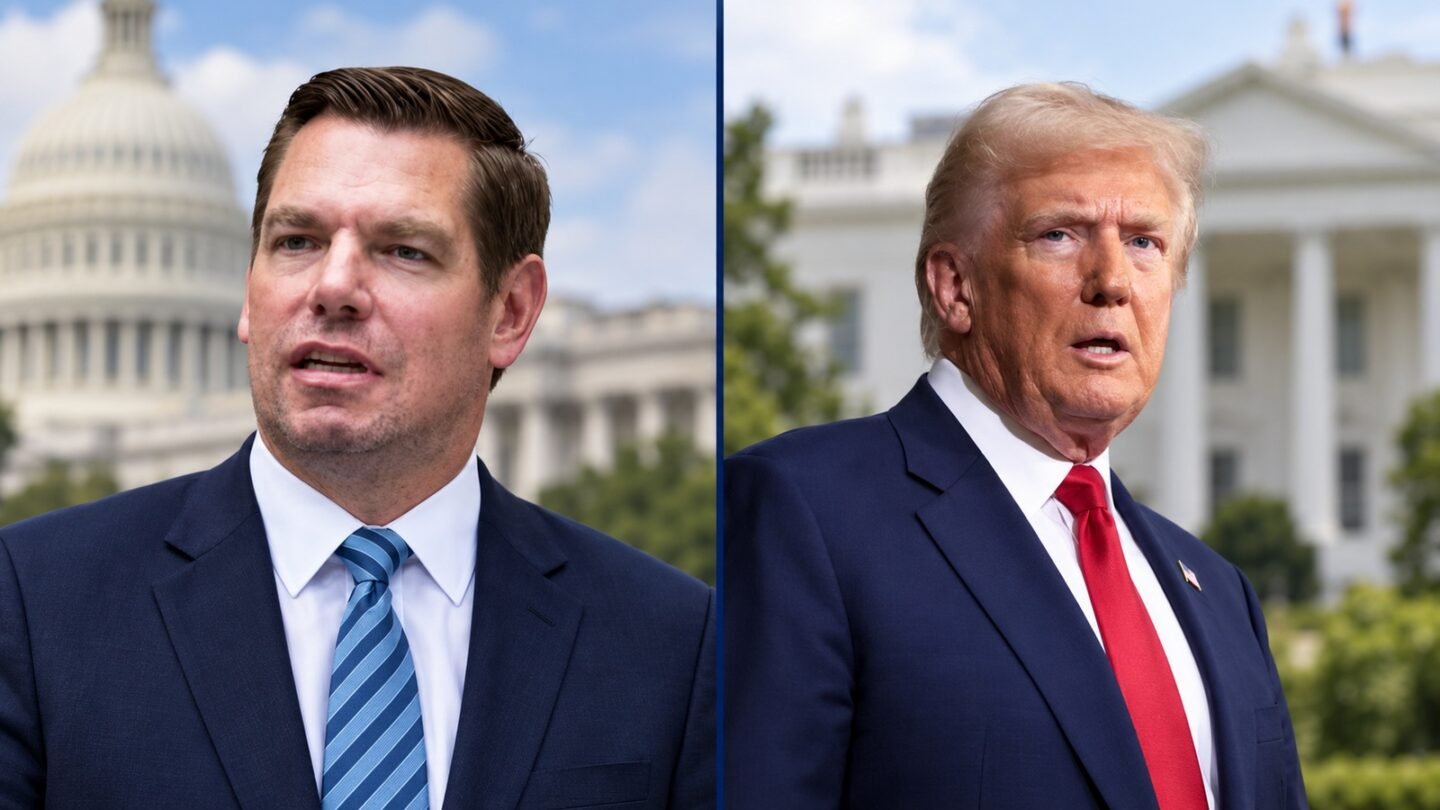
Eric Swalwell called for a Presidential Crimes Commission on August 14, 2020, proposing an independent examination of alleged wrongdoing by Donald Trump’s administration. The idea is authentic, but it belongs to Trump’s first presidency and should not be presented as a newly announced investigation.
Swalwell was a Democratic congressman from California when he made the proposal on Twitter, now called X. Contemporary reporting reproduced his post, and a later CNN transcript records him discussing the commission again that month.
The distinction between a call for action and an established body is essential. The sources reviewed confirm Swalwell’s proposal; they do not establish that the commission he described was created or began investigating anyone.
What the Presidential Crimes Commission proposal said
In the August 14 post reproduced by Mediaite, Swalwell proposed a body made up of independent prosecutors. He wanted it to examine people he accused of enabling misconduct by the president, identifying alleged interference with mail delivery as an example.
Those were Swalwell’s allegations and his proposed response. Describing administration officials as having enabled corruption did not establish that particular individuals had committed criminal offenses.
Swalwell returned to the idea in an August 31 CNN interview. He connected it with his call for bipartisan reforms intended to prevent future presidential abuses. The transcript supports treating the proposal as part of a broader accountability argument rather than a completed investigative process.
The Postal Service dispute behind the call
The proposal emerged during controversy over Postal Service operations and voting by mail before the 2020 election. Swalwell argued that alleged efforts to disrupt election mail deserved examination after Trump left office.
The Postal Service publicly defended its ability to handle ballots. In an August 18 statement, Postmaster General Louis DeJoy said election mail was a priority and announced that certain operational initiatives would be suspended until after the election.
He said the pause was intended to avoid even the appearance of an impact on election mail. The statement included assurances about retail hours, processing equipment, collection boxes and overtime.
In prepared remarks for an August 24 House hearing, DeJoy denied directing several changes attributed to him, including equipment removals and cuts to overtime. He acknowledged a temporary service decline and said the agency was working to correct it.
These statements document the agency’s response. They do not, by themselves, resolve Swalwell’s accusations about intent or establish criminal liability.
A commission would need defined powers
A name does not establish an investigative body’s authority. The Congressional Research Service’s overview of congressional commissions explains that their structures, membership arrangements and powers can differ substantially.
The report distinguishes congressional commissions from presidential and executive branch commissions. It also describes choices about duties, staffing and funding. Swalwell’s brief 2020 post should not be read as a detailed answer to those institutional questions.
There is also a separate proposal that should not be confused with this one. In December 2016, Swalwell and Rep. Elijah Cummings introduced legislation for a bipartisan commission on foreign interference in the election. That proposal concerned foreign interference, not the Presidential Crimes Commission described in 2020.
An investigation is also different from a criminal judgment. The federal courts’ explanation of criminal cases states that the government must prove guilt beyond a reasonable doubt. A commission’s findings or recommendations would not substitute for that process.
What readers should understand in 2026
Swalwell is now a former congressman. The House clerk records his resignation as April 14, 2026. A graphic describing him simply as a current U.S. representative therefore needs that correction.
No newly announced commission is established by the historical post or the reporting examined here. A current claim would require current evidence of its creation, membership, legal authority and work.
Hourly Times’ explanation of Jack Smith’s report and the difference between prosecutorial conclusions and a verdict provides related background on presidential accountability.
The verified conclusion is limited: Swalwell advocated an independent commission in 2020. Whether readers support that idea is a policy judgment. His proposal does not establish guilt, announce a present investigation or prove that such a commission became operational.