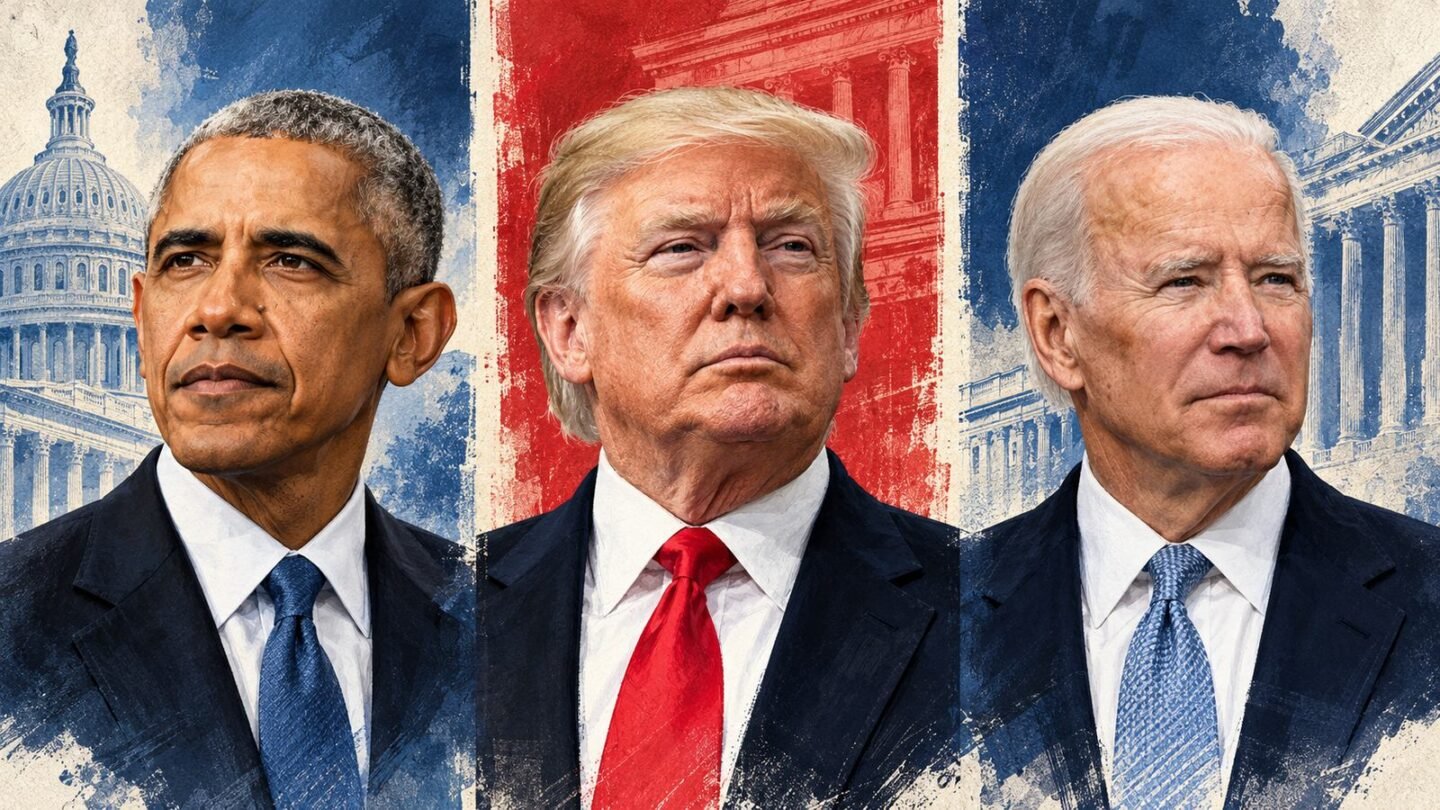
Barack Obama’s renewed campaigning has brought a familiar leadership question into the Midterm Elections 2026: what should Americans expect from the people who represent them? His October warning against Democratic complacency provides a current reason to examine presidential character alongside Donald Trump’s documented legal record and Joe Biden’s stated values.
Comparing kindness, dignity and respect involves judgment. Trump’s New York felony conviction is a court outcome. Calling him an embarrassment, or declaring Obama and Biden more dignified in every circumstance, requires an argument rather than a claim that the question has been objectively settled.
Obama’s campaign warning and the leadership comparison
At an October 7 Democratic Senatorial Campaign Committee fundraiser in Virginia, Obama cautioned that promising races could still be lost, ABC News reported on October 9. His message was that Democratic opportunities should not be mistaken for guaranteed victories.
The Washington Post reported that Obama urged Democrats to treat everybody with dignity and respect. That is a stated political standard, not evidence that every Democratic official consistently meets it.
Obama’s involvement also has a practical electoral purpose. The Associated Press reported a planned October 24 Detroit rally with Michigan Senate nominee Abdul El-Sayed. That appearance was still upcoming when this analysis was prepared; it should not be described as an event that has already happened.
For the Midterm Elections 2026, the distinction is useful. A former president can explain values and support candidates, while voters still need to examine those candidates’ proposals, conduct and ability to serve their communities.
Supporters may see Obama’s public appeals as an example of the respect they want from leaders. The stronger Democratic case would connect that standard to observable choices: how candidates discuss opponents, answer criticism and explain decisions that affect people who did not vote for them.
What Biden’s words establish—and what they do not
In his January 15, 2025, farewell address, Biden described dignity, justice and fairness as principles owed to everyone. He also discussed keeping the incoming administration informed about a negotiated Middle East agreement, presenting cooperation during a transition as a responsibility.
Those remarks, preserved in the University of Virginia Miller Center’s transcript, provide a specific basis for discussing Biden’s stated approach. They are historical remarks, not a new endorsement, campaign appearance or statement about the current congressional races.
A speech is evidence of what a president says he values. It does not by itself establish that every policy matched those values or that every citizen experienced his administration as compassionate.
A fair comparison therefore asks two questions: what standard did a president publicly set, and how did his decisions measure against it? Admiring a leader’s tone should not prevent scrutiny of his actions, just as disliking a leader’s tone should not replace an examination of policy.
Democrats can make a persuasive argument for respectful leadership without treating either former president as beyond criticism. In the Midterm Elections 2026, credibility depends on applying the proposed standard to allies as well as opponents.
Trump’s felony conviction is a fact, with legal limits
A published New York court decision records that a jury found Trump guilty on May 30, 2024, of 34 counts of falsifying business records in the first degree. The case concerned records connected to a payment made before the 2016 presidential election.
On January 10, 2025, Judge Juan Merchan imposed an unconditional discharge, leaving the conviction without prison time, probation or a fine. A sentence without those penalties is different from an acquittal or a decision setting the verdict aside.
The latest substantive ruling independently located for this package was August 28, 2026. Reuters reported that Judge Alvin Hellerstein rejected Trump’s effort to move the case to federal court. Trump has denied wrongdoing, described the prosecution as politically motivated and pursued challenges to the conviction.
Hourly Times’ explanation of the conviction provides additional background. This conviction should not be used as proof of unrelated allegations or as a substitute for checking the status of each separate case.
The Republican accountability question is concrete: how do candidates who defend Trump explain the legal finding and the standards they expect from public officials? Their answers should be reported accurately, including any argument that his policy record matters more to their electoral choice.
America’s reputation requires evidence beyond an insult
Trump offered his own standard in his January 20, 2025, inaugural address. He promised greater international respect, emphasized putting America first and said he wanted a legacy as a peacemaker and unifier. Those are claims and goals to evaluate, not proof of achievement.
Pew Research Center’s June 23, 2026, international opinion report found broadly negative assessments of Trump and declining perceptions of the United States in many places. It also identified countries where Trump received stronger ratings, showing that opinion was not uniform.
Pew interviewed 42,151 people in 36 countries from February 8 to May 13, using telephone, face-to-face and online methods that varied by country. These were adult national samples, with country-specific designs and sampling errors, not a single worldwide electorate.
The questions examined matters such as confidence in presidential leadership on world affairs and views of the United States. They did not directly rank Obama, Biden and Trump by kindness or ask whether Trump was an embarrassment.
For the Midterm Elections 2026, that research supplies context for scrutinizing a promise of international respect. It cannot establish that one president caused every change in global opinion, and overseas respondents do not decide American congressional races.
A useful standard for Midterm Elections 2026
The Democratic opportunity is to explain respectful leadership through conduct, accountability and policy, rather than relying on nostalgia. Republicans should have the same opportunity to explain how their candidates would meet those standards and defend their record.
A Blue Wave remains a possible electoral scenario. Vote Blue No Matter Who is a Democratic campaign slogan; neither phrase establishes what voters will do or resolves a disagreement about presidential character.
People who prefer Obama’s or Biden’s approach can state that preference openly and support it with examples. People who favor Trump can explain which actions or outcomes they value. Neither side needs to turn its judgment into a fictional official ranking.
The strongest conclusion for the Midterm Elections 2026 is that leadership standards deserve scrutiny alongside policy results. Trump’s conviction is documented, presidential promises can be tested against evidence, and judgments about dignity should be presented honestly as judgments.