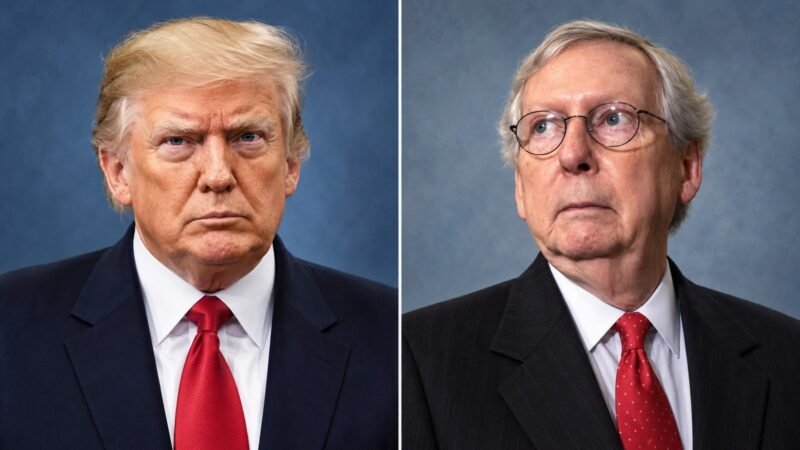
The Trump felony conviction is a documented court outcome, while calling him the “most impeachable” president is a political judgment. A circulating graphic combines those two claims, making it important to separate the New York criminal case from his impeachment history and a newer congressional proposal.
Donald Trump was found guilty on 34 felony counts in May 2024. The House also impeached him twice during his first presidency, and the Senate acquitted him in both trials. Those facts do not create an official ranking of presidents by how “impeachable” they are.
What the Trump felony conviction established
A published New York court decision records that the jury returned guilty verdicts on May 30, 2024, on 34 counts of falsifying business records in the first degree.
The prosecution concerned records linked to a hush-money payment before the 2016 election. The offenses were falsifying business records; the conviction should not be described as a verdict on every other accusation made against Trump.
On January 10, 2025, Judge Juan Merchan imposed an unconditional discharge. Reuters reported that the sentence left a judgment of guilt on Trump’s record without imprisonment, a fine or probation. A sentence without those penalties is different from an acquittal or dismissal.
Trump denies wrongdoing and has described the prosecution as politically motivated. His objections and appeals are relevant context, but an appeal request is not itself a decision overturning the verdict.
The latest reviewed ruling left the conviction intact
Reuters reported on August 28, 2026, that U.S. District Judge Alvin Hellerstein denied Trump’s attempt to move the already-decided state case into federal court. Trump’s lawyers notified the court that they would appeal.
That report also said Trump had asked a New York state appeals court to overturn the conviction. It establishes the status described at that time, rather than predicting the outcome of either challenge.
The Trump felony conviction and the efforts to challenge it must therefore be reported together. Readers should distinguish an existing judgment, an appeal and a later ruling changing that judgment; they are separate developments.
Two impeachments ended in Senate acquittals
The House’s official historical record lists Trump’s first impeachment on December 18, 2019, on charges of abuse of power and obstruction of Congress. His second came on January 13, 2021, on a charge of incitement of insurrection.
The Senate acquitted him on February 5, 2020, and again on February 13, 2021. In the second trial, 57 senators voted guilty and 43 voted not guilty, falling short of the required two-thirds majority.
Trump is the only president listed in the House’s historical record as having been impeached twice. That is a measurable distinction. It does not establish that every subsequent allegation warrants impeachment or that the Senate convicted him.
Cohen’s 26 articles are a proposal, not another impeachment
Rep. Steve Cohen, a Tennessee Democrat, announced September 24, 2026, that he had introduced 26 articles of impeachment. His official announcement and article list accuse Trump of abuses of power, oath violations, misuse of the pardon power and emoluments violations, among other misconduct.
Cohen called Trump “the most impeachable President our country has ever endured.” The phrase expresses Cohen’s assessment. It is not a court judgment or an official historical designation.
Introducing articles puts a member’s accusations forward for congressional consideration. It does not mean the House has approved them. Hourly Times’ coverage of Cohen’s impeachment proposal explains the distinction.
Criminal conviction and impeachment follow different processes
The Senate explains that the House impeaches an official by approving articles through a simple majority vote. The Senate then conducts a trial, with conviction requiring two-thirds of the members present. Removal follows conviction in that process.
A criminal jury verdict and a congressional impeachment decision answer different questions through different institutions. Neither Cohen’s announcement nor the circulating graphic changes the outcome of the earlier Senate trials.
The supported conclusion is specific: the Trump felony conviction is documented, two House impeachments ended in acquittals, and Cohen introduced another proposal. Whether Trump is the “most impeachable” president remains a political assessment that should be clearly attributed to its speaker.