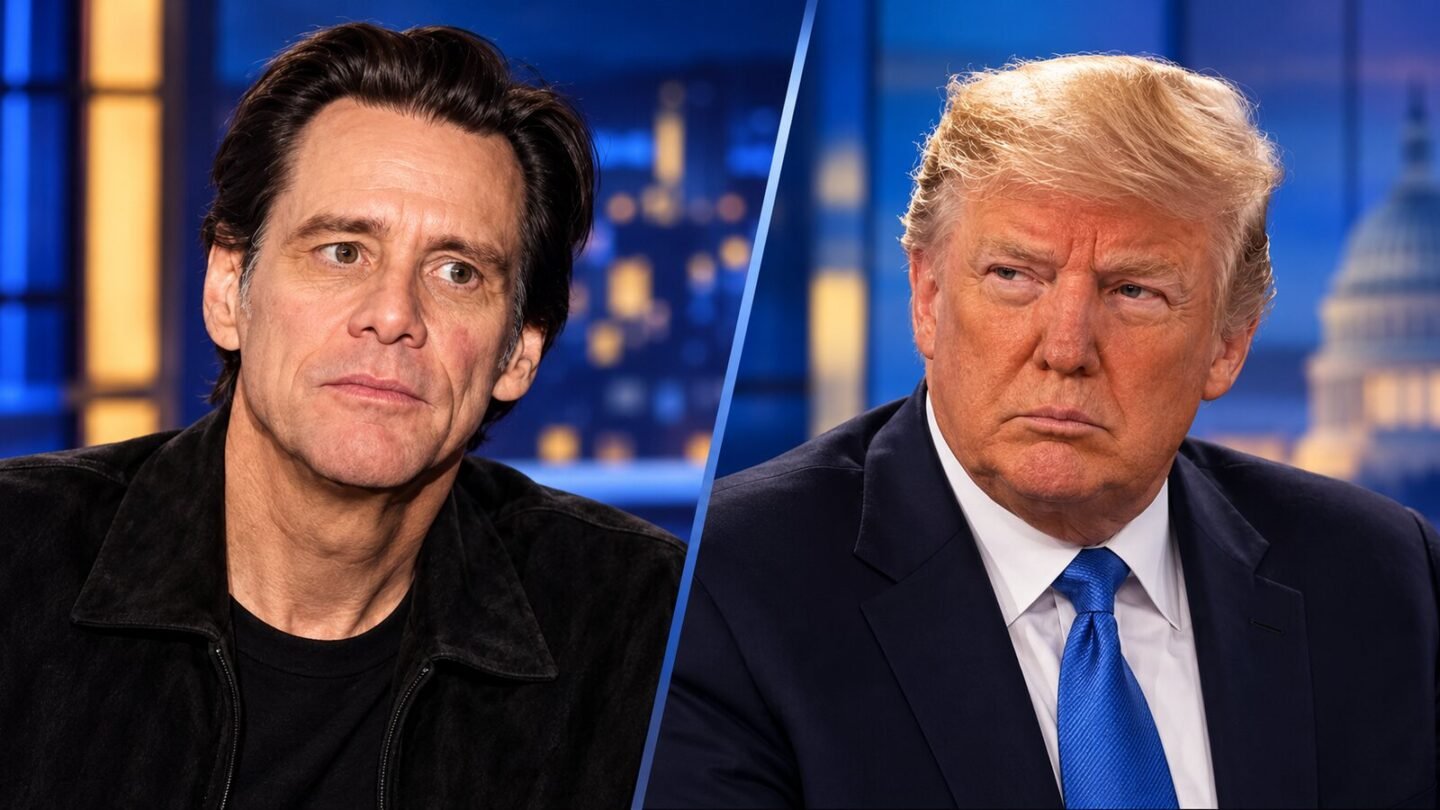
The Jim Carrey interview behind the actor’s harsh criticism of Donald Trump aired on HBO’s Real Time with Bill Maher on July 31, 2020. Carrey described Trump as a “megalomaniacal lunatic traitor” and compared his presidency to a heist during a conversation that also covered political painting and his new novel.
The wording reflects Carrey’s personal political assessment. It does not establish a medical diagnosis or a legal finding, and the documented interview belongs to Trump’s first presidency rather than a new appearance in 2026.
When the Jim Carrey interview aired
The show’s official episode listing identifies the broadcast as episode 536 and explicitly gives its original airdate as July 31, 2020. The podcast release is dated August 1, reflecting its later publication rather than a different interview.
HBO’s advance announcement named Carrey among that week’s guests and described the interviews as virtual. Maher was presenting the show remotely, and Carrey joined him for a one-on-one conversation.
That date provides essential context. The comments were made during the 2020 election season, when Carrey was promoting Memoirs and Misinformation, the novel he wrote with Dana Vachon. The interview was not solely a discussion of Trump.
What Carrey said about Trump and public attention
Carrey’s criticism developed from a conversation about his artwork. Maher displayed a political painting he owned and asked what Carrey would paint if Trump were no longer the subject commanding his attention.
Carrey responded that he had many other possible subjects, but argued that Trump dominated the era’s public attention. His reference to the zeitgeist described the prevailing mood and concerns of the time.
He said other subjects had become secondary and that Trump received too much attention. Carrey then asked: “For God’s sakes, can’t we see this for what it is? It’s a heist, man.”
He extended the comparison with a reference to Die Hard, portraying the political situation through the film’s fictional setting. His broader argument was that chaos and division distracted people and enabled powerful interests to benefit. These were accusations and interpretations offered by Carrey, rather than conclusions established by the program.
Political paintings and a novel about celebrity
The interview connected Carrey’s political commentary with his work as an artist. Contemporary coverage by InsideHook reported that Maher held up one of Carrey’s paintings and that the conversation moved between art, film references and the book.
Memoirs and Misinformation had been published earlier that month. Penguin Random House’s listing dates the hardcover release to July 7, 2020, and describes the work as a semi-autobiographical novel about Hollywood, celebrity, privilege and the search for relevance.
The distinction between a novel and a conventional memoir matters. The book uses a fictionalized character named Jim Carrey, rather than presenting every scene as a factual account of the actor’s life.
In a separate July 21 interview with WBUR’s Here & Now, Carrey and Vachon discussed fame, ego and public perceptions of celebrities. Their account of the project helps explain why the Jim Carrey interview with Maher moved between entertainment, personal identity and political power.
Political characterizations require clear attribution
Carrey’s language drew criticism as well as attention. In an August 2, 2020, article, conservative outlet NewsBusters criticized the interview’s repeated focus on Trump. Its transcript also records Maher attempting to redirect the conversation toward Carrey’s book.
The word traitor carries a separate legal implication when treated as an accusation of treason. The Constitution defines that offense narrowly: levying war against the United States or adhering to its enemies by giving them aid and comfort. An actor’s characterization does not establish those requirements.
Likewise, Carrey’s insults were not presented as the results of a clinical examination. They should be understood as his rhetoric, with their source and date attached, rather than converted into statements of medical fact.
The record establishes what the Jim Carrey interview contained and when it aired. The official episode remains listed with its July 31, 2020, broadcast date; it provides the original context for assessing the words reproduced in the graphic.