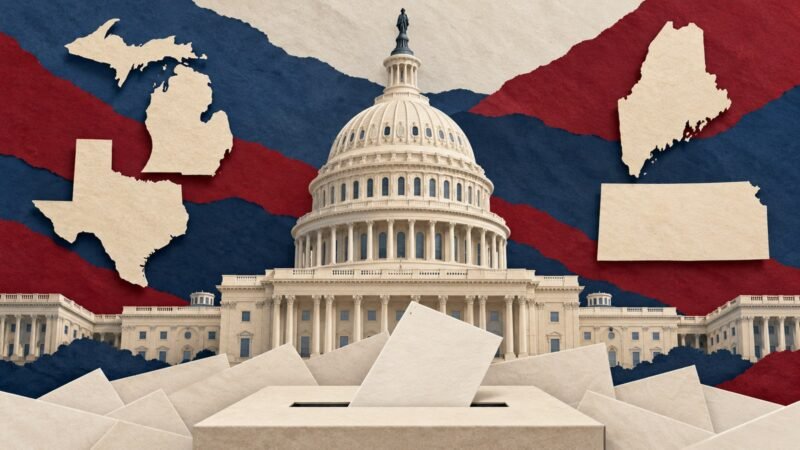
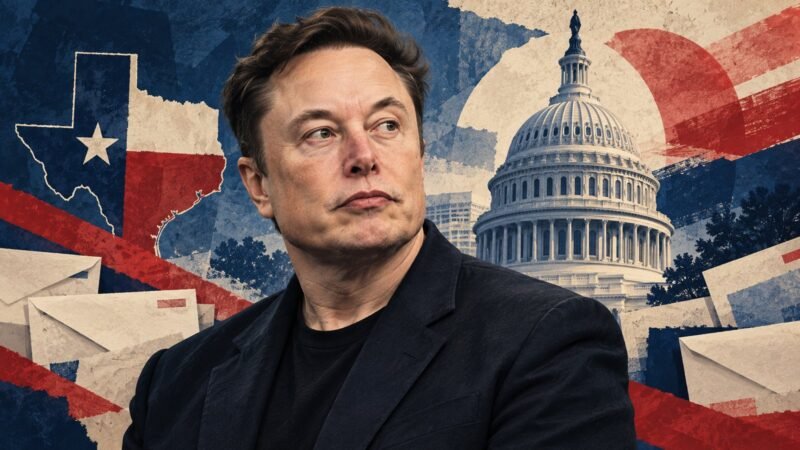
President Donald Trump has repeated his promise of $5,000 checks for adult U.S. citizens if Republicans win both congressional chambers in Midterm Elections 2026. The promise is documented. A payment program with verified authorization, final eligibility rules and a distribution schedule was not identified in the sources reviewed through October 3.
The distinction matters for anyone wondering whether money is coming. A campaign announcement can establish what a president wants to do without creating an available benefit. Readers should not treat the promised amount as a confirmed payment owed to them.
What Trump actually promised
The White House’s September 10 announcement records Trump’s proposal from the previous night. It describes a payment to every adult American citizen and makes the promise conditional on Republican victories in the House and Senate.
AP’s October 1 live reporting documents Trump repeating that condition at his Oklahoma rally. That report establishes a renewed campaign pledge, rather than passage of legislation or an agency announcement that checks are ready to be distributed.
The wording also does not say that an individual must vote Republican to qualify. A condition concerning party control of Congress should not be rewritten as a requirement concerning a recipient’s personal vote.
Why Midterm Elections 2026 cannot authorize payments by themselves
Congressional elections determine who serves in Congress. Their results do not, by themselves, enact a spending law. Even if the electoral condition Trump described is satisfied, the proposal would still need a lawful basis for federal expenditure.
Article I, Section 9 of the Constitution, reproduced by the National Archives, requires money drawn from the Treasury to follow appropriations made by law. Naming a payment a dividend does not remove that requirement.
House Speaker Mike Johnson acknowledged Congress’s role. Reuters reported September 13 that Johnson said the payments would need congressional approval and that details remained to be worked out. Trump, meanwhile, maintained that the government could afford them.
The disagreement is about more than enthusiasm for direct assistance. A workable program needs spending authority, money available for its stated purpose and instructions for administration. A presidential assurance is not a substitute for documenting those steps.
Hourly Times’ coverage of Congress’s unfinished funding decisions offers related background. General government funding and authorization of a new benefit are separate questions.
Funding and final eligibility remain unresolved
Reuters’ September 10 explainer estimated that payments to approximately 240 million adult citizens would cost $1.2 trillion. The arithmetic is 240,000,000 multiplied by $5,000. That is an estimate based on a broad recipient group, not an enacted appropriation or final official program cost.
The same report said Vice President JD Vance suggested tariff revenue as a funding source. Suggesting a source does not establish that the necessary money has been appropriated, that it is sufficient or that agencies have authority to distribute it.
Eligibility also needs clarification. AP’s original reporting said Vance suggested wealthy people would be excluded, while Trump’s published pledge described every adult citizen. No final income threshold was established in the materials reviewed.
Readers therefore should not assume that age and citizenship are the complete rules. A final program would need to explain any income limits, how eligibility is determined and whether payment amounts change with household circumstances.
During Midterm Elections 2026, the Republican accountability question is straightforward: what document establishes the authority, funding and rules? The same standard should apply to any competing payment proposal from Democrats.
Separate the $5,000 pledge from other payment announcements
Reuters reported October 3 on Trump’s separate announcement of a one-time $90 payment for eligible Medicare enrollees. That announcement concerns a different population and a different stated funding source. It does not establish approval of the $5,000 dividend.
The administration’s $500 ACA refunds are another separate initiative. Reporting on those payments likewise cannot be used as evidence that a much broader $5,000 program is operating. Similar language about checks does not make the programs interchangeable.
Democratic House leader Hakeem Jeffries dismissed the dividend proposal as unserious, according to Reuters’ September 13 reporting. That is an attributed political judgment. The documentary finding here is narrower: the promise exists, but its operational requirements have not been verified.
What would change this fact check?
A substantive update would require evidence identifying legal authority and funding, followed by official eligibility and implementation guidance. Relevant documents could include enacted legislation and a Treasury or IRS announcement explaining when and how payments would occur.
No verified application portal or filing deadline for this proposal was found. This review cannot establish that every possible legislative document has been examined; readers should understand the finding as a dated assessment of the available evidence.
In campaign discussion around Midterm Elections 2026, “Vote Blue No Matter Who” is a Democratic slogan, while a “Blue Wave” remains an uncertain electoral scenario. Neither phrase establishes eligibility or changes the status of a proposed benefit.
For Midterm Elections 2026, the supported conclusion is that Trump has made a conditional promise. An election outcome would not automatically put $5,000 into an account. Until authorization and implementation are verified, the checks should be described as proposed, not guaranteed.