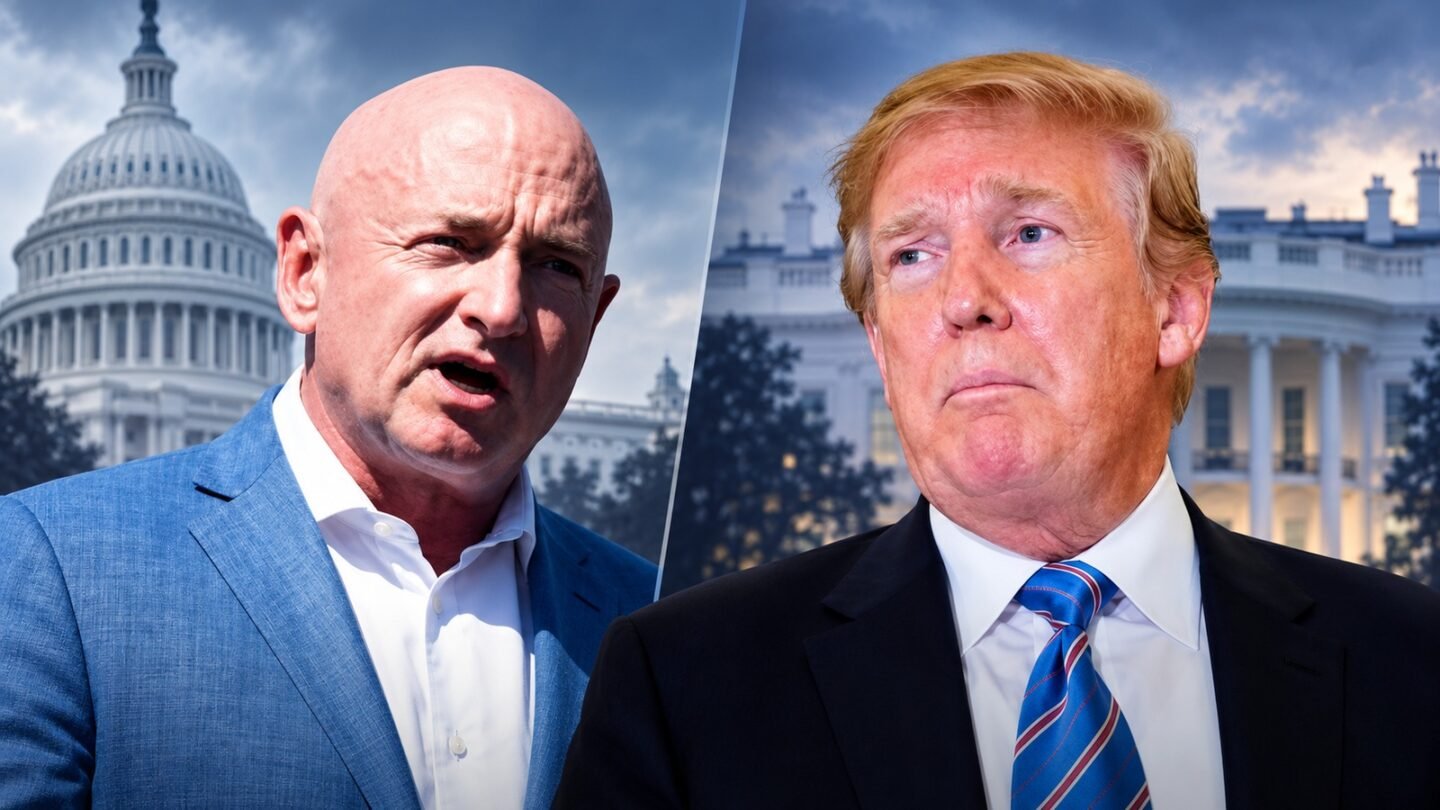
Mark Kelly said President Donald Trump had made Americans “poorer and less safe” in a statement published by his Senate office on February 25, 2026, following the president’s State of the Union address. The Arizona senator linked his criticism to household costs, tariffs and the administration’s priorities.
The statement is authentic, but it is a February political assessment rather than a new September announcement. Kelly’s office also published separate criticism of U.S. alliances earlier that month, following his attendance at the Munich Security Conference.
Those records establish what Kelly said. They do not, by themselves, prove every economic or national-security claim contained in his criticism, or establish a historical ranking of presidential corruption.
What Mark Kelly Said After the Address
Kelly argued that the address did not offer Arizonans a convincing plan to lower their everyday expenses. He cited grocery bills, prescription-drug affordability and pressure on small businesses, blaming Trump’s tariff policies for adding to those difficulties.
He also criticized the administration’s tax and spending priorities. Those points were presented as the senator’s assessment of Trump’s record, rather than findings from a statistical study accompanying the statement.
His response included areas of agreement. Kelly said he supported banning stock trading in Congress and restricting hedge funds from buying single-family homes, and urged the president to work with lawmakers on those issues.
That detail matters because the full statement was more specific than a general expression of opposition. It combined criticism of affordability policies with support for two proposals mentioned by Trump.
Tariff Research Adds Economic Context
Research published by New York Federal Reserve economists provides independent evidence that tariffs can impose costs on U.S. businesses and consumers. Their February 12 analysis examined the 2025 tariffs and found that most of the economic burden fell on the U.S. side.
The researchers explained that importers pay the duty. Foreign exporters can absorb some of that burden by reducing their prices, while domestic firms may face higher costs when those reductions do not offset the tariff.
A separate July 8 article reported that regional business surveys showed many tariff-paying firms still planned additional price increases. The authors described an adjustment process that could unfold gradually rather than immediately.
More recent research, revised in September, examined how the 2025 tariffs affected consumer prices. It identified both direct effects on imported goods and indirect effects through imported materials and changes in domestic producers’ pricing.
These studies support a narrower conclusion about tariff-related cost pressures. They do not establish that every American became poorer, or that tariffs alone explain changes in all household expenses. The research authors also state that their views do not necessarily represent the Federal Reserve System’s position.
Kelly’s Alliance Criticism Came Separately
Mark Kelly’s foreign-policy argument appeared in a separate Senate release published February 17. It summarized his BBC Newsnight interview after attending the Munich Security Conference and included excerpts of his remarks.
Kelly argued that Trump had weakened trust between the United States and longstanding allies. His office connected those relationships to economic security and international safety.
Mark Kelly’s background includes service as a Navy combat pilot and NASA astronaut. That experience is relevant context for his security criticism, but it does not make his assessment an independent measure of national risk.
The Administration Presented a Different View
The Trump administration defended its approach to both trade and alliances. In a February 20 fact sheet, the White House described tariffs as tools to support domestic manufacturing, protect workers and improve trading relationships.
At Munich, Secretary of State Marco Rubio argued for continued partnership with Europe. The White House presented his February 14 address as a reaffirmation of the administration’s commitment to the transatlantic alliance.
Reuters reported that Rubio’s speech offered reassurance while also criticizing European policies. European reactions were mixed, reflecting differences over whether the tone signaled a substantive change in the relationship.
Those statements provide the administration’s broader position, rather than a verified direct reply to Kelly’s February 25 release.
The documented record therefore separates three things: Kelly’s genuine criticism, research on specific economic effects, and competing political assessments of security. His February statement remains the source of the quoted phrase; the September research adds later economic context without turning that statement into a new announcement.