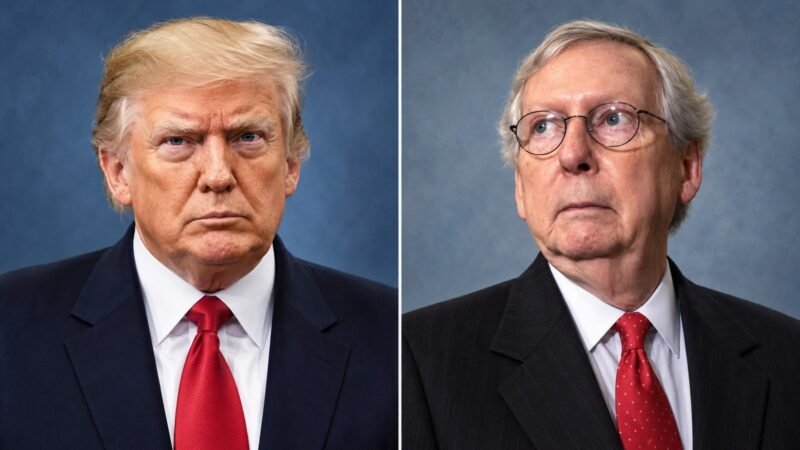
The Cyndi Lauper Trump comparison in the supplied social-media graphic refers to a September 2, 2016, radio interview, according to reporting published at the time. Lauper criticized the Republican presidential nominee’s rhetoric during an appearance on San Diego’s Morning News. The remarks should be identified as historical comments, rather than presented as a newly verified statement.
The central attribution is supported by contemporaneous coverage from the Washington Examiner, NME and PinkNews. Those reports describe Lauper invoking Adolf Hitler while criticizing Trump’s language, including his comments concerning the LGBT community.
The supplied caption correctly identifies the 2016 date. Its broader question about whether presidential language is dangerously inflammatory asks readers for a political judgment. That question is separate from the factual task of establishing what Lauper said and when she said it.
Where the Cyndi Lauper Trump comparison originated
The Washington Examiner published its account on September 2, 2016. NME also reported the interview that day, while PinkNews published its account on September 5. These publication dates place the remarks in the presidential election campaign.
In the passage reproduced by the Washington Examiner, Lauper described Trump as selling inflammatory ideas and ended the comparison with the words “except, you know, Hitler.” This review relies on the published reporting for that wording; it did not independently listen to the original recording.
A contemporaneous Omni report linked to an interview page on KOGO’s website. During this review, that old address redirected to the station’s current programming schedule. It therefore did not provide an accessible recording that could establish the complete exchange, its tone or every surrounding question.
Her criticism concerned rhetoric and workplace responsibility
PinkNews reported that Lauper objected to Trump’s comments about LGBT people because gay employees had contributed to his television program. She argued that a boss had responsibilities toward the people working for him.
NME identified Lauper as a participant in Trump’s reality television show in 2010. It also reported her argument that appearing on a reality program did not establish the qualifications needed for the presidency.
These accounts explain her stated objection. They do not independently establish that every characterization she made was correct. Descriptions of Trump’s comments as racist or sexist must remain attributed to Lauper, rather than become unattributed findings in a news report.
Trump’s campaign statements provide additional context
Trump’s own remarks from the same campaign also belong in the record. In his July 21, 2016, Republican nomination acceptance speech in Cleveland, he discussed the attack on the LGBT community in Orlando and promised to protect LGBTQ citizens against violence and oppression.
The American Presidency Project’s transcript of that speech allows readers to examine his wording directly. His statement framed the protection pledge around terrorism and what he described as a threatening foreign ideology.
That earlier speech was not a response to Lauper’s September interview. It supplies contemporaneous evidence of Trump’s own public position without suggesting that it resolved her objections. No direct response from Trump to this particular interview was established in the material reviewed.
What the evidence establishes
The Cyndi Lauper Trump comparison is documented in reporting from 2016. Calling it one of her strongest criticisms, or describing the reaction as extremely controversial, would require additional evidence or a clearly stated basis. Those descriptions are unnecessary to establish the verified remarks.
A Hitler analogy expresses a political assessment. Reporting that Lauper made it does not establish historical equivalence or demonstrate the effects of any particular presidential statement. Claims about threats, hostility or violence require their own evidence.
Hourly Times has examined a similar dating issue in its review of Ice-T’s older Trump comparison. A quotation’s authenticity and its timing are separate checks.
The supported finding here remains limited: the Cyndi Lauper Trump remarks were reported during the 2016 campaign. No newly verified repetition of this exact comparison is established by the sources used for this review. Any future update should identify a dated, traceable source.