Trump voter regret appears in survey research and recent focus-group reporting, but those findings do not verify a claim circulating online that disappointed Trump supporters are privately backing California Governor Gavin Newsom.
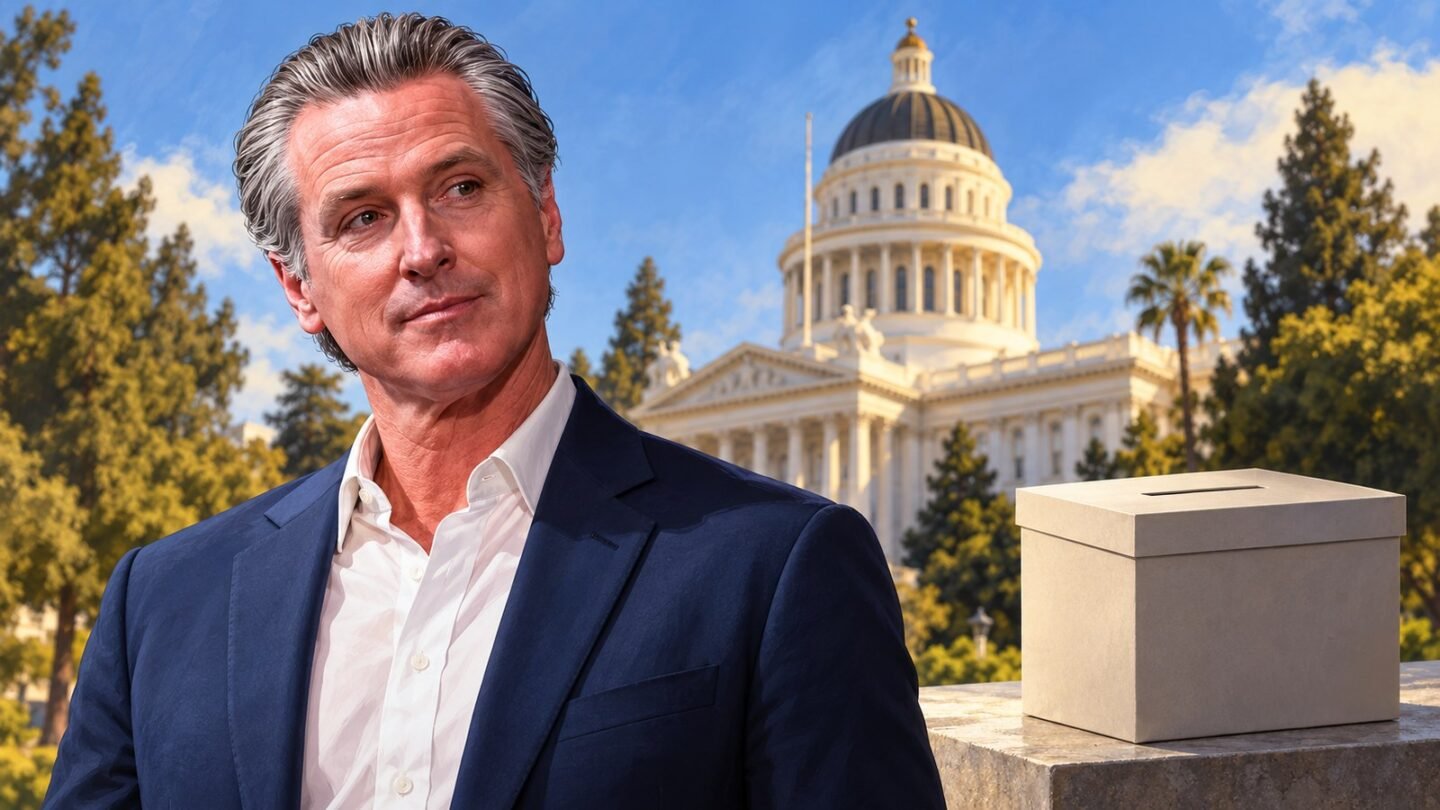
The supplied graphic attributes that claim to Newsom without identifying an interview, speech, date or original recording. A review did not locate a reliable primary source establishing the statement as presented, or independently authenticated messages supporting it. The attribution and the alleged private support therefore remain unverified.
What the Newsom claim would need to establish
The claim combines several propositions: that Newsom made the statement, that messages came from people who actually voted for Trump, and that those people now support the governor. Evidence for one proposition would not automatically establish the others.
An original recording or transcript could establish what Newsom said. It would not, by itself, authenticate the senders’ identities, their voting histories or the number of distinct people contacting him.
Even genuine correspondence would describe a self-selected group of people who chose to write. It could illustrate individual views, but would not establish how common those views are among all Trump voters.
What Trump voter regret research actually measures
In an analysis published in May 2026 and republished by Salon on May 20, UMass Amherst researchers Tatishe Nteta, Adam Eichen and Jesse Rhodes reported that 84% of surveyed 2024 Trump voters would choose him again in a hypothetical repeat of that election.
The researchers described a national survey of 1,000 U.S. adults recruited through YouGov. That total was the overall sample, not the number of Trump voters answering the follow-up question. The university’s methods page linked from the analysis lists March 20–25, 2026 fieldwork.
The university reports a 3.5-percentage-point margin of error for the overall poll. That figure should not be applied automatically to the smaller subset of respondents who reported voting for Trump.
The finding supports the narrower conclusion that most surveyed Trump voters remained willing to repeat their choice at that time. It is historical polling, not a measurement of opinion in October.
Subtracting 84 from 100 gives 16 percentage points outside the reported repeat-Trump response. That remainder cannot automatically be labeled support for Newsom. The reported result did not measure endorsement of the California governor.
The Georgia focus groups involved 12 selected voters
In an October 15 report, NPR journalist Ashley Lopez described two online discussions with 12 Georgia voters who supported Joe Biden in 2020 and Trump in 2024. Ten said they regretted voting for Trump; 11 expressed disappointment with his performance.
NPR observed the discussions, which were conducted by Engagious and Nelson Recruiting as part of the Swing Voter Project. The report explicitly distinguished the focus groups from scientific polling.
Those conversations provide examples of frustration among selected swing voters. They cannot establish a national percentage of Trump voter regret, and they do not authenticate messages allegedly sent to Newsom.
Disapproval, regret and endorsement are different
A person can criticize a president’s performance while remaining unwilling to support the opposing party. A voter can also regret a previous choice without having decided whom to support next.
These distinctions matter when comparing different research. Job-approval questions, hypothetical election reruns and candidate-support questions measure different things. Hourly Times’ coverage of October presidential approval polling provides context on a separate measure of dissatisfaction.
Neither a national survey nor a small discussion group can verify the contents of a politician’s private inbox. Establishing the Newsom allegation requires evidence tied to that allegation, rather than unrelated examples of disappointed voters.
Verdict: The private-support claim remains unverified
There is documented evidence that some Trump voters have reconsidered their choice. There is also evidence that a substantial majority in the cited survey remained willing to vote for him again.
Neither finding establishes that regretful voters are secretly backing Newsom. The available record supports reporting Trump voter regret with clear dates and sampling limits. It does not support presenting the statement attributed to Newsom or the claimed wave of private support as independently confirmed.