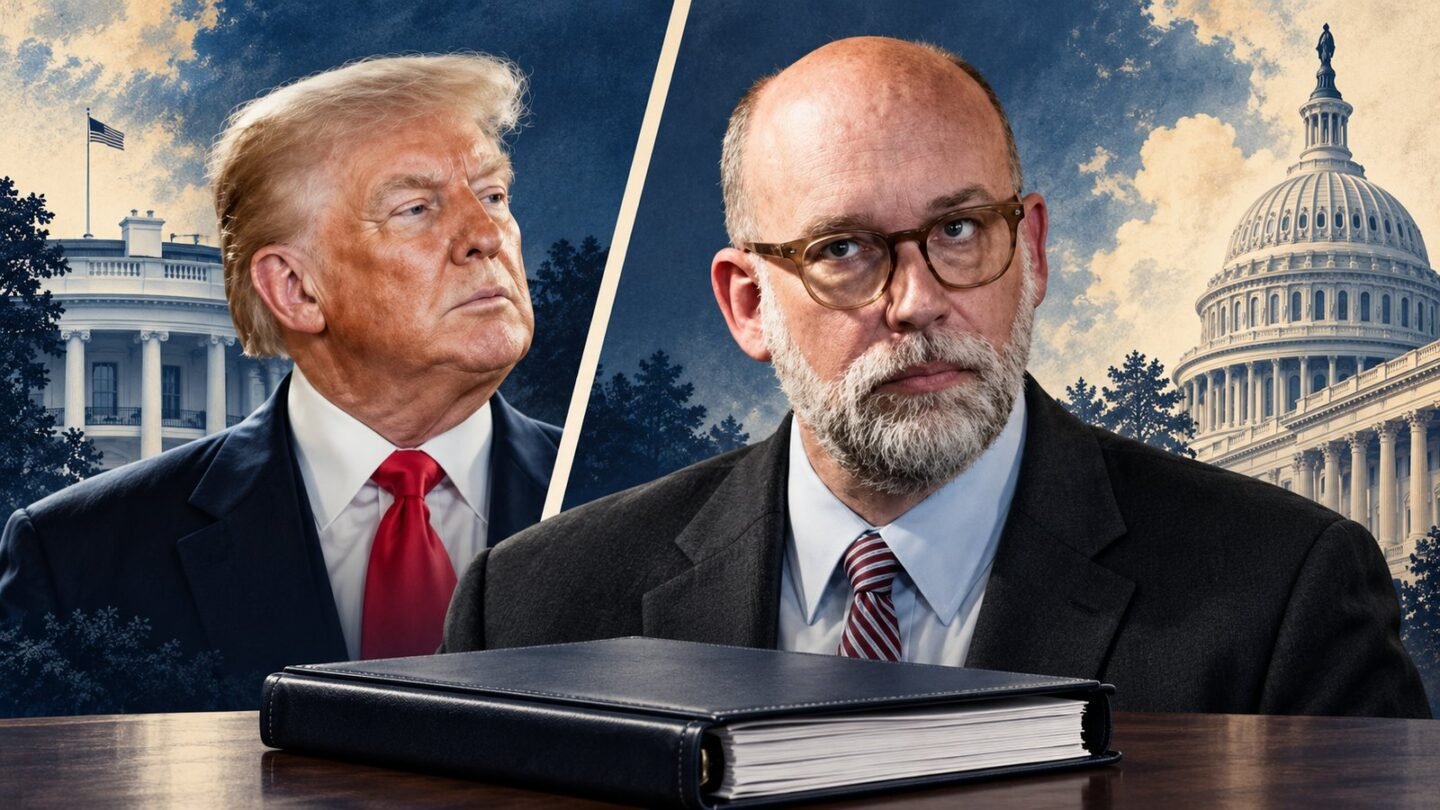
The Project 2025 treason claim in a supplied social-media graphic is not established by the evidence it presents. Russ Vought’s involvement in the conservative policy project is documented, but writing a policy blueprint does not, by itself, meet the Constitution’s definition of treason.
The graphic calls for the project’s authors to be imprisoned and asks readers whether they agree. It does not identify an indictment, a court judgment or specific evidence of conduct satisfying that offense. A demand for prosecution is different from proof that a crime occurred.
This review examines the published blueprint, Vought’s official position and the relevant legal texts. It does not treat disagreement over presidential power as a substitute for evidence about an individual person’s actions.
What the Project 2025 treason claim gets wrong
Article III, Section 3 of the Constitution narrowly defines treason as levying war against the United States or adhering to its enemies while giving them aid and comfort. It also requires two witnesses to the same overt act or a confession in open court for conviction.
Federal law, 18 U.S.C. 2381, reflects that definition. For the Project 2025 treason claim, the legal question is whether evidence establishes the specified conduct, not whether a proposal is unpopular, sweeping or described by opponents as a threat to democracy.
That does not place policy authors or public officials beyond legal accountability. It means a criminal accusation must identify the relevant offense and supporting conduct. The supplied post does not demonstrate those elements merely by naming Project 2025.
Vought’s role in the project is documented
The Heritage Foundation announced the publication of its policy guide, Mandate for Leadership: The Conservative Promise, on April 21, 2023. Heritage described it as a blueprint for the next conservative administration, covering government agencies and proposals for restructuring them.
The book credits Vought with Chapter 2, covering the Executive Office of the President. His chapter advocates using White House management, budget and regulatory tools to align executive agencies with the president’s agenda.
In that account, the Office of Management and Budget has a central coordinating role across government. Vought argues that presidential advisers should have substantial influence over the agencies operating under presidential authority.
The current White House Cabinet page identifies Russell Vought as OMB director. The agency’s own description says its responsibilities include helping the president meet policy, budget, management and regulatory objectives while fulfilling statutory duties.
Supporters and opponents dispute executive power
The political disagreement is real. Associated Press reporting on Vought’s February 6, 2025, confirmation described Democratic opposition to his approach and Republican support for reducing spending and regulation. Vought said during confirmation hearings that he would follow the law, according to AP.
Heritage’s publication announcement presented the project as an effort to prepare conservative personnel, restructure agencies and restore self-government. That is the organization’s stated position, rather than an independent finding that every recommendation is lawful or desirable.
Criticism of spending decisions also needs precise attribution. House Budget Committee Democrats argued in an August 2025 fact sheet that the administration’s use of so-called pocket rescissions unlawfully encroached on Congress’s spending authority. That is a specific legal dispute; it is not itself a treason conviction.
Evaluating a particular spending action requires examining the action and the law governing it. It cannot be resolved simply by attaching a criminal label to everyone associated with a policy project.
Conspiracy charges have their own legal requirements
The word “conspiring” does not remove the need to establish an offense. The separate federal seditious-conspiracy statute, 18 U.S.C. 2384, addresses agreements involving war against the United States or specified uses of force against government authority, laws or property.
Cooperating on policy proposals does not, without additional evidence, establish the conduct described in that statute. Treason and seditious conspiracy are distinct offenses, and neither should be used as a general synonym for political opposition.
What remains unverified
This review did not verify a treason charge or conviction arising from authorship of Project 2025. It also did not establish the original author or publication date of the graphic’s statement.
The Project 2025 treason claim should therefore be presented as an unsupported accusation in the supplied material. No hearing date, charging announcement or court deadline tied to that accusation was verified for this report.