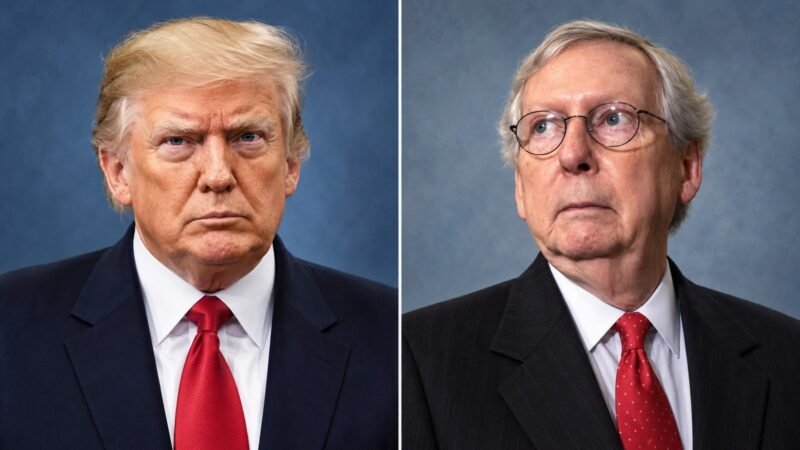
Claims about presidential fitness and nuclear weapons deserve scrutiny, but the supplied allegation that Donald Trump cannot control his bowels or lacks the mental capacity to serve is not established by verified medical evidence reviewed for this report. A political graphic is not a medical assessment.
The separate question of whether presidents should hold sole nuclear-use authority is a legitimate policy debate. It can be examined through constitutional rules and published command procedures without treating an unsupported health allegation as its starting fact.
What the presidential fitness claim establishes
The supplied post does not identify a treating clinician, authenticated medical finding or documented examination supporting its specific allegations. It therefore cannot establish either the alleged condition or an inability to perform presidential duties.
Public statements from the administration offer a different account. Reuters reported on July 11, 2026, that the White House described Trump’s late-May examination as showing excellent health. Officials clarified that his July post about having completed a physical referred to that earlier examination.
That is an attributed public account, not access to his complete medical records. It should neither be ignored nor treated as an independent assessment conducted for this article.
The American Psychiatric Association’s Goldwater Rule provides a relevant professional standard. It says psychiatrists should not offer a professional opinion about an individual without examining that person and obtaining appropriate authorization.
The rule does not prevent public discussion of psychiatric issues or political criticism. It distinguishes general education and civic opinion from a clinical judgment presented with professional authority.
Who authorizes nuclear weapons use?
The Congressional Research Service’s report on nuclear launch authority says the president has sole authority to authorize the use of U.S. nuclear weapons. Senior military leaders advise the president and carry out the command process.
According to that report, concurrence from Congress or military advisers is not required for a presidential launch order. Consultation and communication therefore should not be confused with a requirement for another official’s political approval.
Lawfulness remains a separate requirement. The CRS report explains that military personnel are bound to follow lawful orders from competent authority. Sole presidential authorization does not make every conceivable order lawful.
CRS also describes an ongoing debate over whether additional limits should apply, particularly to first use outside an immediate nuclear attack. Supporters of changes emphasize deliberation and safeguards; defenders of existing arrangements emphasize response options and deterrence.
Those are questions about institutional design. They apply beyond Trump and do not depend on proving that a particular president has a medical condition.
What the Twenty-Fifth Amendment provides
The Twenty-Fifth Amendment’s text provides procedures for presidential inability. Under Section 3, a president can declare an inability to discharge the office’s powers and duties, allowing the vice president to serve as acting president until the president declares otherwise.
Section 4 addresses a different situation. The vice president and a majority of the principal executive-department officers, or another body Congress establishes by law, can submit a written declaration of inability.
If the president disputes that declaration and the designated officials renew it, Congress can become responsible for deciding the issue. Continuing the vice president as acting president then requires a two-thirds vote in both chambers within the amendment’s timetable.
This is a constitutional process involving identified officials and formal declarations. A viral allegation does not itself activate it, and disagreement with policy does not establish the factual condition the amendment addresses.
Evidence and political judgment are different tests
Presidential fitness can be debated through documented decisions, official explanations and properly supported medical information. Readers can also advocate more transparency or different nuclear safeguards without claiming a diagnosis they cannot substantiate.
For the specific medical allegation in the supplied post, I cannot confirm this. The reviewed evidence does not establish the asserted bowel-control problem or a condition rendering Trump unable to discharge presidential duties.
The conclusion about presidential fitness is therefore limited: nuclear authority carries extraordinary responsibility, but allegations about an individual’s health require evidence. Constitutional inability, clinical diagnosis and a voter’s judgment about leadership are distinct questions.