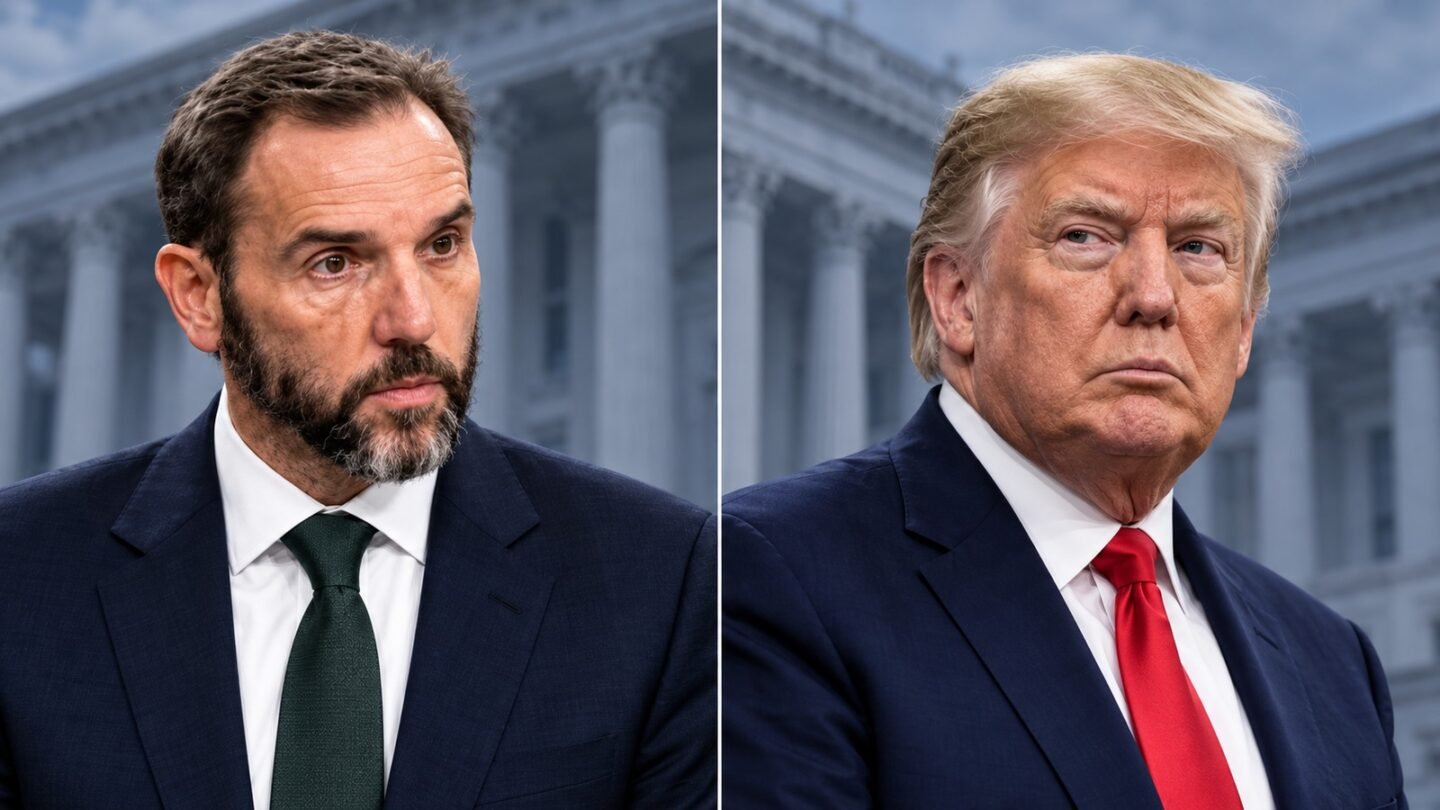
Jack Smith said federal prosecutors had enough admissible evidence to obtain and sustain a conviction against Donald Trump in the 2020 election interference case. His January 2025 report confirms that assessment. It does not establish that a jury would have convicted Trump or that imprisonment was inevitable.
The distinction answers the central question raised by the circulating claim: prosecutors believed they had a case they could prove, and the charges exposed Trump to possible prison time. However, the case ended before trial, leaving its ultimate outcome unknown.
What Jack Smith concluded in his report
The election-case volume of Smith’s final report, released on January 14, 2025, described his office’s investigation and explained its charging decisions. The report’s concluding assessment said the evidence was “sufficient to obtain and sustain a conviction at trial.”
Smith attributed the prosecution’s termination to Trump’s election and impending return to the presidency. He maintained that the decision did not reflect a change in his office’s view of the evidence.
The report described alleged efforts to pressure state officials, organize fraudulent presidential-elector slates and interfere with congressional certification. It also presented prosecutors’ argument that Trump continued advancing false election claims after receiving information contradicting them. Those are the prosecution’s allegations and interpretation of the evidence.
A charging decision is different from a verdict
The federal case included four charges: conspiracy to defraud the United States, conspiracy to obstruct an official proceeding, obstruction of and attempted obstruction of an official proceeding, and conspiracy against rights. Trump pleaded not guilty and denied wrongdoing.
When announcing the indictment on August 1, 2023, Jack Smith emphasized that an indictment is an allegation and that a defendant is presumed innocent unless proven guilty beyond a reasonable doubt. That standard would have applied at trial regardless of prosecutors’ confidence.
A trial would have required the government to prove the charged offenses using admissible evidence. The defense would have had an opportunity to challenge the prosecution’s case. Because that process never reached a verdict, neither the report nor the indictment can substitute for a jury’s decision.
Why the election case ended
U.S. District Judge Tanya Chutkan dismissed the case on November 25, 2024, after prosecutors requested dismissal following Trump’s election victory. Their request relied on the Justice Department’s longstanding position that a sitting president cannot be federally indicted or criminally prosecuted.
The department applied that position to the pending prosecution before Trump’s inauguration. Its Office of Legal Counsel had set out the constitutional reasoning in a 2000 opinion, arguing that criminal prosecution would impair the executive branch’s ability to carry out its responsibilities.
The dismissal was without prejudice, rather than an acquittal after trial. That procedural label does not promise that charges will return. Trump’s spokesperson Steven Cheung welcomed the dismissal and characterized the prosecution as political weaponization.
Presidential immunity created another hurdle
Separate from the sitting-president policy, the Supreme Court’s July 1, 2024, ruling in Trump v. United States recognized absolute immunity for presidential conduct within exclusive constitutional authority, at least presumptive immunity for other official acts, and no immunity for unofficial acts.
Smith obtained a revised indictment on August 27, 2024, following that ruling. Questions about which conduct and evidence could be used remained important to the case. The ruling therefore adds another reason why a prosecutor’s assessment cannot establish a certain trial outcome.
Could Trump have faced prison?
Yes, imprisonment was a legally possible consequence if the prosecution had proceeded and secured a conviction. For example, the federal conspiracy-to-defraud statute, 18 U.S.C. 371, permits imprisonment for up to five years. That is a statutory ceiling for that offense, not a predicted sentence.
Sentencing would have required a separate judicial decision. Federal law directs judges to consider the offense, the defendant’s circumstances, the applicable sentencing guidelines, deterrence and other factors. A possible prison term cannot responsibly be presented as a guaranteed punishment.
Jack Smith defended his investigations again at a September 29, 2026, Senate hearing. Hourly Times’ coverage of claims following that testimony provides additional context. His continued defense of the prosecution does not change the distinction between his conclusions and an unreturned jury verdict.