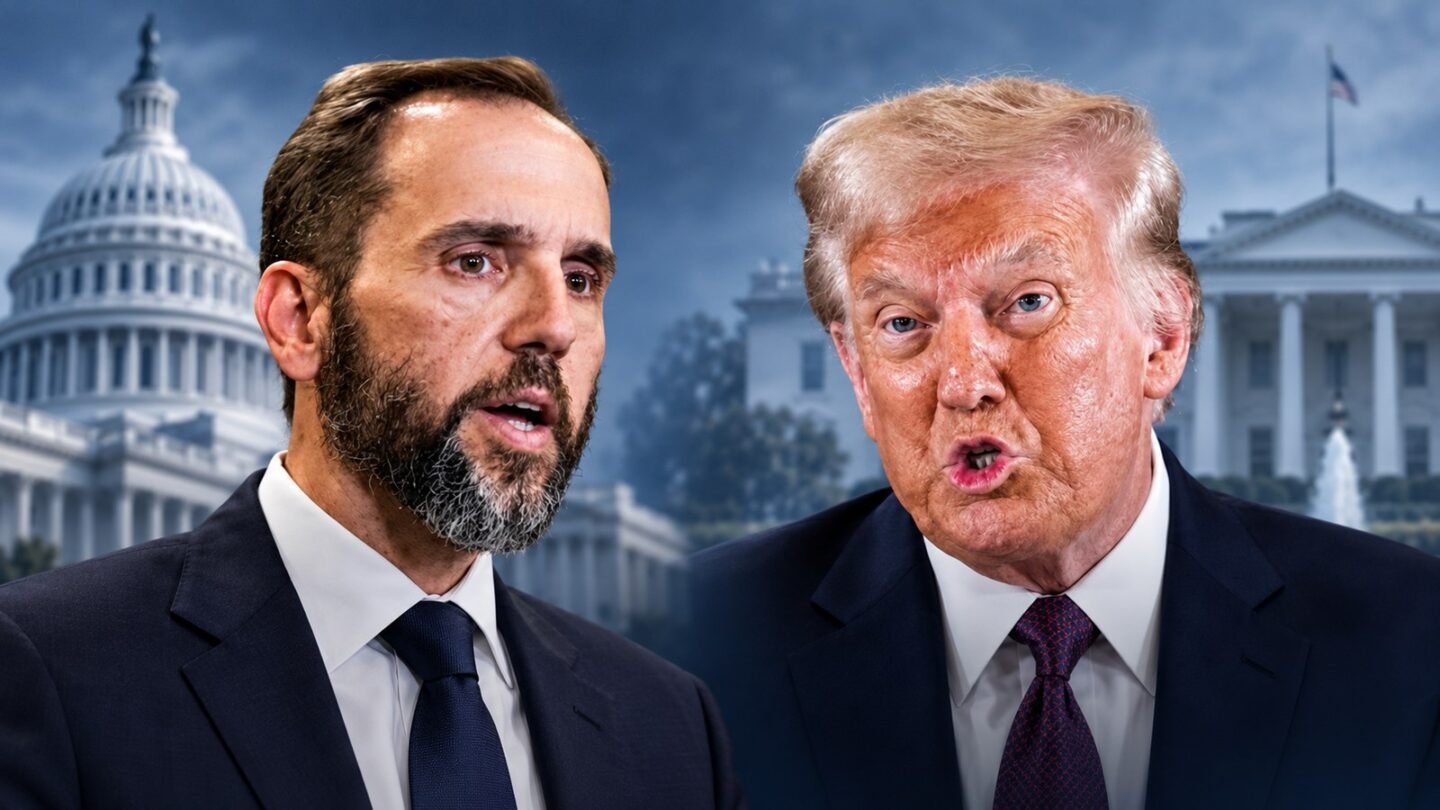
Jack Smith testimony before the Senate Judiciary Committee on September 29, 2026, focused on his investigations of President Donald Trump, not a presidential campaign. In Washington, the former special counsel defended his decisions as Republicans challenged his methods and Democrats supported his work.
A reader question asking whether Smith would make a better president than Trump raises a political judgment. The hearing supplies evidence about Smith’s prosecution decisions, but it cannot establish how he would perform as president or whether voters would choose him.
Trump’s New York felony conviction is a separate, documented matter. Keeping that state prosecution distinct from Smith’s federal investigations is essential to understanding both men’s legal and public roles.
What Jack Smith testimony established
In his written statement to the committee, Smith said his office followed Justice Department policies and made decisions according to the evidence and law. He maintained that Trump’s political affiliation and presidential candidacy did not determine whether charges were brought.
“I will not be silenced by the continued threats of prosecution from the President or others.”
Smith said he stood by his charging decisions and would make the same decision involving a former president from either party on the same facts. He also described threats against officials perceived as opposing Trump as a challenge to the rule of law.
Those statements describe Smith’s position. His assertion that investigators established criminal activity beyond a reasonable doubt is a prosecutor’s assessment, rather than a jury verdict in either federal case.
Republicans challenged the investigation’s methods
Committee Chairman Chuck Grassley questioned Smith about financial information collected during the investigation. The committee’s published transcript records Smith acknowledging that his office acquired financial information and explaining that subpoenas served a criminal investigation.
Grassley argued that the collection swept up personal information belonging to Republican donors and raised concerns about the treatment of Americans’ private records. Those accusations must be attributed to the chairman, rather than reported as established findings of unlawful conduct.
Democratic Senator Dick Durbin defended the investigation while also asking Smith to explain why congressional telephone records were relevant. According to the committee’s account, Smith said his office consulted the Justice Department’s Public Integrity Section before seeking those records.
Smith distinguished toll records, which contain information about calls, from recordings of conversations. He denied initiating wiretaps involving members of Congress and said the records helped corroborate contacts linked to the January 6 certification proceedings.
Hourly Times’ earlier coverage of Smith’s Senate hearing explains the dispute over investigative records and the cases’ procedural history.
Trump’s 34-count conviction came from New York
On May 30, 2024, a New York jury convicted Trump of 34 counts of falsifying business records in the first degree. Manhattan District Attorney Alvin Bragg’s office prosecuted that case; Smith did not.
The case concerned records connected to reimbursements for a payment made before the 2016 election. Trump denies wrongdoing and has challenged the verdict. On January 10, 2025, Judge Juan Merchan imposed an unconditional discharge, leaving the conviction intact without imprisonment or a fine.
On August 28, 2026, federal Judge Alvin Hellerstein rejected Trump’s effort to move the already-decided state case into federal court. Associated Press reporting also described his separate state appeal as pending. That ruling did not overturn the conviction.
Hourly Times’ explanation of Trump’s felony conviction provides further context about the difference between a criminal judgment and political claims.
A presidential comparison remains hypothetical
The Jack Smith testimony also invites a closer look at his professional background. His documented career is in prosecution. When appointing him special counsel in November 2022, Attorney General Merrick Garland described experience in local and federal prosecution, public corruption cases and international war-crimes investigations.
Jack Smith testimony concerns that professional record and the investigations he supervised. It does not provide a presidential governing platform or establish an announced electoral contest against Trump.
A voluntary reader poll can ask whom respondents prefer, but its answers cannot be treated as scientific national opinion. Whether Smith would make a better president remains a personal assessment, separate from the verified hearing and court record.