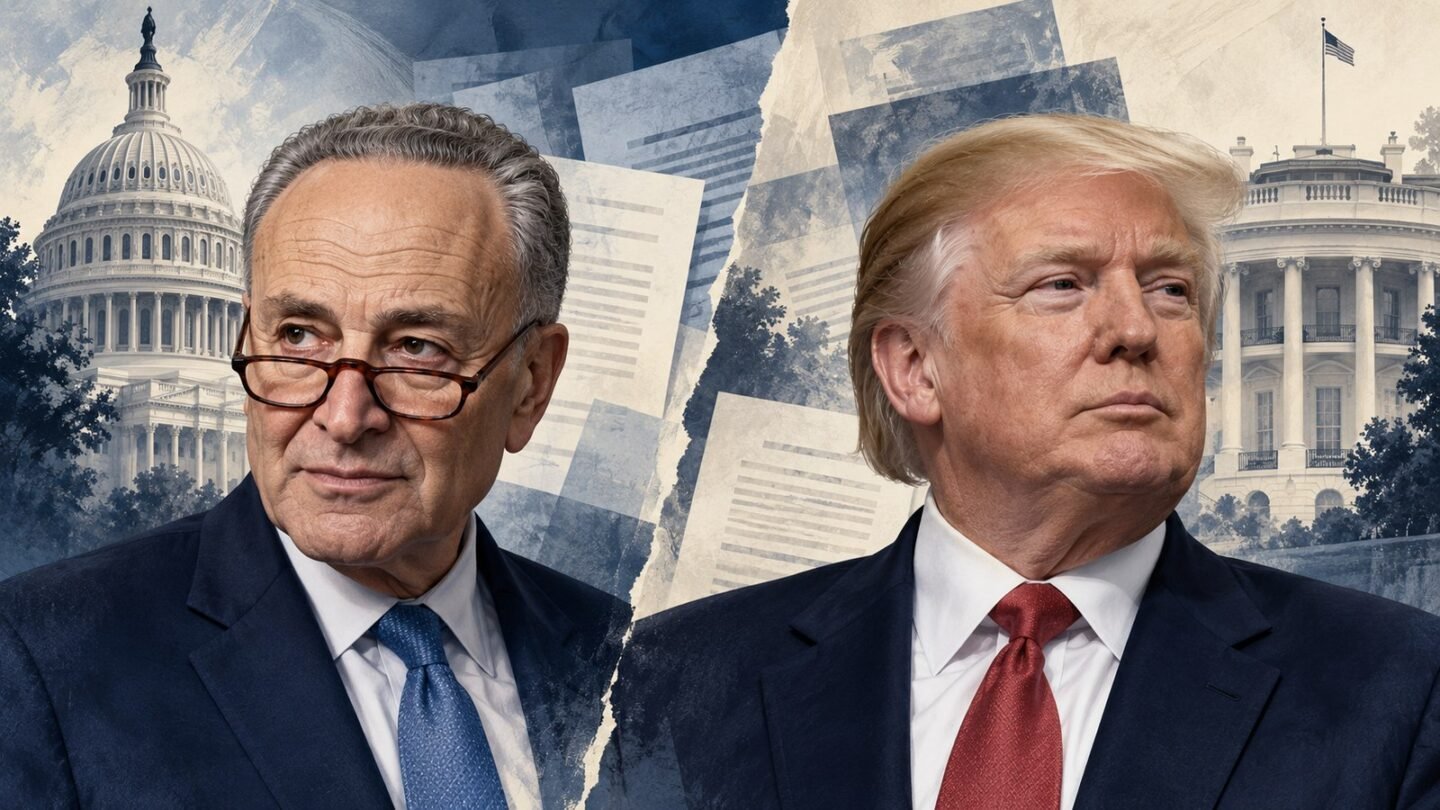
President Donald Trump’s administration backed congressional investment restrictions that would leave the president outside their coverage. Its July 22 endorsement of H.R. 7008 creates a specific accountability question for the Midterm Elections 2026: should similar rules apply to the White House?
The answer begins with the documents. The administration supported the Stop Insider Trading Act, while the House-passed text defines covered individuals as members of Congress, their spouses and dependent children. It does not include the president or vice president in that definition.
This is a Democratic-leaning analysis of that policy gap. The exclusion supports an argument for broader reform, but it does not establish unlawful presidential trading, prove why lawmakers chose this scope or erase the restrictions the bill would introduce.
What the administration actually endorsed
The July 22 administration statement strongly supported passage. It promoted restrictions on individual-stock purchases, public notice before sales and penalties. It also said senior advisers would recommend that Trump sign the bill if presented in its then-current form.
That establishes an official administration position on a particular proposal. It should not be presented as a new October announcement or as a personally delivered presidential explanation of the coverage gap. The reviewed statement does not explain why the president was outside the proposed investment rules.
For the Midterm Elections 2026, the relevant comparison is between the standards the administration endorsed for Congress and the standards candidates would propose for executive officials. Supporting one measure does not automatically settle the second question.
The president falls outside the bill’s investment definition
The House-passed legislation would generally restrict covered purchases and require public notice seven to 14 days before covered sales. It allows existing holdings to remain and contains specified exceptions. Those rules concern the people identified in its covered-individual definition.
A bill can impose meaningful restrictions on Congress while leaving another branch outside those restrictions. Describing the proposal as limited is therefore different from claiming that it changes nothing. Its exclusions and its requirements both belong in the assessment.
Democrats can challenge that scope without claiming the bill grants permission to violate other laws. Exclusion from this particular proposal does not determine whether a specific presidential transaction is lawful. Such a conclusion would require separate evidence and analysis.
During the Midterm Elections 2026, the question for Republicans defending the measure is whether congressional reform is their intended endpoint or a first step toward broader coverage. The administration’s endorsement documents support for this bill; it does not supply an answer about every possible extension.
Schumer’s objection has a documented basis
Senate Democratic Leader Chuck Schumer criticized the proposal on September 30, including its failure to restrict Trump’s trading. The covered-individual definition supports that narrow criticism. His broader allegations about corruption and political motives remain attributed arguments, rather than findings established by the text.
The strongest Democratic case is a consistent rule for officeholders, rather than an accusation based solely on a missing category. A presidential restriction should bind future presidents of either party. That would turn an argument about Trump into a proposed standard that can outlast his administration.
There is also a concrete alternative to examine. The introduced text of H.R. 6731, the Restore Trust in Government Act, expressly includes the president, vice president and their spouses and dependent children. It proposes restrictions on ownership and trading, with its own exceptions and compliance provisions.
The comparison matters in the Midterm Elections 2026 because broader coverage and stricter investment rules are separate choices. Adding the president to a purchase restriction would expand who is covered; an ownership restriction would change what covered officials could retain. A clear campaign proposal should explain both.
A Republican proposal would have extended coverage
The House Rules Committee report records a July 20 motion to allow an amendment offered by Rep. Warren Davidson, an Ohio Republican. It would have extended the proposed restrictions to judicial officers and senior executive officials, including the president and vice president. The motion failed 4–8.
That was a committee decision about allowing an amendment, not a final House vote on the expanded policy. It shows that broader coverage was proposed in the legislative process and that the idea was not exclusively Democratic.
This is material counterevidence to any claim that every Republican opposed including the president. The documented accountability issue is narrower: the House-passed bill retained congressional coverage despite an effort to allow an extension.
For Midterm Elections 2026 comparisons, voters should look at the specific proposal and the specific vote. Supporting the narrower bill, offering an amendment and rejecting a procedural motion are distinct actions. None should be used as a substitute for the others.
What voters can ask ahead of the Midterm Elections 2026
H.R. 7008 passed the House on July 22 by 232–198. The Senate rejected advancement on September 30 by 53–47. The latter was a procedural vote, not enactment. Hourly Times’ coverage of the Senate stock-bill dispute explains the broader legislative context.
Republicans can point to proposed purchase restrictions, advance disclosure and enforcement. Democrats can argue that presidential coverage and stronger ownership rules would address additional concerns. The disagreement should be evaluated through those provisions rather than through the bill’s title alone.
Blue Wave expectations remain an electoral scenario. Vote Blue No Matter Who is a Democratic campaign slogan. Neither establishes support for a particular ethics proposal or predicts whether Congress would enact it.
As candidates compete in the Midterm Elections 2026, a useful test is whether their proposals identify covered offices, covered investments, permitted exceptions and enforcement. Democrats seeking a stronger standard should also explain how it would apply to their own future officeholders.
The administration’s endorsement and the presidential exclusion are documented. The next policy question is whether candidates will support an explicit extension and explain its design. This review identifies no new administration response resolving that question and no confirmed date for another vote on H.R. 7008.