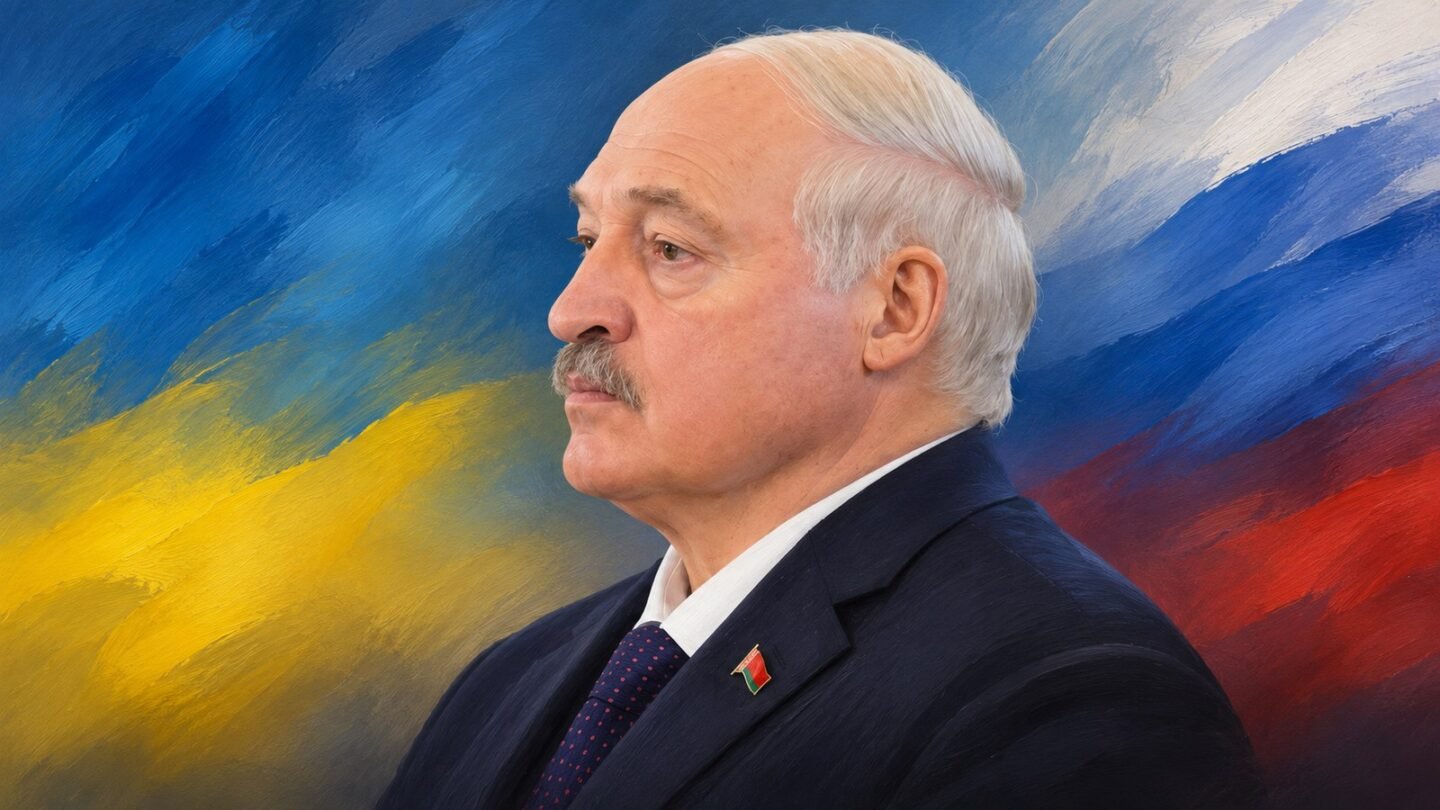
Belarusian President Alexander Lukashenko used a Mongolia comparison to question Russia’s historical claims to Ukrainian territory, arguing that the same reasoning could be turned against Moscow. His remarks, reported by Belarusian media on November 25 and Euronews on November 27, came in an interview with France’s Le Point magazine.
The comparison challenged an argument used by Russian President Vladimir Putin, a close ally of Lukashenko. However, the Belarusian leader also defended Putin’s intentions and expressed support for a shared future for the region’s peoples. His comments did not announce a break with Russia.
The interview was conducted on November 17. Excerpts appeared before the latest international coverage, making the remarks an earlier statement receiving renewed attention rather than a newly announced Belarusian policy.
What Lukashenko’s Mongolia comparison means
Lukashenko questioned the idea that Ukrainian lands should belong to Russia because they had been Russian at an earlier point in history. Going further back, he argued, would also bring up periods when Russian lands were under Mongol-Tatar domination.
In an English translation published by Euronews, he asked: “Then we should hand over the whole of Russia to whom, Mongolia?” The question illustrated his objection to using selected historical periods to determine ownership of territory today.
The Mongolia comparison was a hypothetical challenge to that reasoning. It was not an announcement that Mongolia was claiming Russia, nor a Belarusian proposal to transfer Russian territory. Lukashenko also referred to Kyivan Rus’ while discussing the historical origins of the region’s peoples.
He also defended Putin
Belarusian outlet Nasha Niva reported that Lukashenko followed his historical argument by defending the Russian president. He said he had not heard Putin deny the existence of the Ukrainian people or Ukrainian state.
He suggested Putin’s words might have been misunderstood or expressed incorrectly. Euronews likewise reported that Lukashenko softened the criticism and maintained that Putin understood the historical point.
That defense limits what can be concluded from the exchange. The interview contains criticism of a particular justification alongside continued support for Moscow. It does not establish that Minsk has withdrawn military cooperation or accepted a new settlement for Ukraine.
Historical arguments and Ukraine’s borders
Putin’s historical account of Russia and Ukraine has featured in his public justification for the war. Euronews traced that rhetoric to his 2021 essay about Russians and Ukrainians and his statements before the February 2022 full-scale invasion.
The legal position set out by the United Nations General Assembly addresses contemporary sovereignty rather than competing accounts of medieval history.
Its resolution on Ukraine’s territorial integrity condemns Russia’s attempted annexation of Donetsk, Kherson, Luhansk and Zaporizhzhia. It states that the attempted annexations do not legally change those regions’ status and calls for respect for Ukraine’s internationally recognized borders.
The resolution also urges peaceful negotiations consistent with Ukraine’s sovereignty and territorial integrity. Lukashenko’s interview does not announce changes to those borders or an agreement between the countries fighting the war.
Belarus remains closely tied to Russia
Belarus allowed Russian forces to use its territory during the February 2022 invasion. Euronews reported that Minsk has remained Moscow’s close political and military partner while stopping short of sending its own troops into the war.
The same Le Point interview included a separate proposal for diplomacy. Reuters reported on November 24 that Lukashenko offered to accompany Ukrainian President Volodymyr Zelenskyy to Moscow and guarantee his safety. He also said he believed Russian forces were winning.
Hromadske reported on November 25 that Zelenskyy dismissed the travel proposal. The Ukrainian leader’s response concerned the suggested Moscow meeting; it should not be described as a response to the Mongolia comparison.
What remains unresolved
Hourly Times has separately examined territorial concessions and Ukraine’s proposed NATO membership, issues that remain distinct from Lukashenko’s historical analogy.
Hromadske reported that U.S. envoy Steve Witkoff had announced agreement to hold another negotiating round involving European partners. Its report did not provide a confirmed date for that meeting.