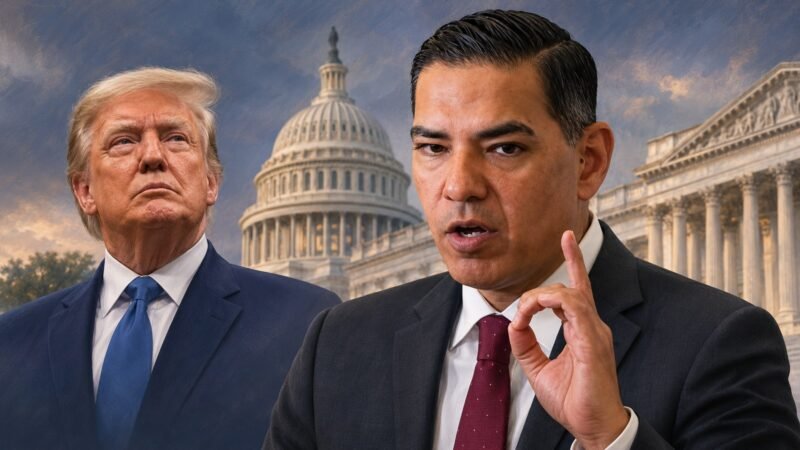
Iran war funding is emerging as a central fight for Democrats preparing to take control of Congress in January, with senators proposing restrictions on money for military operations while negotiations continue over a December 11 government funding deadline.
The proposals would use spending legislation to limit President Donald Trump’s ability to continue the conflict without congressional authorization. They have not become law, and Democrats remain divided over how quickly to force a confrontation over government funding.
Democrats target Iran war funding through spending bills
Sen. Tim Kaine of Virginia has argued for using the appropriations process alongside repeated war-powers votes. After the Senate rejected another resolution on November 19, his office said Democrats would explore additional tools to force an end to the conflict.
Reuters reported that Trump launched the war alongside Israel on February 28 without securing congressional approval. That is more precise than saying Congress had no involvement at all: lawmakers have since debated funding, oversight and resolutions challenging the campaign.
The incoming Democratic majorities take control on January 3, according to Reuters. Before then, lawmakers face the separate question of whether to attach restrictions to legislation needed to keep federal agencies funded after December 11.
What the published proposals would restrict
On November 13, Sens. Tammy Duckworth, Elizabeth Warren and Kirsten Gillibrand announced a planned funding amendment intended to block war spending until Congress authorizes the conflict.
Their announcement also proposed withholding the defense secretary’s travel funding until the Pentagon reports on the war’s effects on military readiness and personnel. Gillibrand described the approach as stopping new offensive-operation funding while allowing troops to defend themselves.
Sen. Michael Bennet published a separate draft amendment on combat-operation funding on November 19. It would cover funds in a forthcoming spending bill and money made available by earlier legislation, rather than only rejecting a new supplemental request.
Bennet’s text would prohibit direct or indirect support for combat activities by U.S. personnel in or over Iran, or in Iranian territorial waters, until Congress authorizes that force.
It preserves specified activities involving defense against Iranian or proxy attacks, defensive intelligence work, assistance protecting other countries and U.S. citizens, and commercial-vessel escorts through the Strait of Hormuz. Those exceptions mean the proposal would not end every U.S. military activity in the region.
Why the December deadline divides lawmakers
Roll Call reported that some Democrats want restrictions in the next continuing resolution, a temporary government funding bill, while others favor waiting until the party controls both chambers.
Senate Appropriations Democrat Patty Murray said lawmakers were considering their options. House Democratic leader Hakeem Jeffries deferred to senior appropriator Rosa DeLauro on what could be negotiated before the deadline.
The disagreement over Iran war funding concerns leverage and timing, including the risk of a partial government shutdown. A lapse in agency funding is a different outcome from enacting a targeted prohibition on combat spending.
Republicans weigh a possible defense-spending bargain
CNN reported on November 23 that senators from both parties were discussing limits on future offensive operations in exchange for additional Pentagon funding, including replenishment needs. The talks remained preliminary.
Republican Sen. John Hoeven said any compromise would need to be acceptable to the administration. Senate Armed Services Chairman Roger Wicker emphasized protecting the commander in chief’s ability to defend the country, according to CNN.
Those comments indicate room for negotiation, rather than agreement on final legislative language. They also distinguish support for military readiness from support for continuing offensive operations.
What remains unresolved
New funding restrictions must clear the legislative process. Under the Constitution, a presidential veto can be overridden only with two-thirds support in each chamber; winning congressional majorities does not remove that hurdle.
Hourly Times previously examined the Iran war’s reported costs and congressional funding questions. The current Iran war funding debate concerns what lawmakers will permit next, rather than a confirmed cutoff or an announced peace settlement.