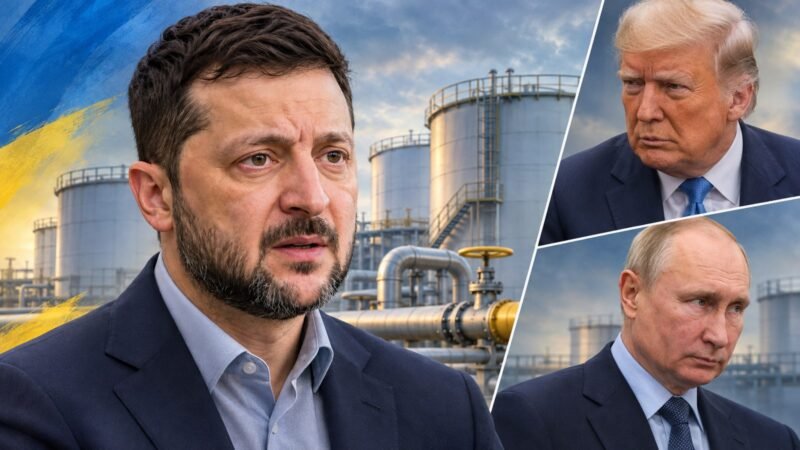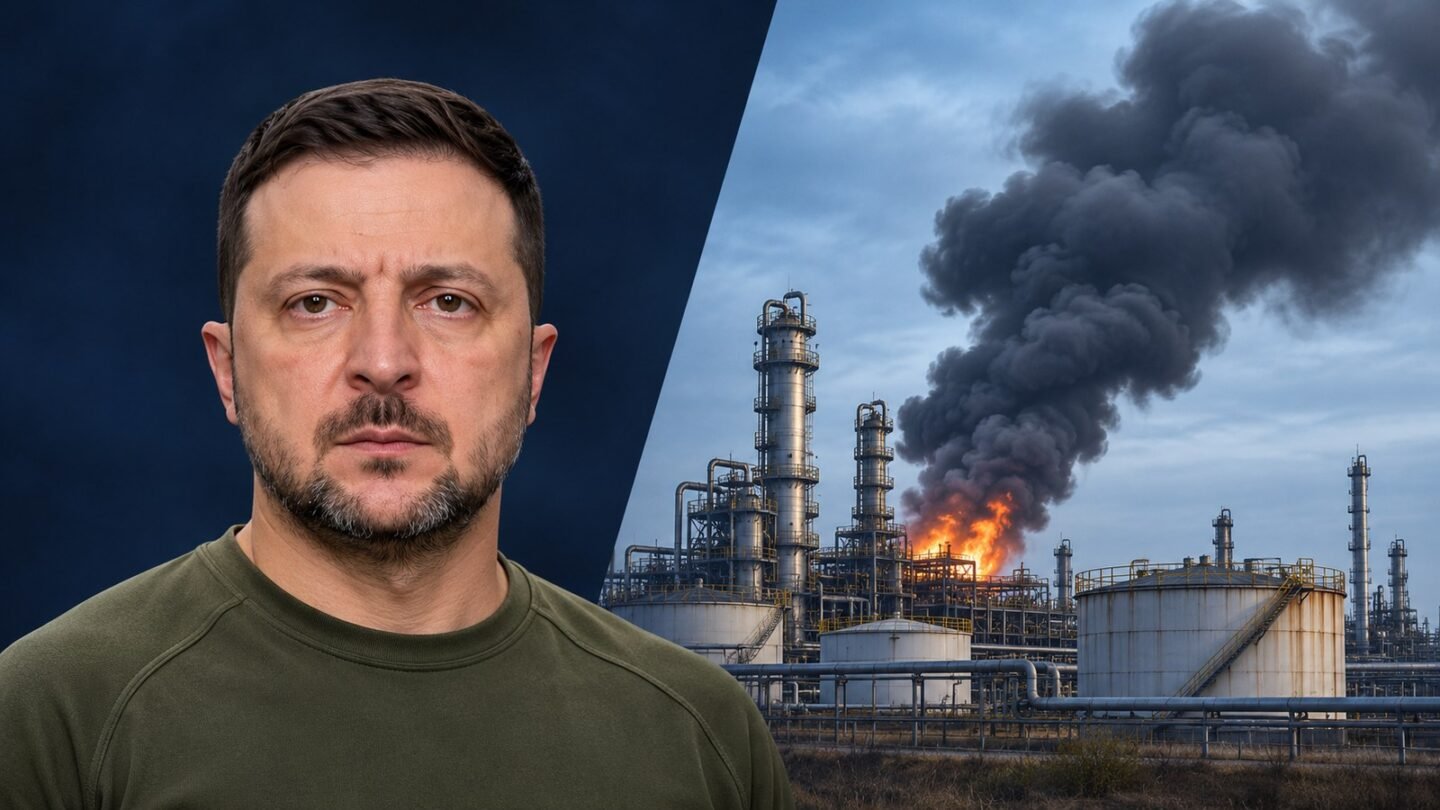
The Slavyansk refinery in southern Russia suffered serious damage after a November 26 drone attack, its operator said, as Ukraine’s military intelligence agency claimed responsibility for another strike on the facility while repairs from an earlier attack were still underway.
The attack came two days after Ukrainian Foreign Minister Andrii Sybiha told President Vladimir Putin to end the war if he wanted strikes on Russian refineries to stop. The timing establishes the sequence of events, but does not establish that the operation was ordered in response to those remarks.
Slavyansk refinery operator reports damaged equipment
Reuters reported that Slavyansk ECO acknowledged significant damage to an atmospheric crude oil distillation unit. The company also reported destroyed storage facilities for heavy petroleum products and damaged pipelines carrying heavy products and gasoline fractions.
RBC-Ukraine, citing industry publication Neftegaz.RU’s account of the operator’s statement, reported damage to crude storage tanks and associated pipelines, along with an oil spill.
The Slavyansk refinery’s operator said processing had already stopped following a September drone strike and restoration work was continuing. The November attack therefore hit a plant undergoing repairs, rather than documenting a fresh shutdown of a fully operating refinery.
The available statements do not provide a confirmed repair cost, restart date or independently measured volume of lost production from this latest attack.
Ukraine claims the overnight operation
In its November 26 statement, Ukraine’s military intelligence agency, known as HUR or GUR, said its long-range drones attacked the refinery in Slavyansk-on-Kuban, in Russia’s Krasnodar region.
The agency said key production facilities, the tank farm and transport pipelines were hit. It put the refinery’s annual processing capacity at up to 5.2 million metric tons and said its gasoline, diesel and fuel oil support Russian military needs.
Those capacity and military-supply descriptions are attributed to Ukrainian intelligence. Annual design capacity is different from actual output, particularly because the plant was already undergoing restoration.
Sybiha’s message followed Putin’s retaliation warning
On November 24, Putin told government officials and senior oil executives that Ukraine continued attacking Russian refineries despite President Donald Trump’s requests for restraint. He said retaliation was inevitable and called for additional security measures at energy facilities.
Sybiha responded that Putin could stop attacks on refineries and military vessels by ending the war. He concluded: “Stop complaining. End the war.” Ukrainska Pravda reported the statement from his X account.
The quotation came from Sybiha, rather than President Volodymyr Zelenskyy. Sybiha also cited 432,000 Russian battlefield losses during 2026; that Ukrainian claim has not been independently established here and should not be presented as a verified death toll.
Other reported strikes require separate assessment
Ukraine’s General Staff also claimed an overnight strike on the Subkhankulovo oil transportation and storage facility in Bashkortostan. It said an oil tank was hit and a fire broke out, according to the Kyiv Independent.
The newspaper reported that local Russian authorities acknowledged a fire in an industrial zone after drone debris fell. That account corroborates a local fire, while the full military damage assessment remains a separate question.
The General Staff also said Neptune missiles struck Marinovka airfield in Volgograd region, where Su-34 fighter-bombers are based. It said damage was still being assessed. The Kyiv Independent could not independently verify the strikes.
Reports concerning Rosneft’s Kuibyshev refinery span November 25–26: the Kyiv Independent described an earlier strike and monitoring reports of a renewed fire the following morning. Those reports should not automatically be treated as one simultaneous operation.
RBC-Ukraine reported Russia’s Defense Ministry claimed it intercepted 343 Ukrainian drones overnight. That remains Russia’s account; the number does not establish that every attacking drone was intercepted.
The wider refinery campaign
Hourly Times previously examined Ukraine’s refinery campaign and the disputed energy pause. The latest Slavyansk refinery attack adds another reported hit during restoration work, while its longer-term effect on Russian fuel supplies remains unquantified.