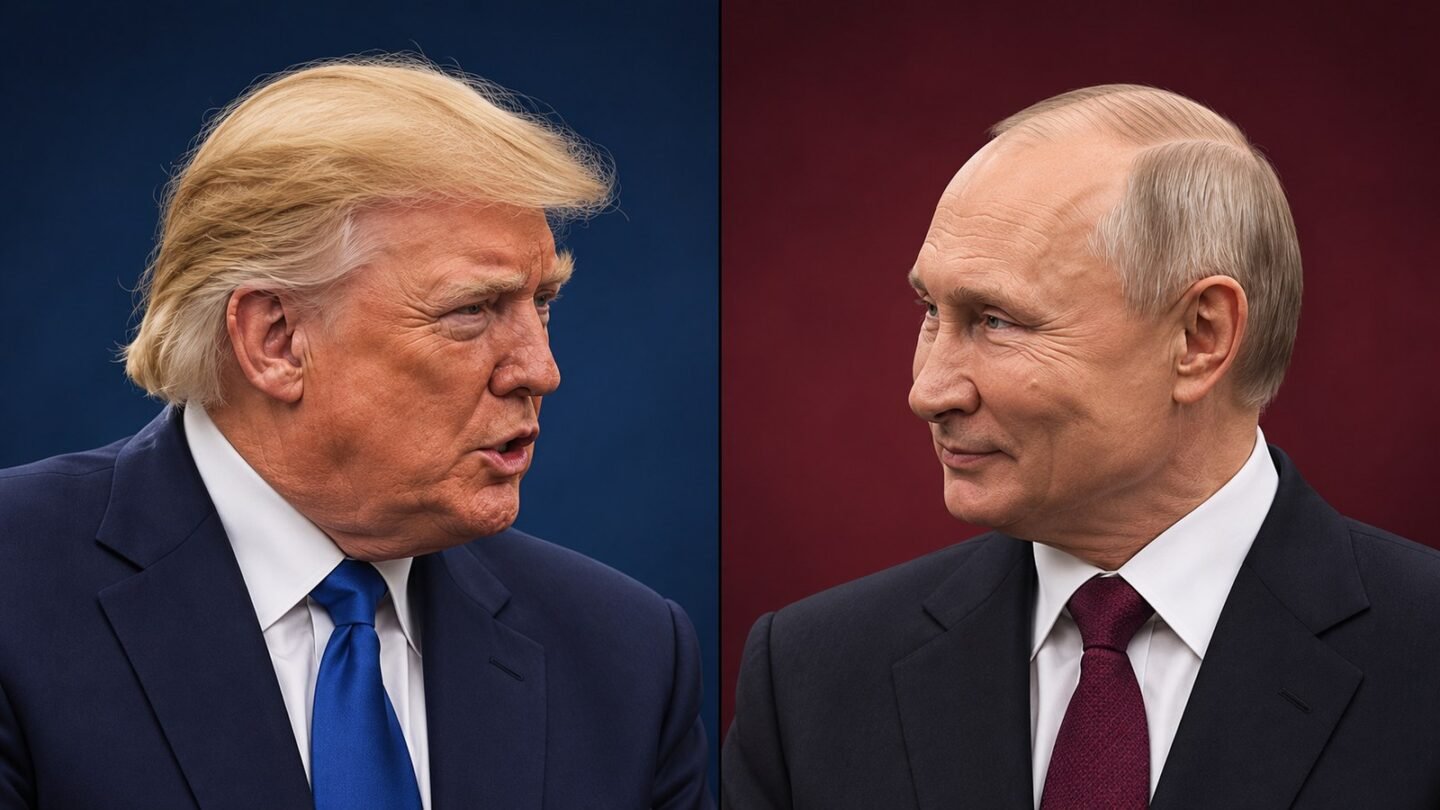
A Ukraine peace deal could be reached quickly if Russia pulls back its military aggression across Europe, President Donald Trump said on November 26, recounting his recent discussions with Russian President Vladimir Putin in China.
Trump’s statement expressed confidence in a possible agreement but announced no negotiated terms, ceasefire or Russian commitment to reduce military activity. It followed his November 25 meeting with NATO Secretary General Mark Rutte at Mar-a-Lago in Florida.
What Trump said about a Ukraine peace deal
In a Truth Social post reported by Reuters and AFP, Trump said he had spent substantial time urging Putin to curb military aggression during their conversations in China. He linked that request to his hope for a rapid settlement between Russia and Ukraine.
Trump called the continuing loss of life a “COMPLETE BLOODBATH” and said thousands of people were being killed each month. He did not identify a casualty dataset, define which groups he was counting or provide a specific monthly reporting period.
That description should therefore be understood as Trump’s characterization of the war’s human cost, rather than a newly verified casualty total. His post also said he had briefed Rutte on his conversations with Putin.
AFP noted that Trump did not specify the territories covered by his appeal. The wording extended across Europe, without setting out a withdrawal timetable, military boundaries or the steps Moscow would be expected to take.
NATO confirms the Mar-a-Lago meeting
A joint statement published by NATO confirms that Trump and Rutte met on the evening of November 25. It identifies Russia’s war against Ukraine and the conflict in Iran as their main subjects.
The two leaders emphasized preventing Russian actions that could widen the war, whether deliberately or unintentionally, and seeking a peaceful resolution as soon as possible.
They also discussed increased defense spending and investment in the defense industrial base in the United States and across NATO. The statement referred to their previous summit work in The Hague and Ankara.
NATO’s advance advisory had scheduled Rutte’s Florida visit for November 24–25, including meetings with senior administration officials. It said there would be no media opportunity, making the published statement an important public account of the discussions.
China talks provide the diplomatic background
The White House’s November 19 declaration confirms that Trump, Putin and Chinese President Xi Jinping met in Shenzhen. Hourly Times previously covered the Shenzhen summit and its diplomatic agenda.
The declaration addressed international security, United Nations reform, energy supplies, state immunity and nuclear risks. It did not set out a Ukraine peace deal, a ceasefire date or an agreed settlement of territorial disputes.
Its nuclear language reaffirmed opposition to nuclear war and a commitment to dialogue on reducing nuclear risks. Those commitments concerned strategic security; they did not themselves establish an end to fighting in Ukraine.
Moscow’s response and the remaining questions
Asked about the Trump-Rutte statement, Kremlin spokesperson Dmitry Peskov blamed Ukraine for efforts to expand the conflict geographically, the Kyiv Independent reported. That was Moscow’s response to the joint warning, rather than an announcement accepting Trump’s appeal.
Separately, AFP reported that U.S. envoy Jared Kushner acknowledged continuing disagreement over territory in eastern Ukraine during a November 25 interview. His comments identified an unresolved negotiating issue despite the administration’s public optimism.
The documents and statements reviewed here establish a sequence of diplomatic contacts: the Shenzhen meeting on November 19, the Rutte meeting on November 25 and Trump’s public account on November 26.
They do not establish when a Ukraine peace deal might be signed. Trump’s confidence remains his assessment of the prospects for negotiations, while the terms, implementation timetable and acceptance by Russia and Ukraine remain unannounced in these statements.