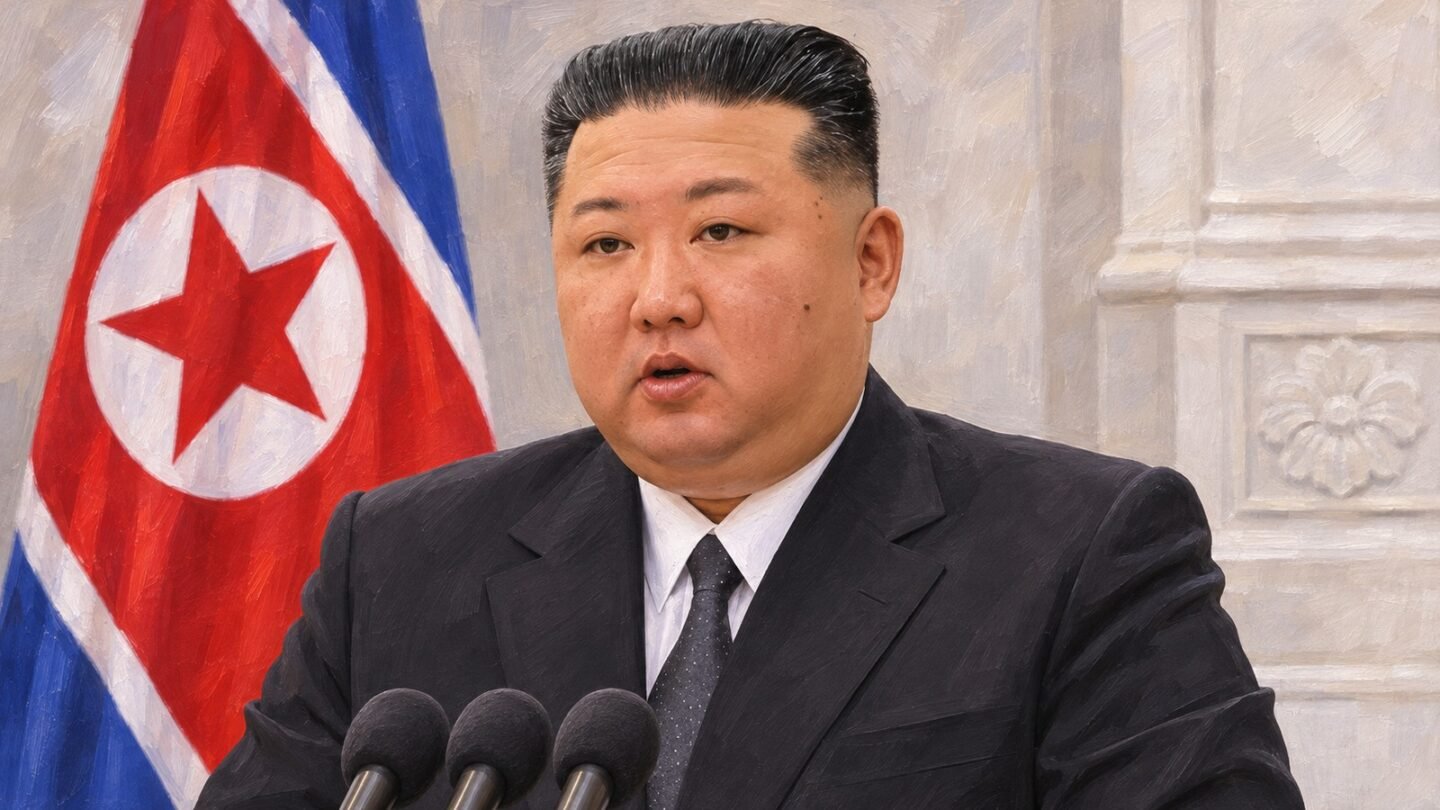
Kim Jong Un welcomed newly appointed ambassadors from 10 countries in Pyongyang on November 22, days after President Donald Trump ended an Asia trip without meeting the North Korean leader. North Korean state media reported the credentials ceremony the following day.
The event brought foreign envoys to the headquarters of the Workers’ Party of Korea Central Committee. Kim received their credentials, posed for photographs and outlined his government’s priorities, according to reports citing the Korean Central News Agency.
The ceremony is confirmed by reporting and South Korea’s official assessment. Its timing, however, does not establish that Kim organized it as a response to Trump’s outreach.
Kim Jong Un receives ambassadors from 10 countries
The ambassadors represented Indonesia, Sweden, Vietnam, Russia, Brazil, the Czech Republic, India, the Philippines, Thailand and Bangladesh. Foreign Minister Choe Son-hui also attended, according to SBS and Yonhap.
Presenting credentials is the formal process through which an ambassador delivers authorization from the sending country’s head of state to the leader of the host country. The gathering concerned newly appointed envoys, rather than a summit involving the leaders of those 10 nations.
SBS reported that Kim pledged to protect diplomatic privileges and immunities before explaining the policy platform adopted earlier this year. He described domestic priorities including sustained economic growth and improvements in material and cultural life.
On foreign relations, he presented cooperation as conditional on respect for North Korea’s sovereignty and security. He said Pyongyang was willing to develop friendly relations with countries that treated it on the basis of mutual respect and equality.
A change in diplomatic protocol
Kim Jong Un’s personal role reflected a constitutional change adopted in March, South Korea’s Unification Ministry said in its November 23 briefing. The amendment authorized the president of state affairs to receive foreign ambassadors’ credentials.
Previously, that responsibility belonged to the chairman of the Standing Committee of the Supreme People’s Assembly, Yonhap reported. Kim’s grandfather, Kim Il-sung, had personally performed the function, while a senior parliamentary official handled it during Kim Jong-il’s leadership.
The ministry described the November 22 event as the first such occasion since the amendment. It assessed the ceremony as a demonstration of Kim’s standing as head of state to audiences inside and outside North Korea.
Asked specifically about the timing, the ministry offered no further explanation. Its official briefing on the credentials ceremony connected the change in protocol to the revised constitution, without identifying a direct link to Trump’s travel.
Trump says a future meeting remains possible
Trump had raised the possibility of seeing Kim during his visit to Asia, but departed without an encounter. As Hourly Times previously reported on the stalled Trump-Kim talks, the trip ended without the proposed meeting taking place.
Trump subsequently attributed the missed opportunity to his schedule. AFP, citing NBC News reporter Gabe Gutierrez, reported that Trump said there had been too many meetings during the trip and that another encounter would not have worked out.
He nevertheless indicated that he expected to meet Kim at some point. That statement expressed an intention; it did not provide a date or establish that Pyongyang had agreed to a new summit.
The two leaders met three times during Trump’s first presidential term. Those discussions sought to address North Korea’s nuclear program but did not produce a concrete agreement, AFP reported.
Security claims accompany diplomatic outreach
In his address to the ambassadors, Kim Jong Un described a volatile international environment and argued that North Korea needed military strength to protect its security. He also rejected the idea that Pyongyang sought dominance or territorial expansion.
Those statements describe North Korea’s position, rather than an independent assessment of its military intentions. South Korea’s Unification Ministry characterized the speech as a restatement of existing policies on defense and sovereignty.
The ceremony therefore documented Kim’s direct engagement with foreign ambassadors and his government’s stated diplomatic priorities. It supplied no announced timetable for renewed talks with Trump.