Hormuz attacks rose sharply in October and the first part of November, according to maritime data reviewed by ABC News, increasing pressure on commercial shipping during the war involving the United States, Israel and Iran. The figures describe reported or confirmed incidents, depending on the organization compiling them.
ABC reported that the United Kingdom Maritime Trade Operations Centre recorded 31 attacks in and around the Strait of Hormuz in October and about 19 in November through November 18. November’s figure is a partial-month total, not a completed monthly count.
Analysts interviewed by ABC said the escalation appeared intended to make U.S.-supported oil-shipping arrangements more dangerous and less reliable. That explanation is an assessment of strategy, rather than proof of who carried out every incident.
Hormuz attacks require careful comparisons
The International Maritime Organization’s confirmed incident register listed 138 incidents across the Strait of Hormuz and the wider Middle East as of November 17. It also recorded 25 confirmed seafarer fatalities.
That regional total should not be described as 138 attacks inside the strait. The register includes incidents in surrounding waters, and its geographic coverage is broader than the narrow passage alone.
IMO says it validates reports using information from flag states, coastal states and credible third parties. Its confirmed register and UKMTO’s reporting system are separate sources, so their totals should not be added together.
UKMTO operates a voluntary reporting scheme and provides security information to ships and maritime authorities. Its public guidance encourages masters to report incidents and suspicious activity, helping build the operational picture available to mariners.
Seafarer protection remains the immediate concern
On November 11, IMO Secretary-General Arsenio Dominguez urged governments to enforce maritime safety and security rules around the strait. He called on shipowners and operators to avoid commercial activity that exposes crews to unacceptable risks.
His warning also addressed unsafe practices, including vessels concealing identification numbers, using false flags or operating with fraudulent registration. Those concerns involve the safety of navigation as well as the danger posed by attacks.
The agency urged political efforts to restore a single, safe and internationally recognized navigation framework. Its appeal does not establish that any particular route currently guarantees safe passage.
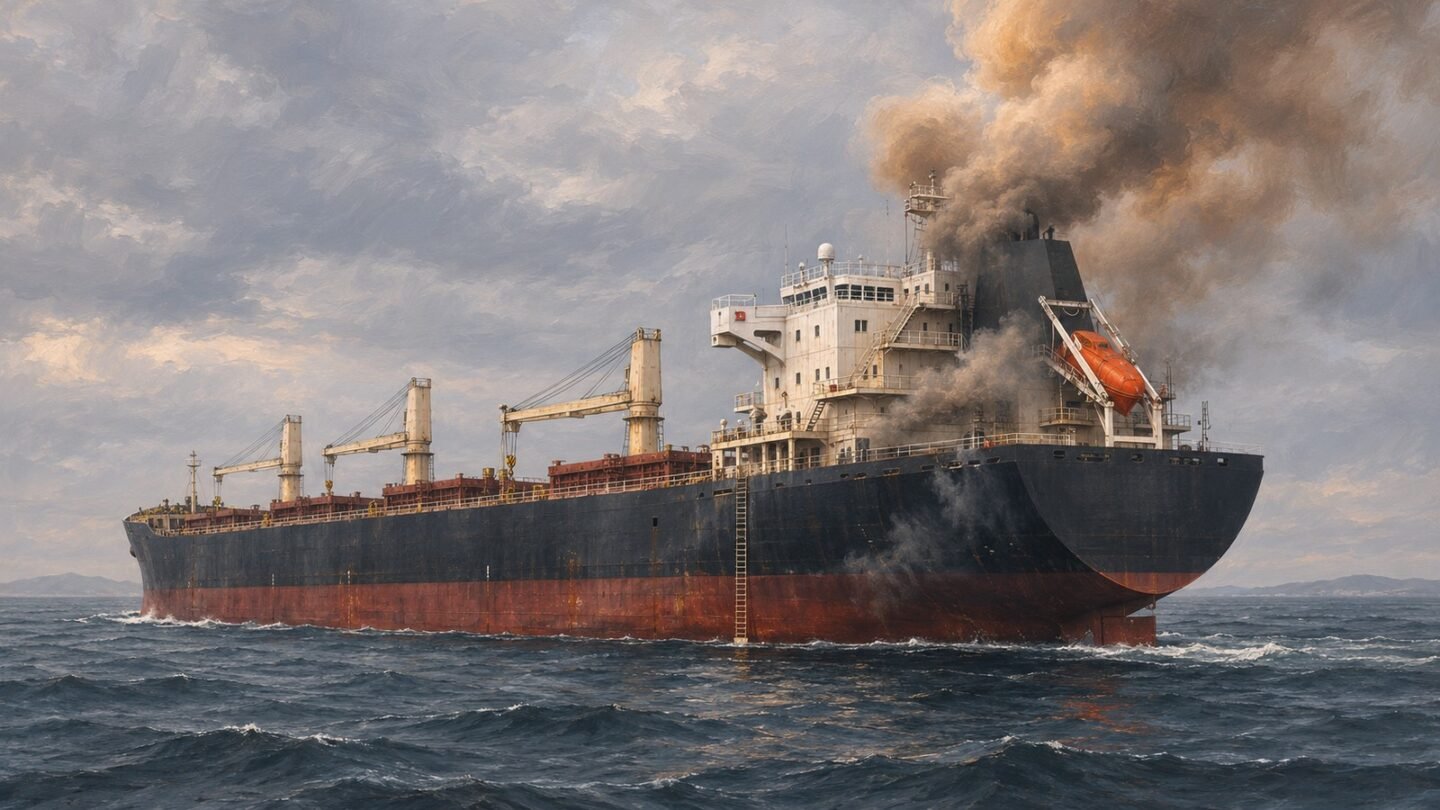
The register’s entry for the Mayuree Naree dates to March 11, so images of that vessel should not be mistaken for a November incident.
Energy flows remain below prewar levels
U.S. Energy Information Administration data show the scale of disruption to energy transport. Its November 16 tables estimate oil flows through Hormuz at 9.1 million barrels per day in the third quarter of 2026, compared with 21.6 million in the fourth quarter of 2025.
The figures cover crude oil, condensate and petroleum products. They are quarterly estimates based on tanker-tracking analysis, rather than live measurements of traffic during the latest attacks.
The same tables estimate liquefied natural gas flows through the strait at 1.4 billion cubic feet per day in the third quarter of 2026, compared with 10.5 billion in the final quarter of 2025.
Those comparisons show substantial disruption while also indicating that energy continued moving through the waterway. They do not establish the immediate price effect of an individual incident.
Iran’s conditions remain a diplomatic obstacle
Hourly Times previously reported on Iran’s conditions for reopening the Strait of Hormuz. That coverage described Tehran’s demands and warnings to shipping, rather than an agreement accepted by Washington.
The distinction matters when assessing Hormuz attacks: a government’s claim to control navigation is different from independently verified safe access. Neither political assurances nor continuing oil movements eliminate the risks documented by maritime agencies.
What the latest figures do not establish
The available reporting does not identify a perpetrator for every incident or provide a final November total. Later reports and validation can change the published picture.
For crews and operators monitoring Hormuz attacks, updated maritime warnings remain the immediate source of incident information. For the broader energy outlook, the EIA lists December 8 as its next scheduled Short-Term Energy Outlook release.