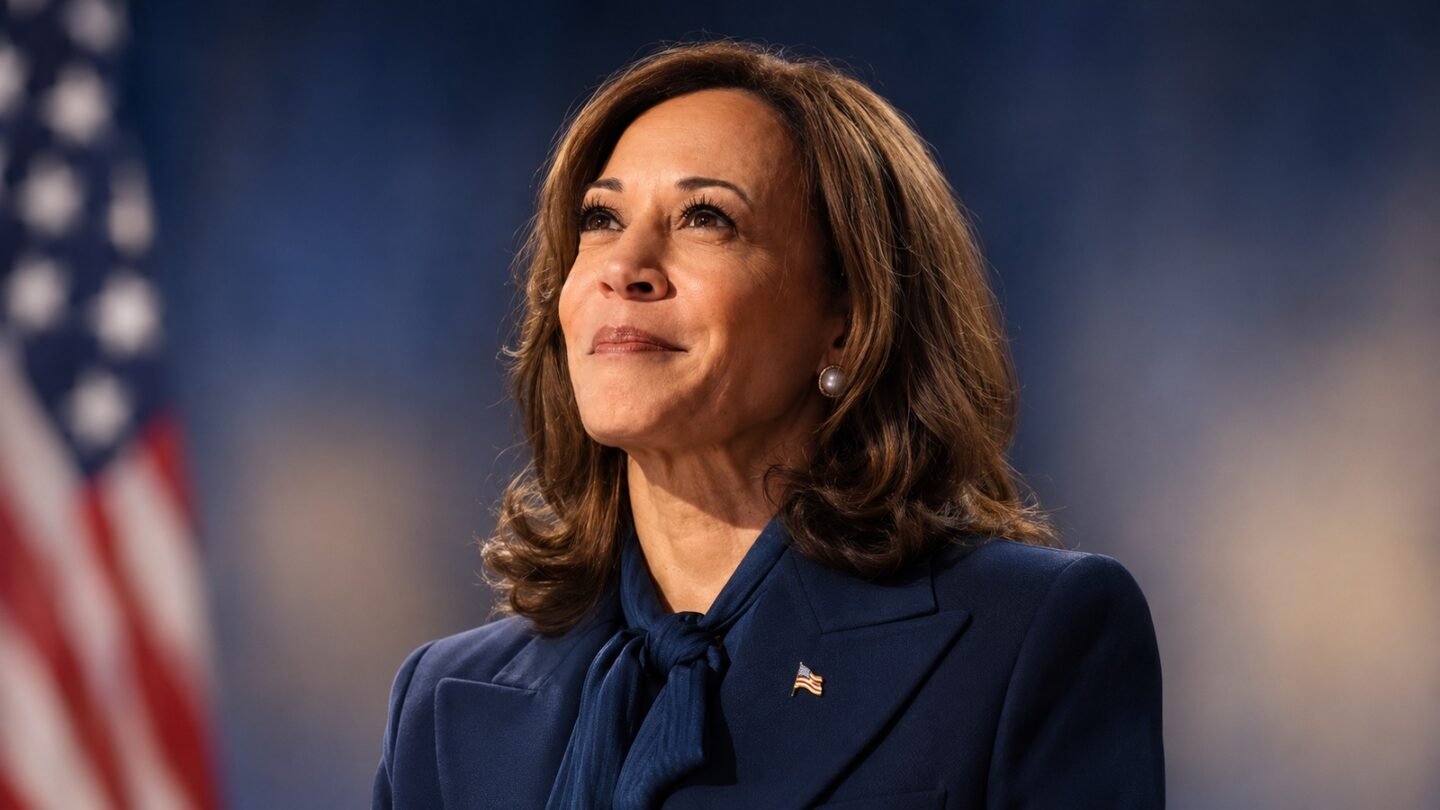
Former Vice President Kamala Harris urged Americans to use the November 3, 2026, midterm elections to check President Donald Trump’s administration, publishing a message that emphasized voters’ political power. The appeal followed campaign appearances supporting Democratic candidates in several states.
In a November 3 Substack post introducing remarks from Fulton County, Georgia, Harris framed the election as an opportunity to challenge the administration. She also argued that Democrats’ work should continue beyond Election Day if voters gave them more power.
Her message paired sharp criticism of Trump with an appeal for participation. It was a partisan campaign argument, rather than a neutral assessment of every administration in American history.
Kamala Harris Emphasizes Voters’ Power
Harris’s published introduction described the administration as “callous, corrupt, and incompetent” and presented voting as a way to put a check on it. Those characterizations are her political judgments and are attributed to her.
“The power is with the people,” Harris wrote.
The post included a transcript of an earlier address to Democrats in Fulton County. Its publication date and the date of the speech are therefore separate: the November 3 publication presented remarks from the previous week.
In that address, she encouraged Democrats to maintain their resolve after voting ended and to use any governing power they gained to deliver results. Her argument extended beyond winning campaigns to what elected officials should do afterward.
A Message Built on Her Closing Campaign Tour
Reuters reported on October 24 that Kamala Harris was returning to the campaign trail for Democrats in closely contested midterm races. The report identified Georgia, Mississippi, Nevada, New Hampshire and Wisconsin among the states on her itinerary.
She was campaigning as the party’s 2024 presidential nominee and a former vice president, with attention also turning to her possible political future. Reuters reported that she was weighing another presidential run, rather than announcing a 2028 candidacy.
In Georgia, her turnout message focused on Democratic candidates and the everyday consequences of government decisions. A Jon Ossoff campaign release described appearances in Macon and Atlanta and reproduced her appeal to turn frustration into political participation.
The Washington Examiner’s October 29 reporting from Macon independently documented that theme. It described Harris speaking to Democratic voters and volunteers about household costs and the connection between those concerns and who holds public office.
The Graphic Needs Date and Title Context
The supplied graphic presents a longer passage about converting pain and anger into action. Its complete wording could not be matched word for word to an accessible original publication during verification, so that passage is not reproduced here as a confirmed quotation.
The narrower point is supported: Harris encouraged election participation and criticized the Trump administration. Her published remarks and campaign coverage establish those themes without requiring every sentence in a social graphic to be treated as verified.
Kamala Harris should also be identified as a former vice president in current news coverage. Her office’s website uses that designation, and Reuters likewise identifies her as no longer holding the office.
What the Midterm Appeal Could Change
At the federal level, midterm elections determine congressional representation, rather than selecting a new president. USAGov explains that congressional elections occur every two years, while state and local contests have their own schedules.
Hourly Times’ explanation of congressional power after the midterms describes how a different majority can affect legislation and oversight without automatically ending a president’s term.
Harris’s appeal is therefore a statement about mobilizing voters and seeking political leverage. It does not establish who won any particular contest or prove that her appearances changed its outcome.
The next measurable developments are the results in the races she supported and the governing decisions that follow. Kamala Harris’s November 3 message calls for continued engagement; its electoral impact will require evidence beyond the message itself.