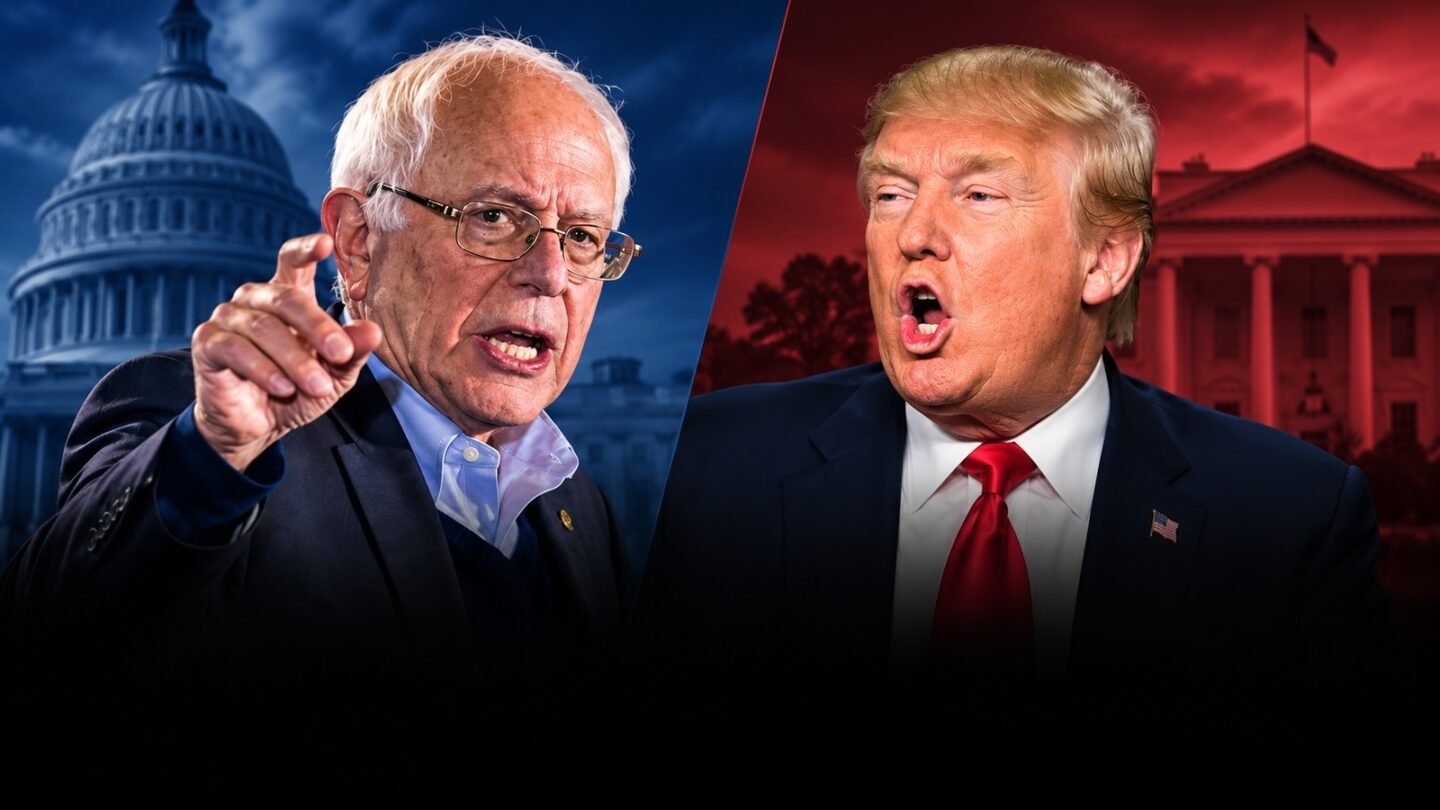
The Bernie Sanders quote accusing Donald Trump of exceptional presidential corruption is authentic: the Vermont senator used those words in a December 10, 2019, statement supporting articles of impeachment. It was a political accusation, not a court ruling or an official ranking of presidents.
The statement remains available on Sanders’ Senate website, and the University of California, Santa Barbara’s American Presidency Project independently preserves the same text and date. Those records confirm who made the remark and the circumstances in which he made it.
Sanders has continued criticizing Trump during his second term. However, verifying that a politician made an accusation is different from establishing that the accusation is true or that a new investigation has been opened.
Where the Bernie Sanders quote came from
Sanders issued his December 10 statement in response to the announcement of impeachment articles. In the original Senate release, he said:
“Donald Trump is the most corrupt president in history, and he must be held accountable.”
He urged the full House of Representatives to approve the articles and called on then-Senate Majority Leader Mitch McConnell to arrange a full trial. Sanders also said he would fulfill his responsibility as a Senate juror.
On December 18, 2019, Sanders issued another statement welcoming the House’s impeachment vote and again making a sweeping corruption accusation. That second dated release further documents his position during Trump’s first presidency.
The Bernie Sanders quote therefore should not be presented as a newly discovered statement from November 2026. Its documented 2019 context concerns impeachment, rather than the announcement of a new criminal corruption investigation.
Trump rejected the impeachment allegations
Trump forcefully disputed the case against him. In a December 17, 2019, letter to then-House Speaker Nancy Pelosi, he described the impeachment effort as partisan and unconstitutional and denied that the articles identified wrongdoing warranting impeachment.
His letter rejected the abuse-of-power allegation involving Ukraine and defended his administration’s resistance to congressional demands. Those were Trump’s arguments against the proceedings, rather than independent findings resolving the disputed conduct.
Sanders voted to convict Trump on both articles on February 5, 2020. In his explanation, he argued that the evidence established abuse of power and obstruction of Congress. He also distinguished impeachment from ordinary disagreements over government policy.
The Senate did not convict. Its official records show 48 guilty votes and 52 not-guilty votes on the first article, and 47 guilty votes and 53 not-guilty votes on the second. Both votes fell short of the required two-thirds threshold.
His criticism continued during Trump’s second term
In an October 25, 2026, post on his Substack, Sanders accused Trump’s administration of unprecedented corruption and urged voters to end Republican control of Congress. The post documents continuing criticism, while using wording about the administration rather than simply repeating the 2019 sentence.
The distinction matters when combining statements from different years. A historical quotation can be genuine without every accompanying suggestion about its timing, legal consequences or current political setting being established.
Hourly Times has separately examined Sanders’ criticism of taxpayer-funded presidential advertising. That report distinguishes his accusation from the court proceedings and findings it discusses; it does not establish a general legal ranking of presidential corruption.
What the verified records establish
The Bernie Sanders quote is evidence of Sanders’ stated judgment about Trump. The Senate releases do not offer a standardized comparison of every presidency, and confirming their authenticity does not convert a political superlative into a judicial conclusion.
The reviewed December 2019 statements concern impeachment and a Senate trial. They do not announce a November 2026 corruption investigation. Any claim that a particular new inquiry exists would require separate, dated evidence identifying the investigating authority and its scope.
The next scheduled federal general election is November 3, 2026, according to the Federal Election Commission. Readers considering accountability arguments can distinguish the documented quotation, Trump’s recorded response and the Senate’s actual votes from proposals for future investigations.