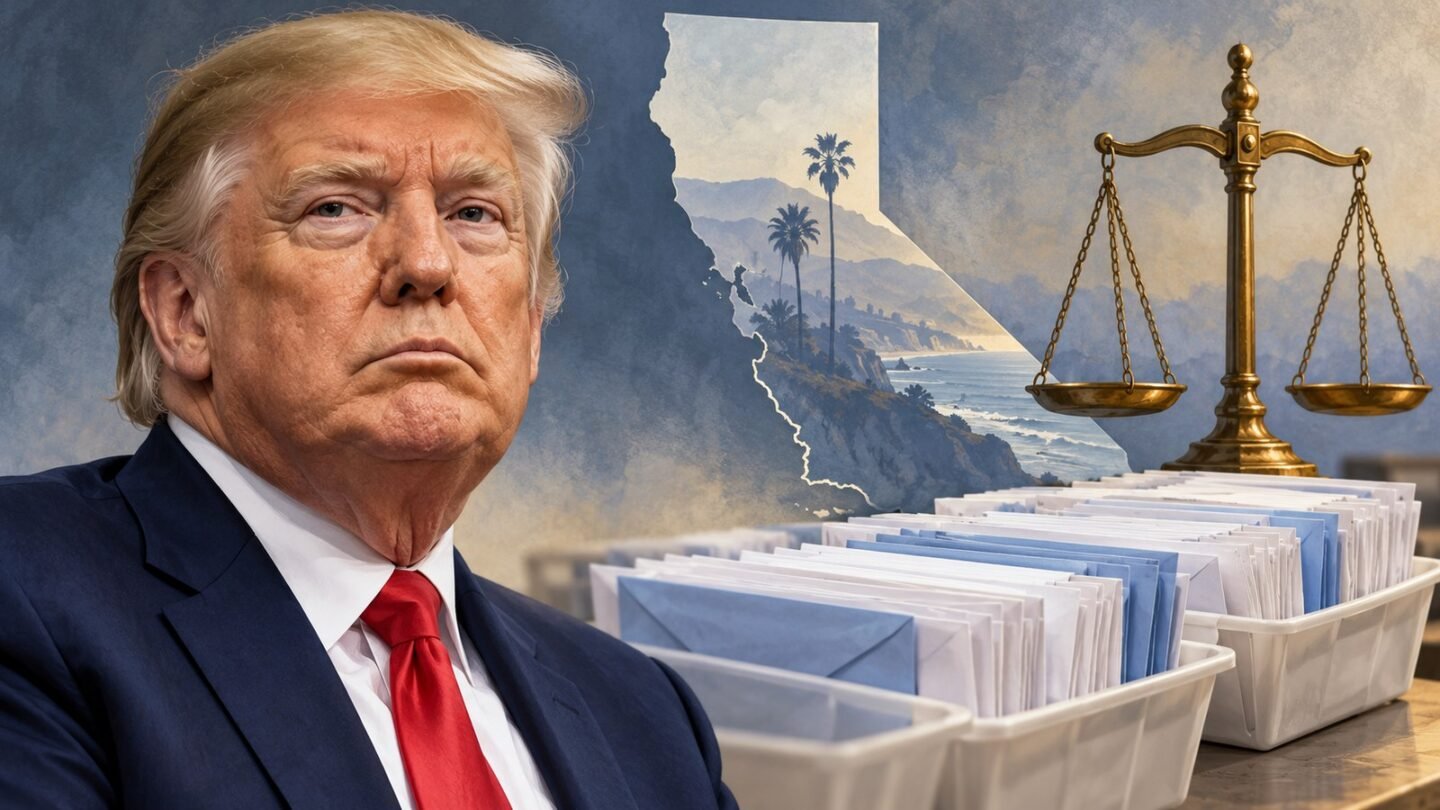
California ballots at the center of a citizenship dispute can continue through the state’s existing counting process after the Ninth U.S. Circuit Court of Appeals on October 30 rejected the Trump administration’s emergency request to have them separated and withheld pending verification.
The 2-1 decision followed U.S. District Judge David O. Carter’s October 28 refusal to issue a temporary restraining order. The Justice Department wanted special handling of ballots returned by people on a list of approximately 20,000 individuals it suspects may not be U.S. citizens.
The list is disputed, and it is not a confirmed count of illegal votes. Reuters reported that the department had not disclosed how many people on it had actually submitted ballots.
Why the court rejected the California ballots request
The October 30 appellate order denied an injunction pending appeal, leaving the requested restrictions off the counting process while the litigation continues.
The majority concluded that the government had not met the demanding standard for emergency intervention. It identified risks to eligible voters and election operations, alongside doubts about the reliability of the federal list.
The panel also considered the Purcell principle, which cautions courts against changing election procedures close to voting. Its concern was especially strong because the election was already underway.
What the Justice Department alleged
In its October 15 lawsuit announcement, DOJ said federal agencies had compared publicly available California voter-registration records with immigration information to identify people believed likely to be noncitizens.
The department described the analysis as ongoing. It alleged that California officials had refused to cooperate with efforts to review the names and separate ballots from suspected ineligible voters.
First Assistant U.S. Attorney Bill Essayli argued that the requested action would protect citizens against vote dilution. That is the government’s stated justification, rather than a judicial finding that every person flagged by its records was ineligible.
Both sides recognize that noncitizens cannot lawfully vote in federal elections. Their dispute concerns the evidence supporting these particular allegations and whether the federal government can compel the requested changes to state election procedures.
Why California challenged the proposed remedy
California Attorney General Rob Bonta defended the state’s eligibility safeguards and argued that the federal demand could exclude lawful voters. His office cited the risk of disruption, the state’s constitutional role and the danger of last-minute changes.
Bonta’s October 30 statement described three separate rulings that week: dismissal of an earlier appeal on October 26, Carter’s denial on October 28 and rejection of renewed appellate emergency relief on October 30.
The first appellate decision concerned whether the district court had been given enough time to consider the request. It should not be confused with the later ruling reviewing the denial of emergency relief.
The wider debate over citizenship data also appears in Hourly Times’ earlier coverage of federal voter-records litigation. That report concerns a separate case, rather than this California ballots dispute.
What Carter found about ballot handling
Carter’s written order raised concerns that the proposed segregation process would require major technological and administrative changes, including staff retraining, while voting was underway.
He also concluded that the requested remedy would likely conflict with federal voting protections. His analysis addressed the National Voter Registration Act’s restrictions on systematic removal programs shortly before federal elections, alongside protections against unequal voting procedures.
The district court treated the practical effect of withholding ballots as important even though DOJ called its proposal temporary. Carter warned that officials might not complete verification in time for certification deadlines.
The dissent and what happens next
Judge Patrick Bumatay dissented, arguing that separating the disputed ballots would preserve time for citizenship checks without itself canceling votes. He viewed the proposal as a legitimate way to prevent unlawful voting.
The ruling addresses immediate relief during an appeal, rather than finally resolving every claim in the underlying lawsuit.
The majority rejected emergency relief. That decision does not establish the citizenship of each person on the list, and it does not authorize noncitizens to vote.
The litigation continues ahead of the November 3 midterm elections. For now, the October 30 order leaves California ballots subject to the state’s existing procedures rather than the special segregation process DOJ requested.