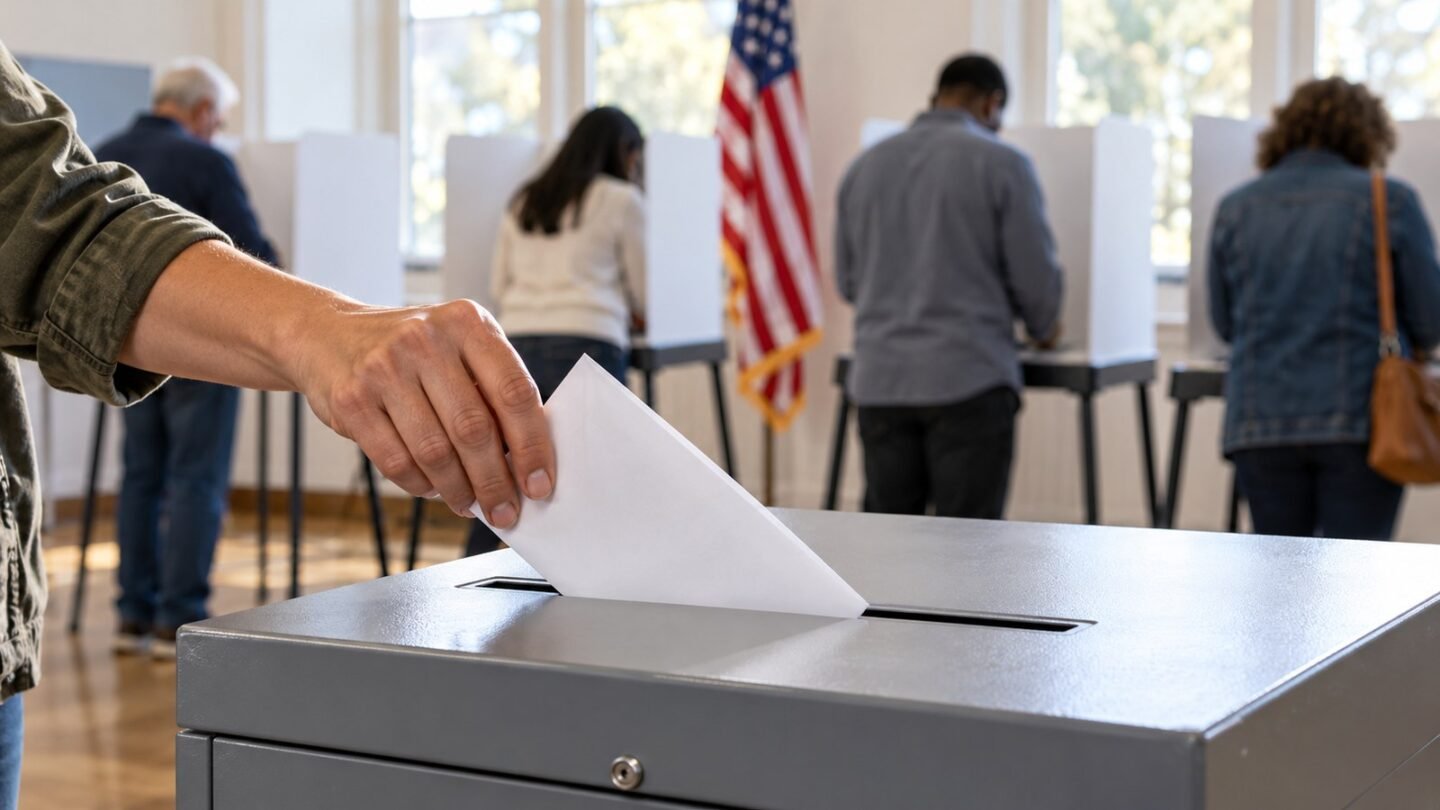
Early voting has passed 31 million participants ahead of the November 3 midterm elections, according to an October 27 Spectrum News report. The report cited participation data from 47 states and the District of Columbia.
The milestone is a dated snapshot of participation before Election Day. It does not identify which candidates those voters supported, establish a final turnout record or show which party will control Congress.
Early voting reaches a reported 31 million
Spectrum published its report at 9:27 a.m. Eastern on October 27. Separately, an October 26 evening update attributed to University of Florida political scientist Michael McDonald reported that at least 31 million people had voted in the general election.
The University of Florida Election Lab maintains a national tracker of ballots cast before Election Day. Its website explains that states do not all provide daily updates and that some information comes directly from election officials rather than publicly available files.
That reporting schedule matters when comparing totals. A figure should be read alongside its source and update date, rather than treated as an exact count of everyone who has voted at the moment a reader sees it.
The tracker separates in-person participation from returned mail ballots. A ballot requested or sent to a voter is a different measure from a ballot returned, so requests alone should not be described as completed votes.
Participation figures do not reveal candidate choices
The Election Lab also publishes party-registration information where available. It cautions that those figures describe voters’ registration, rather than actual votes for candidates.
Consequently, a reported advantage among registered Democrats or registered Republicans cannot be read as a confirmed lead in a congressional race. The national participation figure also does not provide a district-by-district election result.
Hourly Times’ coverage of first-day midterm voting records in Texas’ five largest counties illustrates another important distinction: an opening-day benchmark is different from cumulative participation across the entire voting period.
Those Texas records concerned the first day of voting. They did not establish the final statewide turnout or determine which candidates would win.
What voters are deciding in the midterms
Congressional elections determine representation in the House and Senate and which party holds a majority in each chamber. These are separate contests across states and districts, rather than one nationwide vote for control of Congress.
USAGov explains that all 435 House seats are contested in midterm election years. House members serve two-year terms, giving voters an opportunity to choose their representative every two years.
Senators serve six-year terms, with roughly one-third of the Senate elected every two years. Because those terms are staggered, not every state necessarily has a regularly scheduled Senate contest on its ballot.
How to check remaining voting options
For people who have not yet voted, early voting schedules and requirements depend on where they live. USAGov says most states offer an in-person voting period before Election Day, but the available process varies.
Voters should use USAGov’s early-voting guidance and consult their state or local election office for current locations, opening hours and applicable rules. A schedule from another state should not be assumed to apply locally.
Mail-ballot rules also differ. Some states require an excuse for absentee voting, while others do not; some automatically send ballots to registered voters through vote-by-mail programs.
USAGov advises checking both the request deadline and the return deadline. Voters should establish whether their state’s deadline concerns a postmark or receipt by the election office.
Depending on state rules, options besides postal mail may include an authorized drop box or returning a ballot in person. The local election office can confirm the permitted methods and locations. That office, rather than a national participation tracker, is the appropriate source for instructions about an individual voter’s polling place and ballot-return procedure.
The reported early voting milestone documents participation before Election Day. It should remain clearly attributed and dated as voting continues, without being presented as a forecast of the final result.