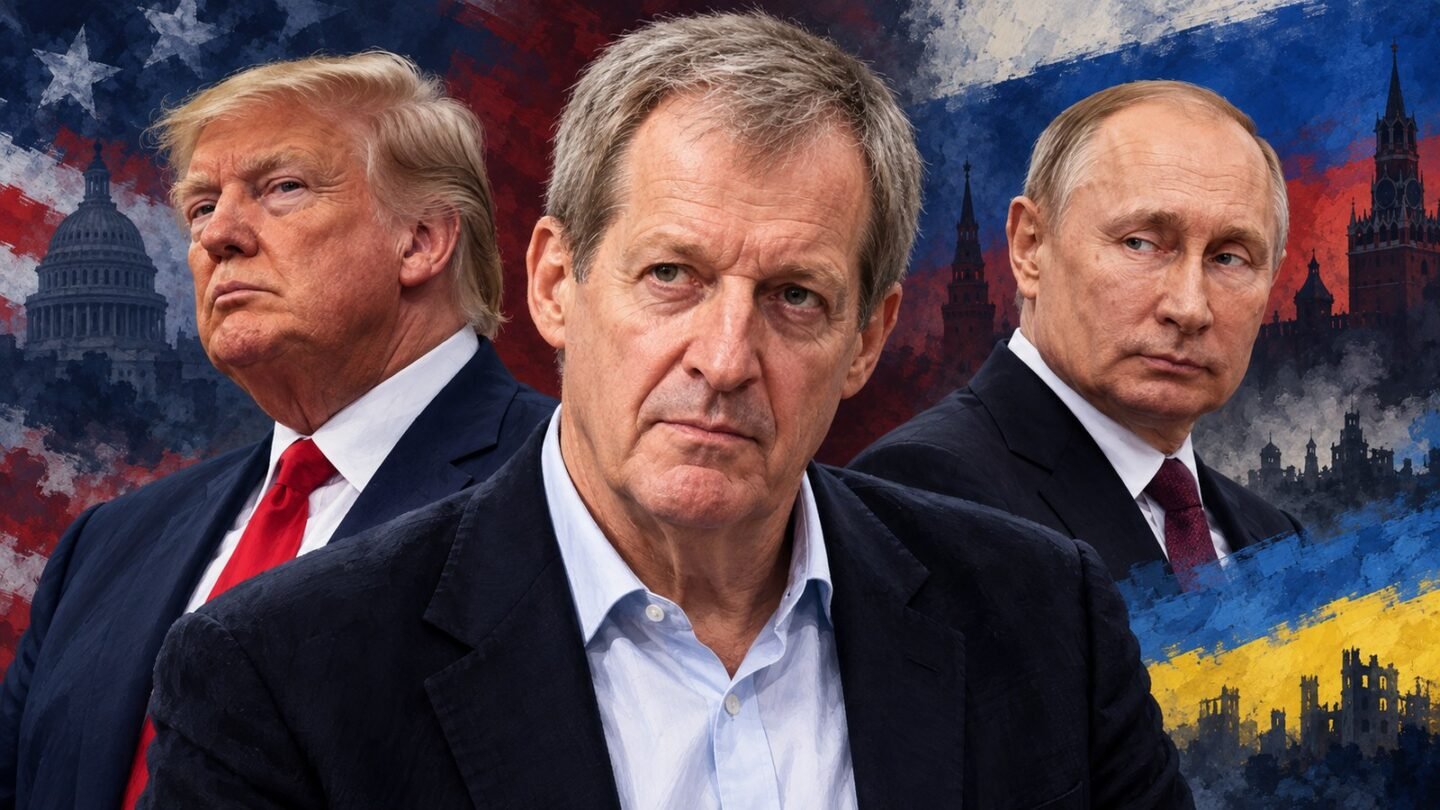
Alastair Campbell criticized President Donald Trump’s approach to Russia after U.S. envoy Steve Witkoff praised Vladimir Putin during an October 21, 2026, meeting in St. Petersburg following the release of American detainee Stephen Hubbard.
The British commentator argued that Washington was favoring Moscow in Russia’s war against Ukraine, according to an October 22 report by The London Economic. That assessment is Campbell’s political judgment, rather than an official finding about the president’s intentions.
Alastair Campbell challenges the administration’s approach
The London Economic reported that Campbell criticized Witkoff during appearances on BBC Newsnight and LBC on October 21. His objections concerned both the praise for Putin and the administration’s treatment of Ukrainian President Volodymyr Zelenskyy.
Campbell is a writer and broadcaster who previously served as spokesman, press secretary and communications director for British Prime Minister Tony Blair. He now co-hosts The Rest Is Politics with former British Cabinet minister Rory Stewart.
His own website published an October 21 episode listing that questioned whether Trump was firmly aligned with Putin and examined European concerns about the war. That provides context for his criticism, without independently establishing every conclusion discussed by the presenters.
The distinction between a statement and its underlying claim matters. Reporting that Alastair Campbell believes American policy favors Moscow does not establish that Trump has agreed to help Russia win the war.
What prompted Witkoff’s praise for Putin?
Witkoff thanked Putin after Russia released Hubbard, a 74-year-old retired teacher from Michigan who had been detained since 2022. ABC News reported that the envoy described the Russian leader as a humanitarian during their meeting.
Hubbard had been accused by Russian authorities of fighting as a mercenary for Ukraine. His family and U.S. officials disputed the allegation, and the State Department designated him wrongfully detained.
Hourly Times’ earlier report explains Hubbard’s release after more than four years in custody. His freedom was a concrete development, separate from whether the wider negotiations would produce an agreement to end the war.
Vice President JD Vance defended Witkoff’s complimentary language, emphasizing the importance of bringing an American home. Trump related the description to the particular act of releasing Hubbard and avoided giving an unqualified endorsement of Putin, according to ABC News.
Those responses explain the administration’s position on the diplomatic exchange. They were not identified in the reporting as direct replies to Campbell’s later criticism.
The sanctions and diesel decisions have defined limits
The policy debate extends beyond the envoy’s language. An October 16 executive order waiving specified sanctions and duties states that Trump certified the measures were in the national interests of the United States.
The order concerns provisions of the Lindsey O. Graham Sanctioning Russia and Iran Act of 2026. It also explicitly preserves certain sanctions imposed under earlier executive orders, so describing it as the removal of every Russia sanction would be inaccurate.
Separately, Treasury’s General License 135, dated October 9, authorizes specified transactions involving Russian-origin diesel through April 7, 2027. The authorization includes sale, delivery, offloading and importation, subject to its stated exception concerning certain Russian government accounts.
A license permits transactions; it does not establish how much fuel was delivered or how much consumers saved. Hourly Times’ coverage of the dispute over sanctions relief and Russian diesel explains that wider policy context.
Earlier pressure and future negotiations remain relevant
The record also includes earlier pressure on Moscow. On October 22, 2025, the Treasury Department announced sanctions against Rosneft and Lukoil, linking the action to Russia’s failure to commit seriously to ending the war.
That earlier announcement does not resolve whether the administration’s current approach is effective. It does show why the debate should examine specific decisions and dates, rather than reduce the entire policy record to a single description.
Alastair Campbell’s criticism focuses attention on that disputed approach. The next diplomatic step discussed during Witkoff’s visit was the possible resumption of talks involving the United States, Russia and Ukraine; the meeting itself did not establish a completed peace settlement.