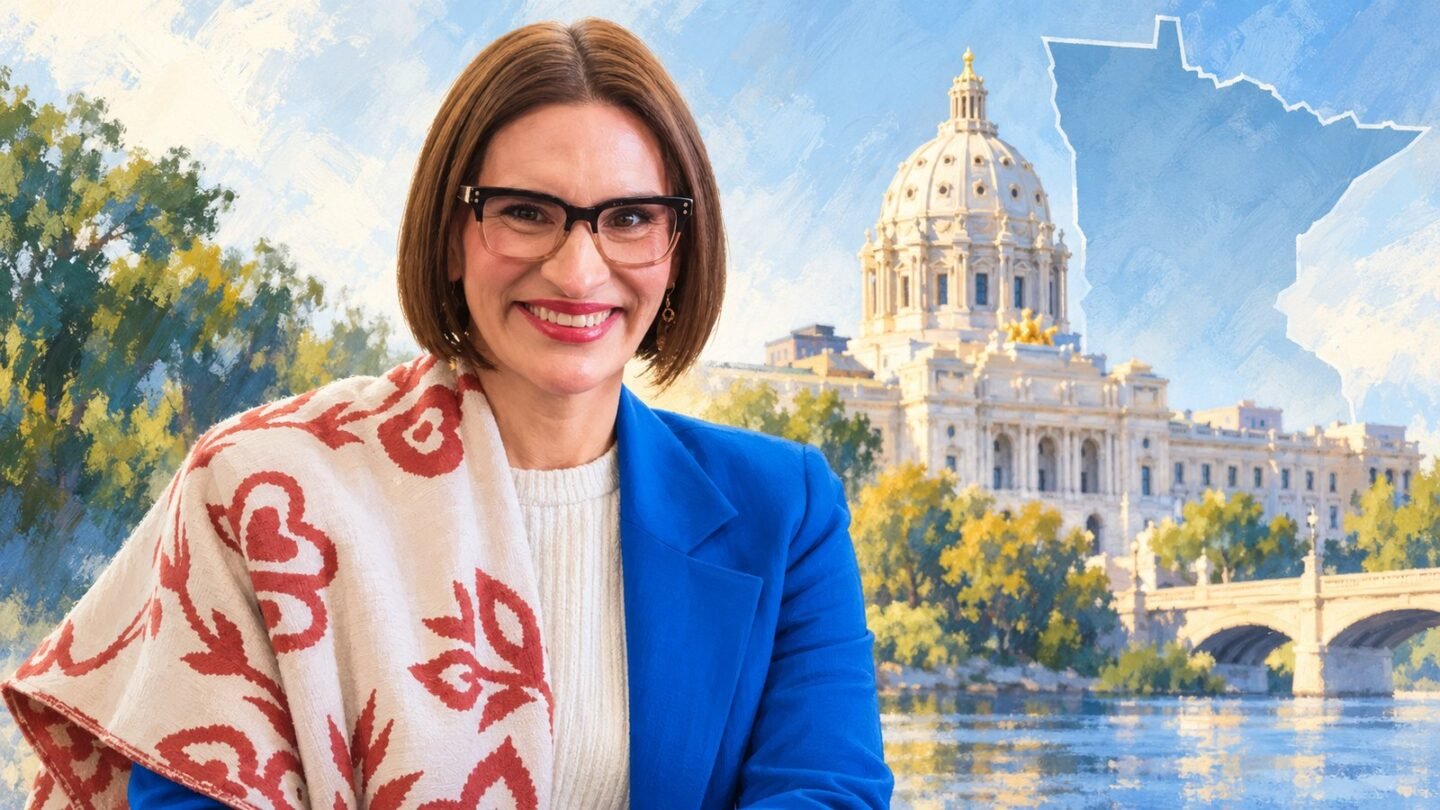
Peggy Flanagan is making opposition to Donald Trump a central part of her Minnesota Senate campaign, pledging to represent the state rather than the president as voters prepare for the November 3, 2026, election.
The lieutenant governor’s message connects that promise to her Ojibwe name, Gizhiiwewidamookwe. In the statement, she translates the name as “Speaks in a Loud and Clear Voice Woman” and describes the kind of senator she intends to become.
Flanagan is the Democratic-Farmer-Labor nominee in the contest to succeed retiring Democratic Sen. Tina Smith. Republican nominee Michele Tafoya, a former sports broadcaster, is also seeking the open seat, according to Minnesota Public Radio and WTIP.
Peggy Flanagan frames her campaign around Minnesota
The statement presents a campaign pledge, not a description of an office she already holds. Minnesota’s official biography identifies Flanagan as lieutenant governor and a member of the White Earth Band of Ojibwe.
Her Senate campaign website similarly argues that Washington needs leaders who understand families’ financial pressures. It criticizes Trump’s policies and presents her candidacy as a way to bring that experience into federal policymaking.
The campaign also says she would become the first Native American woman to serve in the U.S. Senate if elected. That remains a conditional historical milestone: the election has not yet taken place.
Her use of her Ojibwe name places her own description of her identity alongside a political promise about representation. The English meaning should be attributed to Flanagan, rather than presented as an independently established linguistic translation.
The policy proposals behind the pledge
Peggy Flanagan’s published campaign priorities give voters specific proposals to examine beyond the statement about Trump.
Her platform supports Medicare for All, broader Medicare and Medicaid coverage, and changes to prescription drug pricing. These are proposals she supports; the campaign page does not establish that Congress has enacted them or that they would automatically take effect if she wins.
On government ethics, the platform calls for restrictions on corporate campaign money, donor disclosure and a ban on stock trading by federal elected officials, including members of Congress and the president.
Those positions help define the agenda she says she would pursue. Whether any proposal advances would depend on the legislative process and support beyond a single senator.
Tafoya contests Flanagan’s account of independence
The candidates’ disagreement over Trump was prominent during their October 16 debate at MPR’s headquarters in St. Paul. MPR reported that Trump had endorsed Tafoya, while Tafoya was presenting herself as willing to depart from her party.
Flanagan argued that the endorsement undermined that claim of independence. Tafoya challenged Flanagan’s record in state government, including her accountability for fraud problems in state programs.
Flanagan responded that Gov. Tim Walz had taken responsibility for addressing fraud and said her work had focused more on other administration priorities. Those exchanges represent the candidates’ competing arguments, not a finding that either campaign’s characterization is conclusively established.
MPR also reported disagreement over tariffs: Flanagan criticized their effect on Minnesota industries, while Tafoya defended them as a negotiating tool. That dispute offers a concrete policy comparison alongside the broader campaign argument about Trump.
What voters can check before November 3
Peggy Flanagan’s official state biography describes work on housing stability and homelessness, as well as earlier service on the Minneapolis Board of Education. Those records provide background that voters can compare with her federal campaign promises.
The biography also lists her leadership of the Minnesota Interagency Council on Homelessness and work with the Young Women’s Initiative. These are state-government responsibilities. Her Senate bid seeks a different role, involving federal legislation rather than the executive duties described in that record.
Minnesota’s secretary of state says absentee ballots became available September 18. The state’s separately defined early-voting process, which lets voters place ballots directly into a counter, began October 16.
The last day to vote early in person is November 2, and ballots must be received by November 3. Voters can use the secretary of state’s official voting guidance to check their options before those deadlines.