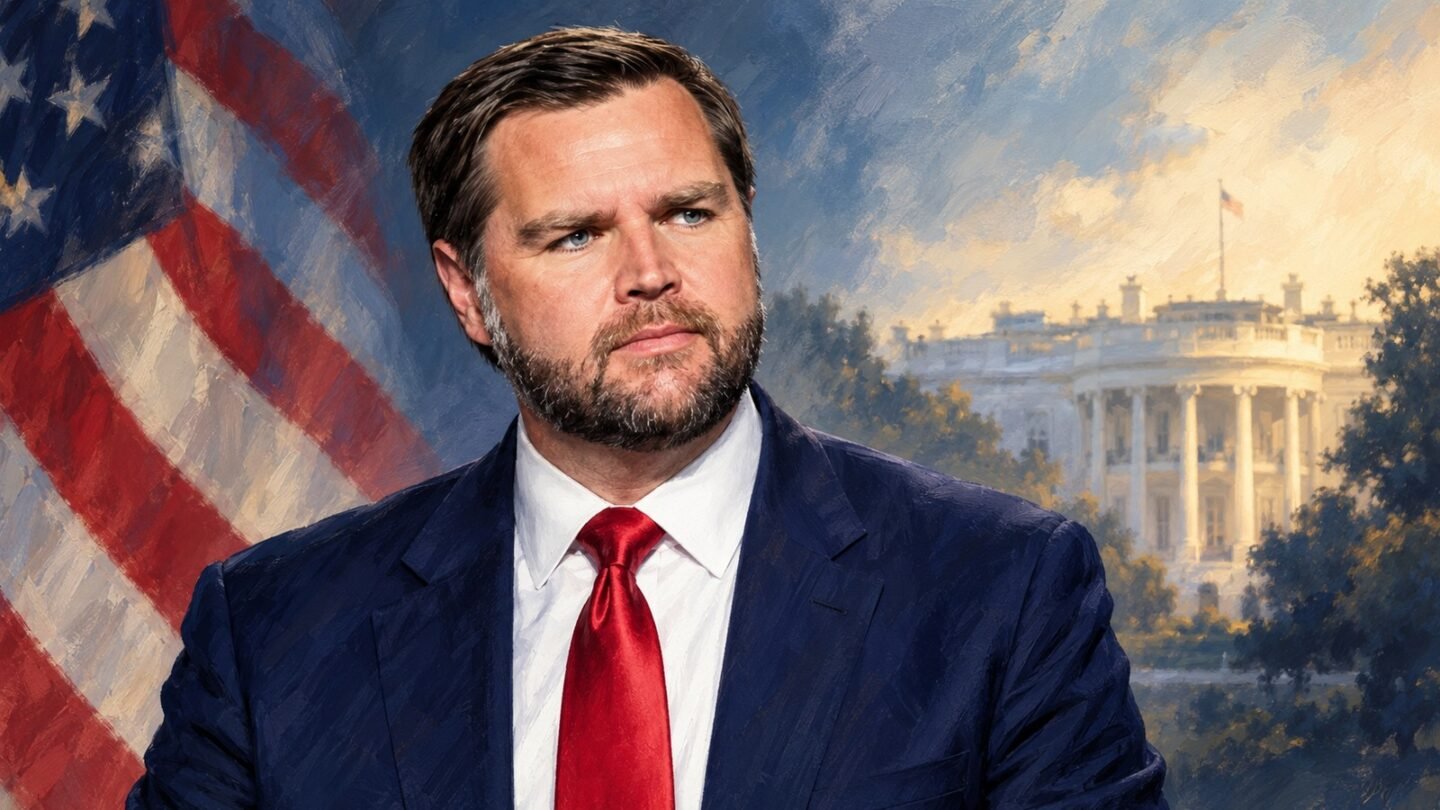
JD Vance says he has not decided whether to run for president in 2028, leaving open the possibility that the vice president could sit out the next race despite widespread expectations about his political future.
Asked during a CBS News town hall whether there was a chance he would not run, Vance replied: “Of course there’s a chance.” The Michigan program aired on October 17, 2026.
His answer was an acknowledgment of uncertainty, not an announcement that he had abandoned a campaign. He described family considerations and indicated that the approaching midterm elections remained his immediate priority.
JD Vance cites family as 2028 remains undecided
Vance pointed to the four young children he shares with his wife, Usha, and described a distinction between her interest in public service and her feelings about electoral politics.
He said she values public service but has never particularly enjoyed politics. That was his description of her views; it should not be presented as a new statement from Usha Vance herself.
He also described himself as someone who delays thinking about major personal decisions. Rather than identifying a campaign launch date, he suggested he would give the question more attention after the November elections.
CBS published a video page for the exchange about a presidential run. Its October 18 posting date should be distinguished from the program’s Saturday evening broadcast.
Voters pressed him on the administration’s record
The conversation was part of a broader town hall moderated by Tony Dokoupil. Voters questioned Vance about household costs, the war with Iran, immigration enforcement and other administration policies.
Vance acknowledged that gasoline prices were too high while defending the administration’s approach. He argued that instability in the Middle East was affecting energy markets and that the government was working to prevent further disruption.
Those explanations were his policy arguments. Reporting that he made them does not independently verify every factual claim about fuel markets or the effect of government decisions.
On immigration, the discussion included criticism of enforcement practices and Vance’s language about employment-based visa holders. He acknowledged that his rhetoric could have been imperfect and said his criticism concerned employers’ power over workers.
The program also raised military accountability. Its questions put the vice president’s defense of current policy alongside the practical consequences described by voters, rather than focusing solely on a distant presidential campaign.
Later remarks addressed a possible Trump endorsement
JD Vance continued discussing the possibility of running after the CBS broadcast. In an October 19 interview with 2WAY, he said he believed President Donald Trump would endorse him if he entered the race, according to USA TODAY.
He also said he had not discussed a presidential bid with Trump. His expectation of support was therefore a prediction, not an endorsement announcement from the president.
Vance acknowledged that Trump might prefer to let candidates compete before choosing a favorite, given the influence his endorsement could carry among Republicans. He again emphasized the immediate task of supporting Republican candidates in the midterms.
These remarks leave both possibilities open. A politician can discuss the support he might receive if he runs while still saying he has not decided whether to become a candidate.
What his comments establish—and what remains opinion
The verified development is that JD Vance publicly left his 2028 plans unresolved. Calling him a possible successor to Trump describes political expectations; it does not establish that he will enter the race, win a nomination or become president.
His family explanation also does not establish that he plans to leave his current office. The question concerned seeking the presidency in 2028.
Whether Vance is among America’s worst vice presidents is a personal or historical judgment requiring stated criteria. The town hall did not measure that ranking, and no scientific survey supporting it accompanies the supplied claim.
Readers can assess his policy positions, public answers and performance separately from his electoral plans. For now, his comments support a straightforward description: a possible presidential contender who says a final decision is still ahead.