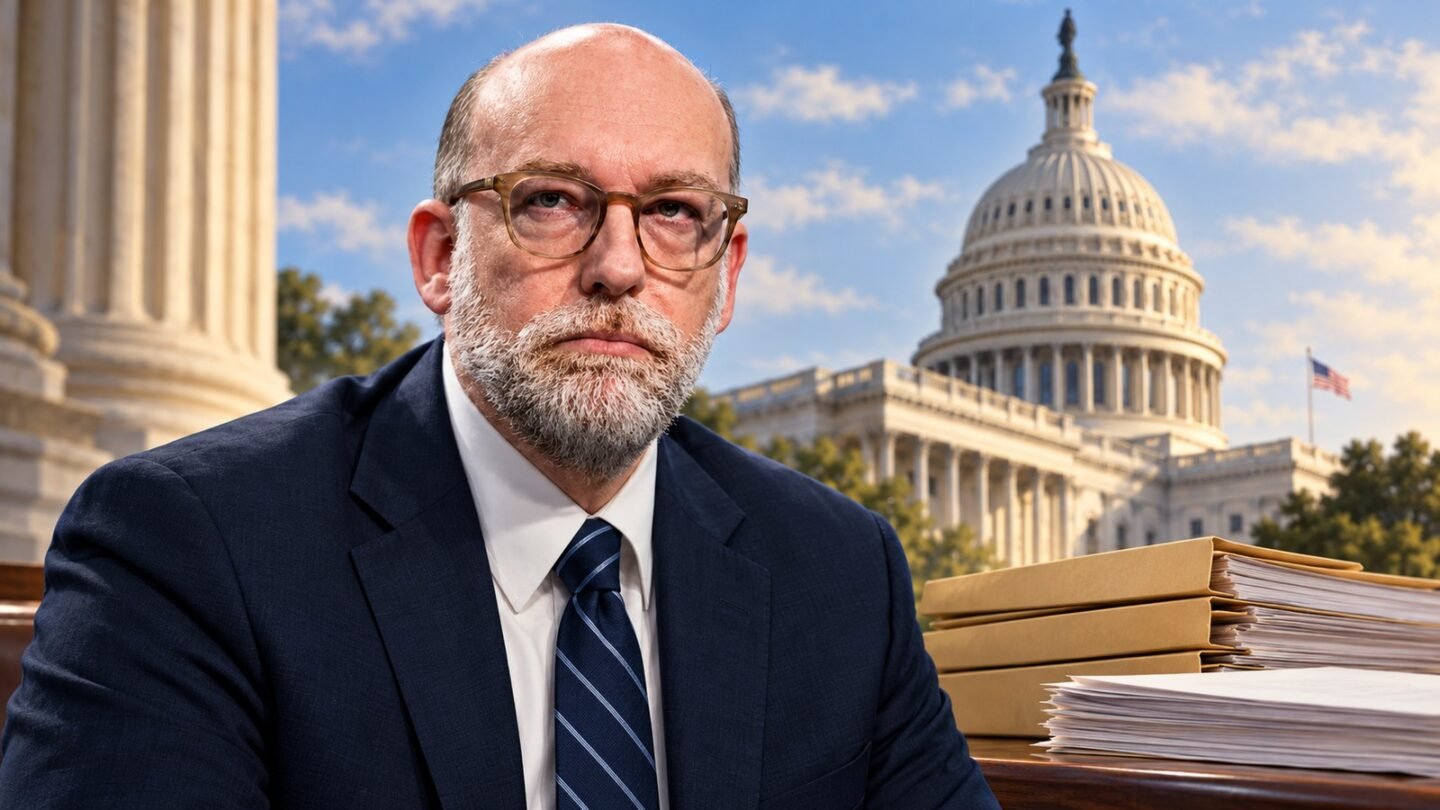
Russ Vought’s contribution to Project 2025 and his subsequent actions as President Donald Trump’s budget director give Congress a documented record to examine. The issue is how ideas in the conservative blueprint relate to actual government decisions, particularly workforce changes and restrictions on spending approved by lawmakers.
Congressional scrutiny is already underway through hearings and requests for records. A broader inquiry could examine policy development and compliance with spending laws, but an investigation would not itself establish criminal wrongdoing.
Russ Vought’s Project 2025 contribution
The Heritage Foundation’s 2023 policy volume, Mandate for Leadership: The Conservative Promise, identifies Vought as the author of its chapter on the Executive Office of the President.
His chapter argues for a strong presidential role in directing federal agencies. It presents the Office of Management and Budget as a central coordinator of budget, regulatory and management policy, and advocates greater control by presidential appointees over agency decisions.
That establishes his involvement in the blueprint. It does not mean that every subsequent administration action originated in that document. Establishing a direct connection would require comparing proposals with decision records, instructions and the officials responsible for carrying them out.
A signed directive provides a concrete example
On February 26, 2025, Vought and Charles Ezell, then acting director of the Office of Personnel Management, issued joint workforce-reorganization guidance to executive departments and agencies.
The memorandum instructed agencies to prepare reduction-in-force and reorganization plans under Trump’s workforce initiative. Its stated objectives included fewer full-time positions, a smaller property footprint, reduced budgets, higher productivity and better public services.
Those were the administration’s stated goals, rather than independently established outcomes. The directive also referred to compliance with applicable law and included exclusions for specified personnel and functions.
For an oversight inquiry, a signed memorandum offers a more specific starting point than a general claim that the entire government is following Project 2025.
Lawmakers have already sought answers
On March 10, 2025, then-House Oversight ranking member Gerald Connolly requested documents from 24 agencies about their responses to the February guidance. The Democratic committee announcement described an investigation into workforce-reduction plans and their effects on government services.
Russ Vought also appeared before the House Appropriations financial services subcommittee on June 30, 2026. Republican Chairman Dave Joyce said federal funds needed to be used as Congress intended, including for programs the administration opposed.
In his submitted testimony, Vought defended the administration’s spending reductions and government reforms as progress toward Trump’s fiscal agenda. That position is part of the record lawmakers can question alongside the objections.
Spending restrictions face a separate legal test
A September 29, 2026, Government Accountability Office review addressed Trump’s September 25 proposal to cancel funding from 11 appropriation accounts. GAO reported that OMB had issued instructions withholding the proposed amounts from obligation.
GAO concluded that the Impoundment Control Act did not authorize withholding the money beyond the end of fiscal year 2026. It explained that the president could not use a cancellation proposal to force congressionally approved funding to expire without Congress rescinding it.
The review concerned a specific spending mechanism. It was not a criminal conviction of Vought or a ruling on every policy associated with Project 2025.
What a broader inquiry could establish
The existing hearing and document requests illustrate two ways lawmakers can examine agency decisions. An inquiry could seek communications, policy drafts, agency instructions and spending records to establish who made decisions, what legal authority they relied upon and how those decisions affected programs.
This would help separate the origins of a proposal from the question of whether an agency had authority to adopt it. An inquiry could also compare promised savings or service improvements with documented results. Those are questions an investigation could answer, rather than findings that should be assumed at its outset.
The verified record links Russ Vought to both Project 2025 authorship and official administration directives. Whether Congress should expand its scrutiny remains a political judgment. A useful inquiry would distinguish shared policy preferences, documented implementation decisions and any specific legal violations supported by evidence.