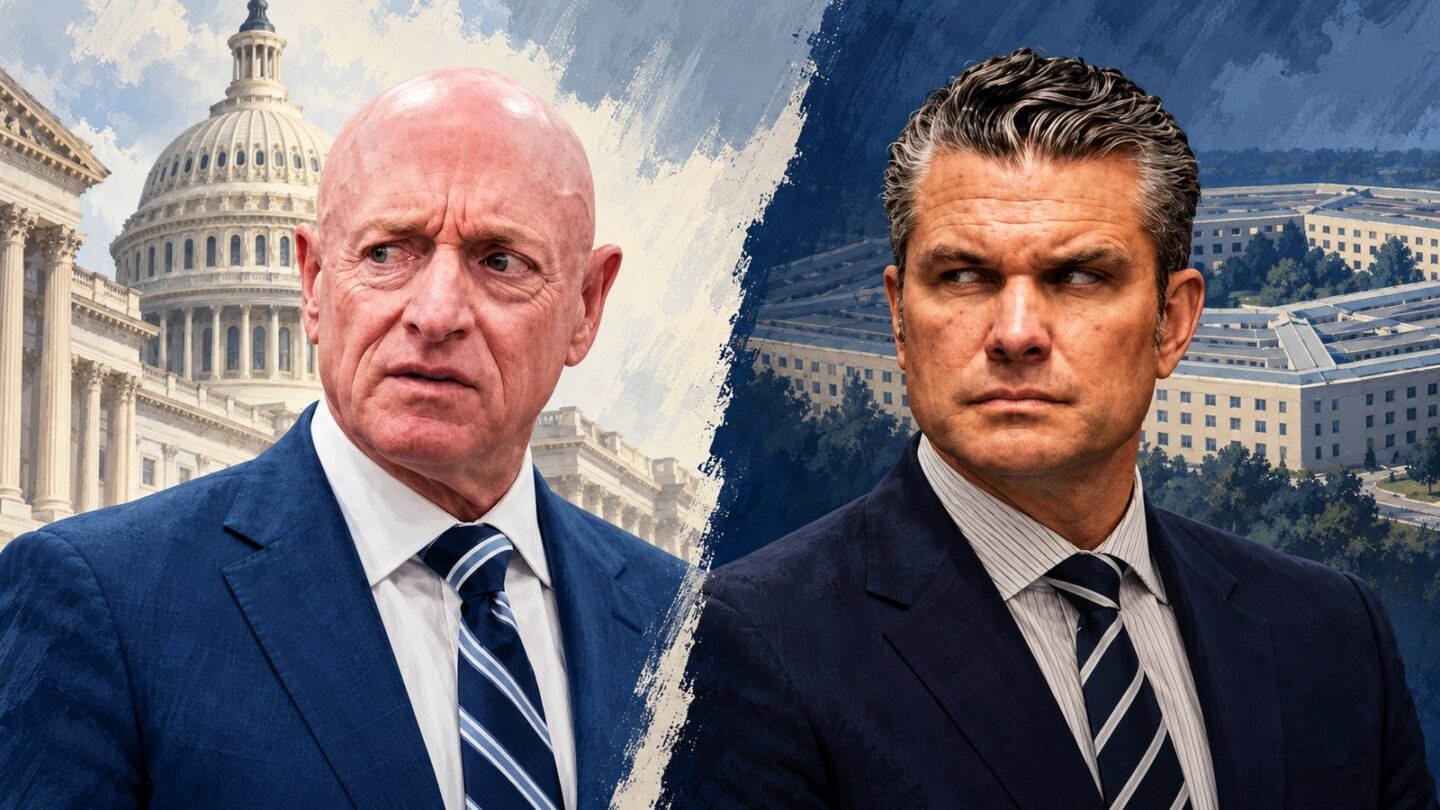
Mark Kelly has proposed legislation to prohibit public broadcasts of military executions after President Donald Trump canceled the planned livestream of Fort Hood gunman Nidal Hasan’s execution. The Arizona senator announced the No Public Executions in America Act on October 15, seeking a lasting restriction beyond the president’s reversal.
The proposal follows Kelly’s criticism of Defense Secretary Pete Hegseth and a reported call for his removal. The latest confirmed development is that the livestream was canceled; Hasan’s firing-squad execution remained scheduled for December 3, according to reporting on Trump’s announcement.
Mark Kelly Seeks a Ban Beyond One Execution
Kelly’s official October 15 announcement says the legislation would prohibit broadcasting military executions and restrict federal funding for recording or publicly distributing execution footage.
The senator argued that broadcasting a death would be dangerous and inconsistent with American values. His objection concerned public presentation of the punishment, rather than a claim that Hasan should escape accountability for the killings.
The published legislative text would cover live transmission as well as later publication or distribution. Its proposed restrictions would apply to federal officials and people acting under Defense Department authority in connection with military executions.
The text includes a limited exception allowing recordings for official purposes, including investigations, judicial proceedings, congressional oversight and historical records. Public release of those recordings would require a court order or an act of Congress.
It would also restrict federal spending on publicly distributed recordings of executions under other federal law, subject to specified exceptions. Those provisions describe a proposal; they should not be presented as a ban that has already become law.
The draft would apply to executions carried out after enactment, even when the death sentence had been imposed or approved before that date.
Removal Demand Came Before Trump’s Cancellation
TAG24 reported on October 10 that Mark Kelly had called for Hegseth’s immediate removal in a social media post the previous day. Its report quoted Kelly criticizing the secretary’s judgment and approach to military leadership.
AFP independently reported Kelly’s opposition to the public-execution proposal, including his view that Hasan should face justice. The senator compared public executions to practices associated with Iran and the Taliban.
These statements express Kelly’s political judgment about Hegseth’s fitness for office. A senator’s demand is not itself a dismissal decision, and the broadcast’s cancellation should not be described as the secretary’s removal.
What Trump Canceled and What Remained Scheduled
The Associated Press reported that the Pentagon confirmed the livestream plan on October 8 after Hegseth discussed public viewing. Hasan was convicted of killing 13 people and injuring 32 others in the 2009 Fort Hood shooting.
Reuters reported that Trump canceled the livestream on October 15 after political and religious opposition. Trump continued supporting the execution and said victims’ families could witness it in person if they chose.
The Pentagon said Trump and Hegseth were aligned on dropping the broadcast, according to AP. That response is important context alongside criticism of the original announcement.
Hourly Times previously covered Trump’s cancellation of the execution livestream. Canceling the broadcast did not cancel the death sentence, and reporting noted that legal challenges could affect the announced execution date.
Poll Distinguished Punishment From Public Broadcasting
An ABC News/Washington Post/Ipsos survey found that 80% of U.S. adults said Hasan’s execution should not be livestreamed, while 18% said it should and 2% skipped the question.
The poll surveyed 2,545 adults from October 9 through October 13 using Ipsos’ probability-based KnowledgePanel. Its full-sample margin of sampling error was plus or minus two percentage points.
Respondents were asked about broadcasting regardless of whether they supported execution by firing squad. The result therefore measures opposition to the livestream, rather than support for removing Hegseth or opposition to every use of capital punishment.
The poll’s published findings and methodology provide the underlying context. For Mark Kelly’s proposal, the remaining question is whether Congress adopts statutory restrictions after the administration abandoned this particular broadcast.