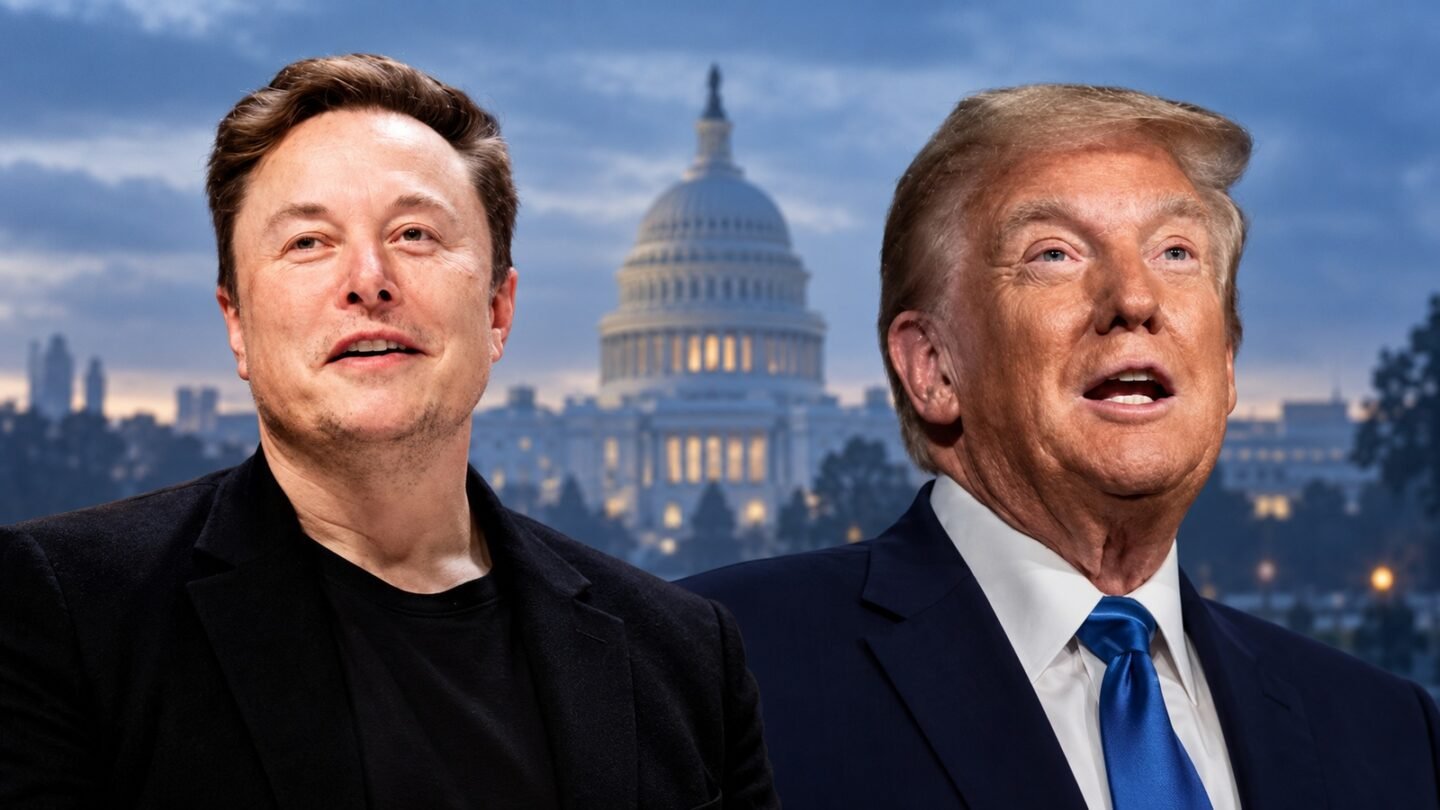
Musk midterm donations have put concentrated political wealth under scrutiny ahead of the November 3 federal election. The Associated Press reported that Elon Musk gave more than $276 million to Republican-aligned groups since July, identifying him as the biggest known donor in the midterm contests.
The report supports concern about the scale of one individual’s financial involvement. It does not establish that election results have been purchased. Whether such spending undermines representative government is a political judgment that should be distinguished from evidence of a specific legal violation.
Romeo defended the investments as helping Republicans communicate their message, AP reported.
What the Musk midterm donations figures cover
AP identified $158 million for the Senate Leadership Fund, $76 million for America PAC and $10 million for Lone Star Liberty PAC, which supports Texas Republican Ken Paxton. AP said America PAC spokesperson Andrew Romeo confirmed the figures.
Those three amounts total $244 million: $158 million plus $76 million plus $10 million. They are a partial breakdown, rather than a complete accounting of the reported total.
Reuters separately reported approximately $366 million across the election cycle, with $276 million since July. Its breakdown also identified $20 million for the Congressional Leadership Fund, $10 million for the Republican Governors Association and $2 million for the Republican Attorneys General Association.
These are attributed reporting figures. They should not be presented as a new, independently audited total assembled from every committee’s filings. The reporting period also matters: a figure for donations since July is different from a total covering the entire cycle.
Super PAC donations follow different rules
The Federal Election Commission’s guidance on super PAC contributions explains that committees making only independent expenditures can accept unlimited contributions from permitted sources. The same applies to the non-contribution accounts of hybrid PACs.
This does not mean every political organization has unlimited fundraising authority. The FEC’s 2025–2026 contribution chart generally limits an individual’s donation to a federal candidate committee to $3,500 per election. A primary and a general election count separately for this purpose.
Nor does unlimited fundraising mean that every source is permitted. The FEC lists restrictions covering foreign nationals, federal contractors, national banks and federally chartered corporations. Those general rules do not establish that a particular donor violated them.
The distinction helps explain how very large donations can exist alongside limits on direct candidate contributions. It also means an assessment of Musk midterm donations must identify the recipient and transaction type before drawing a legal conclusion.
Independence and disclosure remain important
The FEC defines an independent expenditure as a communication expressly advocating a clearly identified candidate’s election or defeat that is not coordinated with the candidate, campaign or political party. Such expenditures are not subject to an amount limit.
Its explanation of independent expenditures also warns that coordinated communications can become in-kind contributions subject to applicable limits and prohibitions. Establishing coordination requires evidence about the relevant conduct, rather than the size of a check alone.
Disclosure provides another route for scrutiny. FEC guidance says nonconnected committees file regular reports that are available through its campaign-finance database. Committees making independent expenditures must disclose them through regular reporting and, when required, additional notices.
The agency also requires disclaimers identifying who paid for independent-expenditure communications. These requirements help distinguish the organization buying a message from the candidate benefiting from it. They do not answer every question about a donor’s motives or influence.
Financial influence and election outcomes are different questions
The supplied post describes this concentration of money as oligarchy. That is an argument about unequal political influence, not a legal finding that ballots were bought or officials accepted a corrupt exchange.
Money available for political communication is one measurable fact. Its effect on a particular voter, race or later policy decision requires additional evidence. Legal compliance and the democratic fairness of the rules are also separate questions.
The Musk midterm donations debate therefore warrants scrutiny of funding, independence and transparency. Claims about purchased outcomes need support beyond donation totals, while the broader argument over concentrated financial power remains a legitimate subject of public debate.