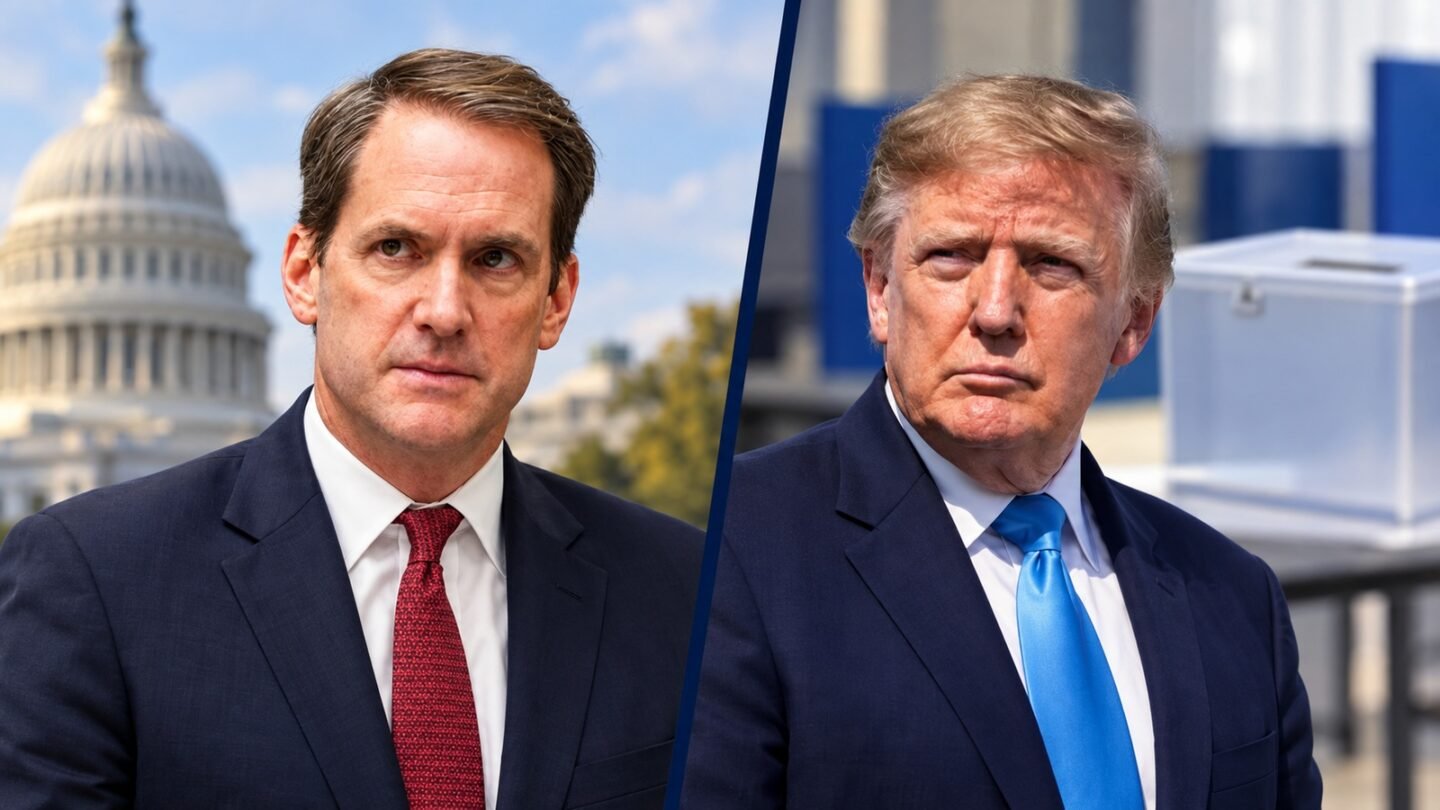
Rep. Jim Himes issued a midterm election warning on October 7, 2026, saying he expects President Donald Trump to dispute unfavorable results if Democrats gain power in Congress. The Connecticut Democrat spoke to reporters at his Stamford office, according to local reporting.
Himes is the ranking Democrat on the House Intelligence Committee. His warning concerns how Trump might respond after voting, rather than evidence that the upcoming results have already been rejected.
The distinction is important: the November 3 election has not happened. Neither a Democratic victory nor Trump’s response to that outcome can be reported as a completed event.
What Himes’s midterm election warning means
Westport Journal reported that Himes expected Trump to allege corruption after an unfavorable Election Day. Himes based that assessment on what he described as Trump’s pattern of challenging election outcomes he disliked.
He cited Trump’s response to the 2016 election as part of that argument, including his insistence that he had won the popular vote. Himes’s broader point was that a Republican defeat could prompt accusations about the voting process.
The concern was not new that week. In an October 6 CNN interview, Himes made a similar argument, connecting Trump’s election rhetoric with the aftermath of the 2020 presidential contest.
That interview confirms the substance of his concern, but it does not turn his assessment into proof of a future decision. Whether Trump challenges particular races, and what evidence he offers, remains to be seen.
The White House defended its election approach
The Connecticut Mirror included a response from White House spokeswoman Lauren Bis. She defended Trump’s record on election integrity and supported voter identification and citizenship verification measures.
Her response presented the administration’s actions as safeguards for legitimate voting. It did not directly resolve Himes’s prediction about how Trump would react to Democratic victories.
Separately, Reuters published an October 7 pool transcript in which Trump said his administration would closely monitor the election. He described honest elections and fair reporting as priorities.
Those statements establish the administration’s public position. They are not evidence that November’s votes have been counted or that any particular result is fraudulent.
January 6 is relevant, but the situations differ
The historical reminder in the circulating post refers to January 6, 2021. The National Archives’ record of the 2020 election confirms that violent unrest at the Capitol delayed completion of the electoral vote certification until the following morning.
The recorded outcome was 306 electoral votes for Joe Biden and 232 for Trump. Objections involving Arizona and Pennsylvania were not sustained, and their electoral votes were counted.
That record establishes what happened during the presidential election certification. It does not establish that the same events will occur after a congressional election.
Himes also expressed a qualification that the circulating headline leaves out. The Connecticut Mirror reported that he feared potential disruptions at polling places but considered another January 6 unlikely. He attributed that assessment to his view of Trump’s weaker public support.
That assessment, like his warning about election denial, is a political prediction. It should be attributed to him rather than treated as a guarantee of either violence or safety.
How results become official and what comes next
The U.S. Election Assistance Commission’s guide to results and certification explains that election-night totals are unofficial. Officials continue counting valid ballots and checking the results before certification.
The canvass reconciles election records, while audits and recount procedures vary by state. A delayed result or a change in preliminary totals therefore needs examination in its procedural context, rather than being treated automatically as evidence of wrongdoing.
Before his warning, Himes and Sen. Mark Warner issued an October 2 letter seeking timely intelligence assessments and greater public information about foreign election threats. That request concerned transparency about threats, not a declaration that the midterms had been compromised.
Hourly Times’ coverage of how the midterms could reshape congressional scrutiny of Trump explains the oversight stakes behind the contest.
The Federal Election Commission lists November 3, 2026, as the next scheduled federal general election. State election offices are responsible for certifying results. The next confirmed milestone is voting itself, followed by counting and the applicable certification procedures.