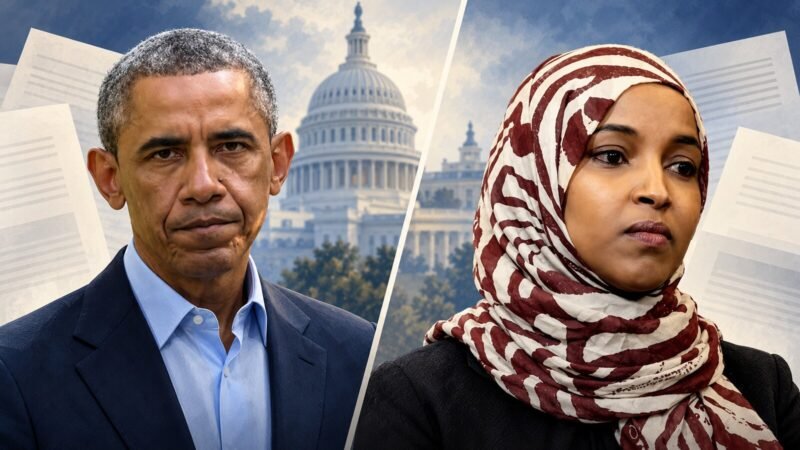
The Obama democracy warning remarks at Hamilton College in April 2025 and in a May 2026 television interview raised concerns about government pressure on universities, law firms and the justice system. The statements are documented, although a renewed social-media discussion brings together comments made more than a year apart.
Former President Barack Obama argued that constitutional protections require active defense, especially when officials use government power against people or institutions that disagree with them. His assessment is a political argument; individual claims of unlawful conduct require examination of the relevant evidence and court decisions.
What the Obama democracy warning said at Hamilton
Obama appeared at Hamilton College in Clinton, New York, on April 3, 2025, for a conversation with college President Steven Tepper. Hamilton published its account on April 7, while Obama published a transcript of the discussion on April 4.
In that published transcript of his Hamilton remarks, Obama distinguished disagreements over economic policy from concerns about the government’s treatment of dissent. He criticized pressure on universities involving students’ speech and federal actions targeting law firms because of the clients they represented.
Obama also challenged institutions to consider whether they had broken laws or violated their own values. If they had not, he argued, they should resist intimidation even when doing so carried financial costs.
His free-speech argument extended to people with views he disliked. Obama criticized efforts to prevent controversial campus speakers from being heard and urged students to answer objectionable ideas through debate. That context matters because his argument was about protecting disagreement, including disagreement within universities.
Justice Department independence was a separate concern
In an interview with Stephen Colbert that aired May 5, 2026, Obama discussed limits on executive power and the independence of criminal prosecutions. Reporting published the following day described his comments as an apparent criticism of Trump’s administration, although Obama did not name Trump in that discussion.
Obama argued that presidents should not direct the attorney general to prosecute chosen individuals. He distinguished presidential consultation over broad policy from intervention in decisions about particular charges or cases.
He also warned against using state power to punish political opponents or benefit allies. His proposed response included considering stronger legal safeguards for practices that previously depended on presidential restraint and institutional norms.
Related disputes remain contested. Hourly Times’ coverage of Jack Smith’s testimony about the Trump investigations examines the former special counsel’s defense of his decisions and Republican challenges to his methods. Accusations of political prosecution must be attributed to their speakers and assessed against evidence.
What the court-case figure establishes
An August 4, 2026, Reuters review identified rulings against the Trump administration in 75 of 93 cases addressing First Amendment arguments. Some decisions were preliminary, and 15 adverse rulings had been paused or overturned on appeal. The White House disputed the judiciary’s handling of the cases.
That August count is not an updated October total or a list of 75 final judgments that all remained effective. It documents substantial litigation, with outcomes subject to appeals.
A continuing example is Harvard’s research-funding dispute. Reuters reported that an appeals court heard arguments on October 5 over the administration’s termination of more than $2 billion in grants. Harvard described unconstitutional retaliation; the administration defended withholding funding over alleged failures to combat antisemitism. The hearing itself did not resolve the appeal.
Constitutional protections and competing positions
The First Amendment’s text protects speech, the press, religious exercise, peaceful assembly and petitions to government. Those protections provide concrete standards for evaluating disputed federal actions.
Trump’s administration presents itself as defending free expression. A January 20, 2025, executive order directed federal agencies to avoid unconstitutional restrictions on Americans’ speech and investigate alleged censorship under the previous administration.
The Obama democracy warning challenges whether government practice matches those commitments. A presidential statement and an executive order each express a position; neither substitutes for evaluating a particular action’s legality.
For readers weighing the Obama democracy warning, the useful questions concern specific conduct, the rights involved, the government’s stated justification and the current status of any court ruling. Agreement with the former president remains a political judgment, while his remarks and the documented legal disputes can be checked independently.