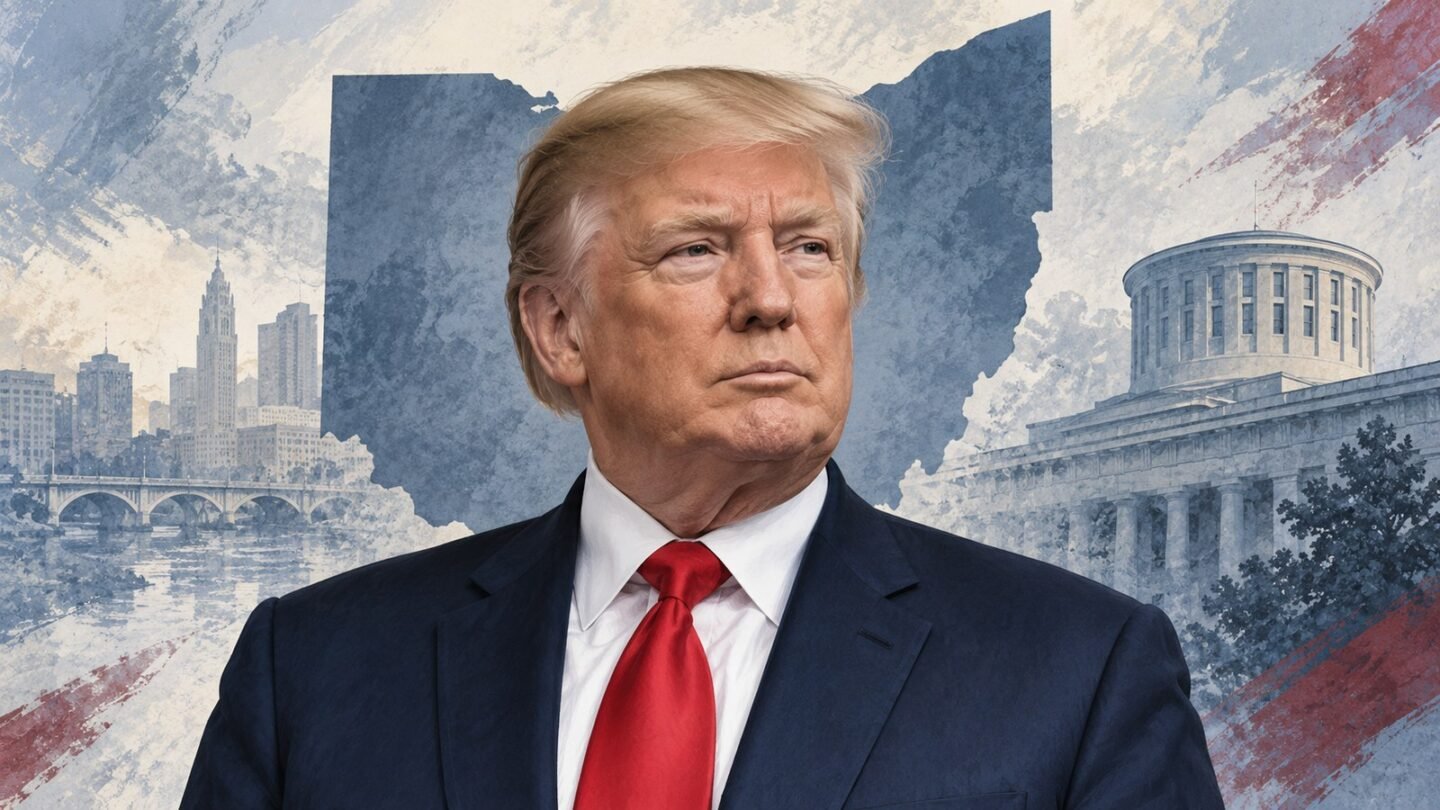
President Donald Trump suggested he would cooperate less readily with Democrat Amy Acton if she wins Ohio’s governor’s race, adding a question about federal-state relations to Midterm Elections 2026. The October 3 remarks in Vandalia linked his willingness to help with his relationships with Republican officials.
The statement warrants scrutiny, but its limits matter. Trump expressed a prospective attitude toward Acton, not an announced cancellation of a particular grant. The evidence reviewed for this article does not establish that an Ohio funding award was withdrawn because of the election.
What Trump said about helping Acton
The archived rally transcript places the exchange at approximately 1:18:31. Trump had been describing calls from Ohio Republicans seeking federal assistance when he contrasted those relationships with a possible Acton administration.
“But I’m not gonna help her probably.”
Donald Trump, Vandalia, Ohio rally, October 3, 2026; Roll Call Factbase transcript
Preserving “probably” is important. Omitting it makes the statement more absolute than the archived wording. Trump also described working differently with someone he assumed disliked him, framing the issue as a consequence of personal relationships.
Ramaswamy presented the Republican counterargument at the same event: a governor able to collaborate with the president could help attract investment and address household costs. That is a recognizable campaign case for political alignment. Whether cooperation should depend on personal affinity is a separate accountability question.
Why Ohio matters in Midterm Elections 2026
Ohio voters face two distinct contests. Acton is running against Republican Vivek Ramaswamy for governor. Republican Senator Jon Husted faces Democrat Sherrod Brown. The governor’s race concerns state leadership; the Senate contest contributes to the national struggle over congressional control.
NBC News reported that Trump’s visit was intended to strengthen both Republican campaigns. Husted was appointed after JD Vance became vice president, while Brown is seeking a return to the Senate. NBC also described Republican concerns about whether voters especially attached to Trump would participate when he is absent from the ballot.
Those concerns explain the turnout purpose of the rally. They do not demonstrate that Trump’s appearance helped or hurt either candidate. Measuring that effect would require additional evidence, rather than treating attendance or a forceful speech as an election forecast.
For Midterm Elections 2026, the cooperation argument asks voters to weigh access to the White House alongside candidate qualifications and policy choices. Democrats can question the fairness of that premise; Republicans can argue that working relationships produce results. Both positions should be tested against specific decisions.
Ohio had just received a disaster declaration
The funding discussion had an immediate backdrop. Husted’s Senate office announced on October 2 that Trump would grant Ohio a major disaster declaration following August storms. The office credited an effort involving Husted and the Ohio delegation to obtain expedited federal assistance.
Representative Troy Balderson’s separate announcement said the approval followed Governor Mike DeWine’s September 2 request and congressional advocacy. It described assistance for eligible people and communities, including disaster-related needs and recovery support.
These records are meaningful counterevidence to any suggestion that Ohio was receiving no help. Republican officials can point to a documented approval and explain their role in seeking it. The announcements do not establish that every eligible recipient had received money, or that partisan connections were a formal eligibility requirement.
The analytical distinction is between cooperation already documented and cooperation Trump suggested might change. A completed assistance decision cannot prove what he would do under a different governor. His campaign remarks likewise cannot establish that a future denial has occurred.
A campaign warning is not a funding order
The Constitution’s Appropriations Clause requires spending from the Treasury to follow appropriations made by law. A president’s rally comments do not themselves change those laws. Assessing a particular funding restriction would require examining the program, the governing statute and the actual administrative decision.
This article therefore does not conclude that Trump committed an established legal violation through these remarks. Nor does it assume that presidents lack discretion in every assistance decision. The narrower, supported issue is how he described his willingness to cooperate with an opposing-party governor.
Hourly Times has examined the broader stakes of state government control. Ohio adds a practical question to that discussion: what commitments will candidates make about working across party lines when residents need help?
For Midterm Elections 2026, a Democratic accountability argument is strongest when it asks for equal treatment and clear decision criteria, rather than inventing a funding loss. A possible Blue Wave remains an electoral scenario. Vote Blue No Matter Who is a Democratic organizing slogan, not evidence that any candidate can guarantee federal cooperation.
What voters can check next
Ohio’s official voting schedule lists October 5 as the registration deadline and October 6 as the start of early in-person and mail absentee voting. Election Day is November 3, with polls open from 6:30 a.m. to 7:30 p.m. Ohio time.
The next useful campaign development would be a specific explanation of whether Trump’s cooperation would change, what assistance he meant and how each gubernatorial candidate would protect residents’ access to federal programs. This review did not establish a subsequent clarification addressing those questions.
Voters seeking an absentee ballot must also watch the October 27 application deadline. Applications must reach the county board by 8:30 p.m., according to the state schedule.
As Midterm Elections 2026 approach, voters deserve that distinction: the president expressed conditional willingness to help a political opponent; the reviewed records also document assistance already approved for Ohio. Scrutiny should follow both the words and any later decisions.