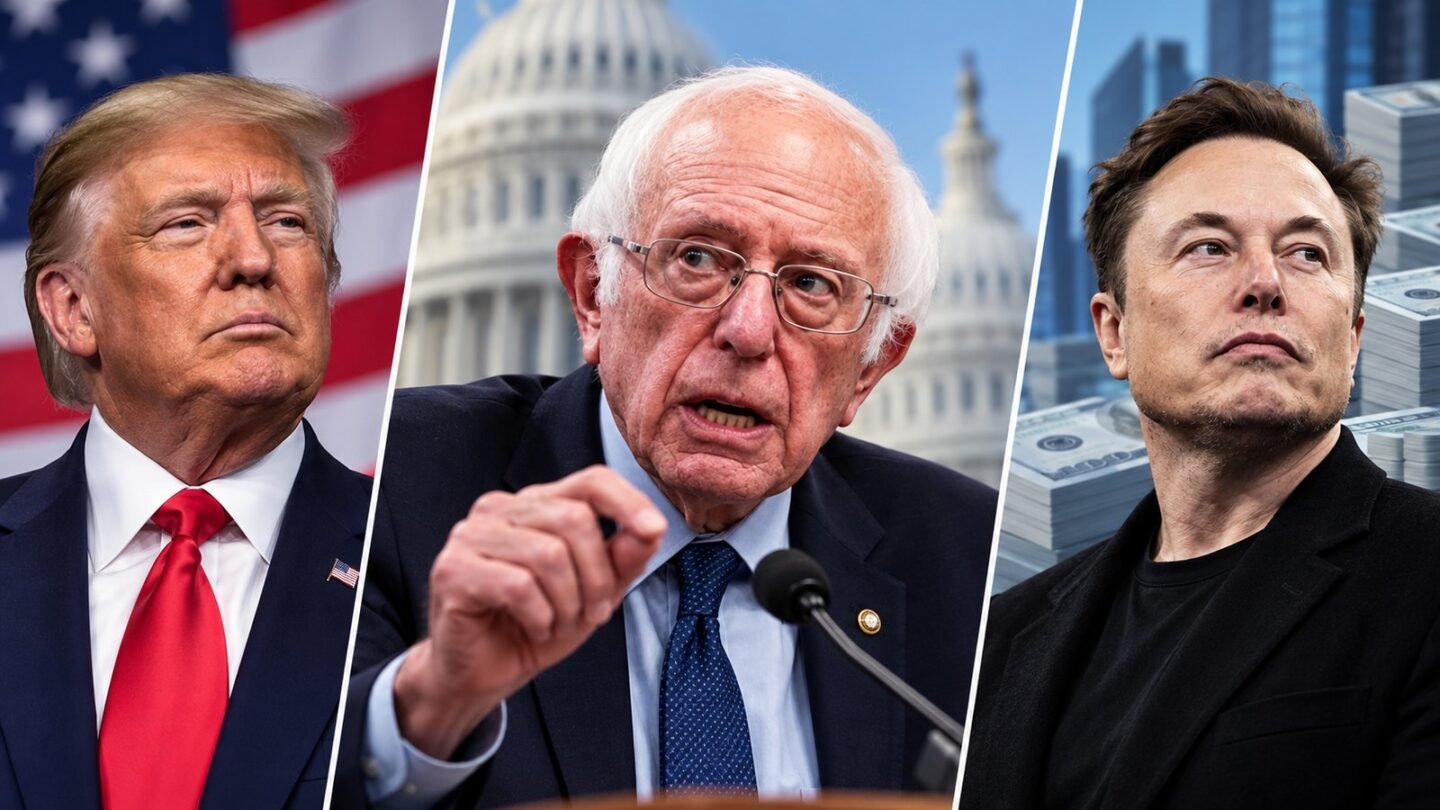
Sen. Bernie Sanders is criticizing the role of wealthy donors in the 2026 midterm elections. In a recent social media post, the Vermont independent said anonymous donors had spent more than $1 billion to influence the elections and that Elon Musk had spent more than $90 million.
Sanders called the spending “oligarchy” and urged changes to campaign finance rules. Reporting supports the broad picture of record election spending, but the figures come from different sources and measure different kinds of money.
What the spending figures show
Reuters reported in August that U.S. companies had spent a record $517 million on House and Senate races during the 15 months through the end of the first quarter of 2026. The figure, compiled by the nonprofit Public Citizen, was higher than the $461 million in corporate spending reported for the entire 2024 election cycle.
Reuters also reported that Musk had put more than $90 million toward the 2026 federal elections. A separate Washington Post analysis of federal campaign finance data listed $90.6 million in contributions associated with Musk during the 2026 midterm cycle, as of September 21.
The claim about more than $1 billion in undisclosed money refers to another category. The Brennan Center for Justice reported on September 22 that, according to New York Times reporting, about $1 billion in “dark money”—spending from sources whose identities are not publicly disclosed—had entered the political system this year. The Brennan Center cautioned that the total could be higher.
These numbers should not be added together as if they were the same measure. Corporate election spending, individual contributions and money from undisclosed sources are tracked differently and may cover different time periods.
How super PACs work
Super PACs can accept unlimited contributions, including from corporations and labor organizations. Federal rules do not allow them to contribute directly to candidates. They can spend independently on political advertising and other election activity.
The Supreme Court’s 2010 Citizens United decision held that the government could not restrict certain independent political spending by corporations and unions. Supporters of this approach argue that spending to promote political ideas is protected speech. Critics say that large donations and spending can give wealthy donors and organizations too much influence over elections.
Sanders’s proposed changes
Sanders has called for an end to the Citizens United system, limits on super PACs and public financing of elections. In May, Sanders and Rep. Summer Lee introduced the Abolish Super PACs Act. The proposal would cap individual contributions to super PACs at $5,000. It is a bill, not current law.
The debate over influence
The figures show that large sums are flowing into the 2026 elections. They do not, by themselves, prove that a donor or company has bought a particular election or changed a specific result.
Sanders’s post is a political argument about the influence of money, rather than a neutral description of campaign finance data. Supporters of stricter limits say the current system lets a small number of wealthy donors and organizations dominate political debate. Opponents say spending limits can restrict political speech and advocacy.
As the November 3 midterm elections approach, campaign spending and donor influence are likely to remain part of the national debate. The proposed legislation would need congressional approval to become law.