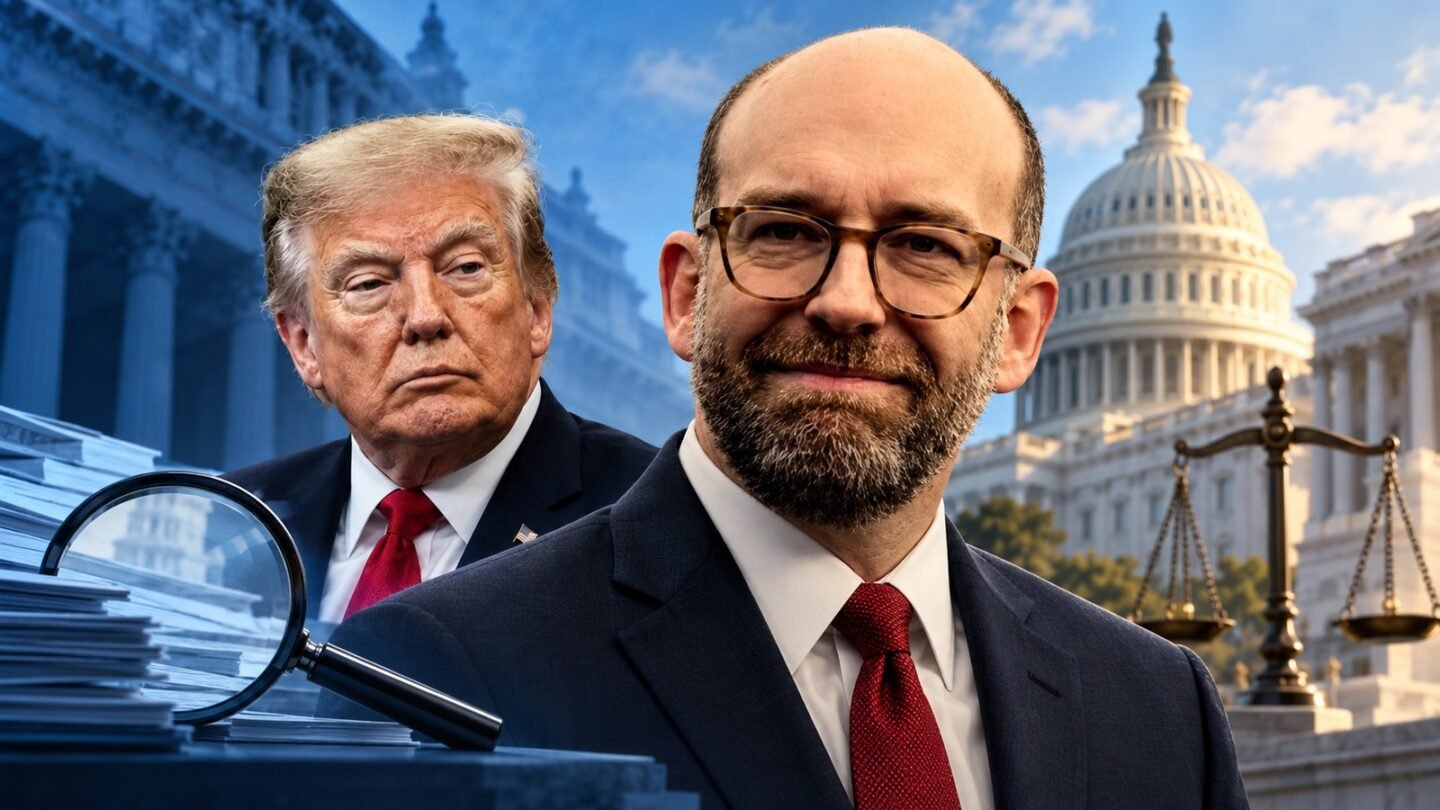
Russ Vought’s role in Project 2025 raises two separate questions: how Congress can examine executive actions, and what would be required for criminal punishment. His authorship is documented, but that connection alone does not establish a crime or justify a prison sentence.
The White House identifies Russell Vought as director of the Office of Management and Budget under President Donald Trump. The Heritage Foundation credits him with writing the policy blueprint’s chapter on the Executive Office of the President.
The supplied reader question asks whether lawmakers should investigate his role in implementing the agenda. It does not provide evidence establishing a specific criminal offense. This explainer examines the documented policy connection, existing oversight and the legal process.
What Russ Vought wrote for Project 2025
Heritage’s policy guide, Mandate for Leadership: The Conservative Promise, contains a chapter credited to Vought that advocates stronger presidential direction of the executive branch. It presents White House budget and management tools as important ways to align agencies with the president’s priorities.
The chapter describes OMB’s involvement in spending, regulation and agency management. It also recommends giving political officials an active role in reviewing apportionments, the process used to allocate the availability of appropriated funds.
These are policy recommendations. Establishing whether a particular recommendation was implemented requires examining the resulting orders, agency instructions and spending decisions. Authorship does not, by itself, establish personal responsibility for every action taken across the government.
Congress has already questioned the budget director
Russ Vought appeared at a House Appropriations subcommittee oversight hearing on June 30, 2026. The House committee repository lists him as the witness and identifies the hearing’s subject as the Office of Management and Budget.
Subcommittee Chairman Dave Joyce’s account of the hearing says lawmakers questioned him about spending plans and budget priorities. Joyce also emphasized that federal funds should be used as Congress intended, even when the administration disagrees with particular programs.
That record establishes existing oversight. It should not be described as proof that Congress has opened a separate criminal investigation into Project 2025 or reached a finding of personal criminal guilt.
A recent watchdog decision concerns spending authority
In a September 29, 2026, decision, the Government Accountability Office reviewed the president’s September 25 proposal to cancel funding from 11 appropriation accounts. GAO said OMB had issued a letter withholding the proposed amounts from obligation.
The GAO decision on the proposed spending cancellations concluded that the Impoundment Control Act did not permit withholding those appropriations beyond their expiration at the end of fiscal year 2026. GAO said its conclusion concerned compliance with spending law, rather than support for the affected policies.
This provides a specific budget-law issue for congressional scrutiny. It is not a criminal conviction of Vought, and the decision does not establish that every disputed spending action resulted from Project 2025.
What congressional oversight can establish
The Congressional Research Service’s oversight manual explains that committees can hold hearings, request documents and testimony, and use subpoenas within their authority. An investigation must serve a valid legislative purpose and remains subject to constitutional limits.
Applied here, oversight could examine whether agency instructions complied with appropriations laws and whether Congress needs to change those laws. That is an application of Congress’s general oversight role, not a report that a particular committee has announced those steps.
Would proven wrongdoing mean prison?
Russ Vought would not face a justified criminal sentence merely because lawmakers disagreed with his policies. Prosecutors would need to establish a specific offense through the criminal justice process.
The federal judiciary explains that the government bears the burden of proving guilt beyond a reasonable doubt at trial. A defendant may also plead guilty. Following a conviction, sentencing belongs to the court; imprisonment is not automatic for every offense.
Congressional criticism, a watchdog’s spending-law finding and a criminal conviction are different outcomes. Readers can also consult Hourly Times’ examination of why Project 2025 authorship alone does not establish treason. Any demand for punishment must be assessed against the specific alleged conduct, applicable law and evidence.