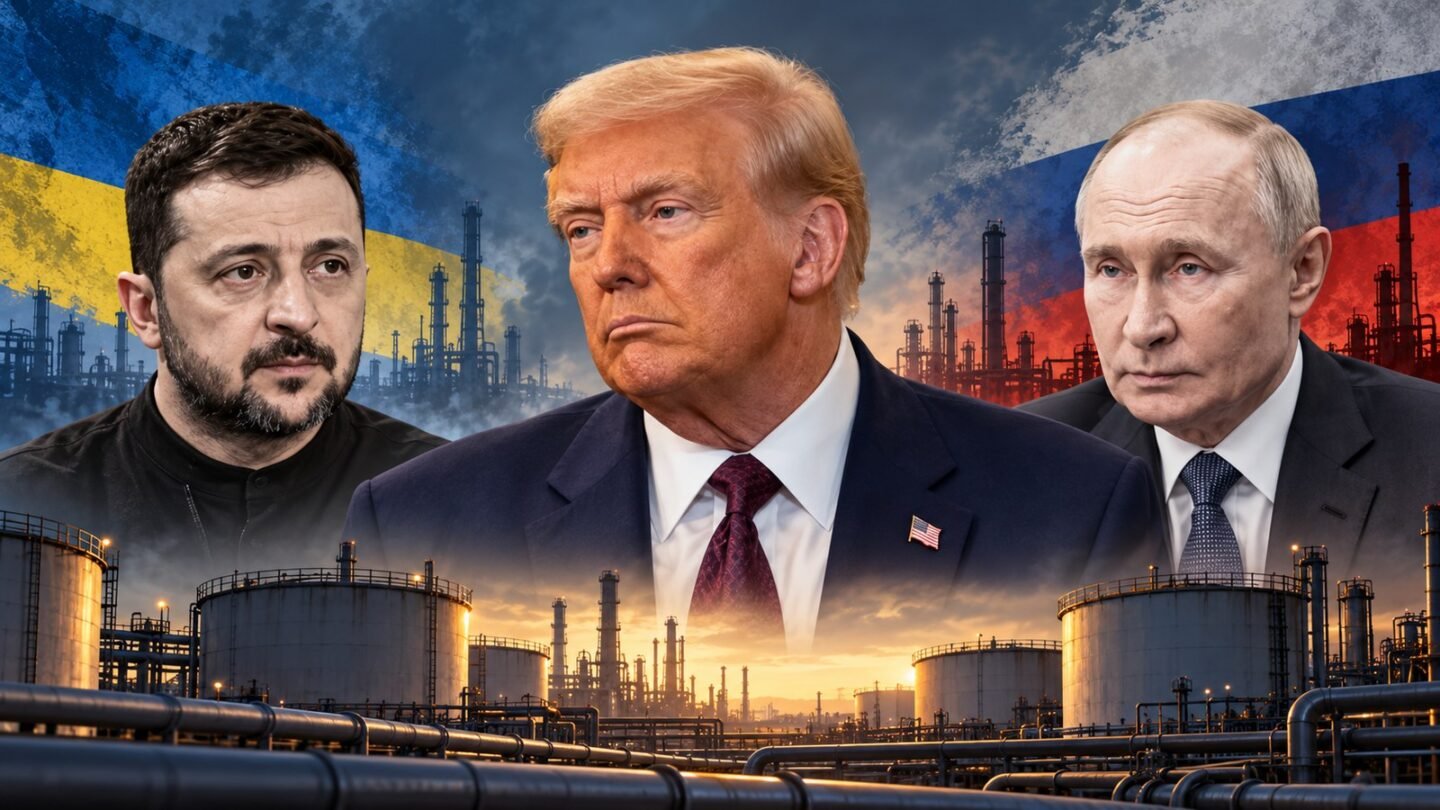
The Russian diesel deal announced by President Donald Trump has drawn bipartisan demands for reversal, as U.S. officials defend the agreement as a way to ease fuel costs. The October 9, 2026, announcement would allow Russian supplies into American and global markets while Moscow’s war against Ukraine continues.
Trump said President Vladimir Putin had agreed to supply more than 300,000 metric tons initially, followed by 500,000 tons in November and another 1 million tons afterward. These are announced supply commitments, rather than confirmation that the fuel has already reached buyers.
The Treasury Department issued a temporary license the same day. Critics say the policy could give Moscow additional revenue while undermining efforts to pressure Russia over the war. The administration argues that increasing diesel availability serves American consumers.
What the Russian diesel deal authorizes
The Office of Foreign Assets Control published General License 135 on October 9. It authorizes transactions related to selling, delivering, offloading and importing Russian-origin diesel under two specified U.S. sanctions programs, including imports into the United States.
The authorization runs through 12:01 a.m. Eastern daylight time on April 7, 2027. It does not authorize debits to accounts held at U.S. financial institutions by Russia’s central bank, National Wealth Fund or Finance Ministry.
The document establishes the scope and deadline of the sanctions permission. It does not establish that every announced shipment has been delivered, identify each buyer or promise a particular reduction in consumer prices.
Republicans and Democrats demand a reversal
On October 11, seven senators issued a joint statement challenging the legality of Russian diesel imports. The group included Republicans Susan Collins, Lisa Murkowski, Thom Tillis and John Curtis, and Democrats Jeanne Shaheen, Richard Blumenthal and Ron Wyden.
They argued that allowing the imports conflicted with Congress’s 2022 ban on Russian energy imports. They also accused the administration of failing to consult Congress or provide the explanation required by law. Those are the senators’ legal allegations, not a court ruling.
A separate October 13 bipartisan letter, signed by 12 senators, urged Trump to rescind the Russian diesel deal and implement sanctions authorized by Congress in September.
The signatories acknowledged the need to reduce energy costs but argued that the agreement would offer little relief while helping finance Russia’s war. Their argument concerns both the deal’s economic effectiveness and its implications for U.S. security policy.
Ukraine objects as Washington defends the agreement
Ukrainian President Volodymyr Zelenskyy criticized the decision. Reuters reported on October 9 that he argued allowing Russian petroleum sales would give Moscow more resources for the war and undermine efforts to secure peace.
The administration has presented a different case. Reuters reported on October 18 that Secretary of State Marco Rubio defended the diesel agreement as an effort to address rising fuel prices. Energy Secretary Chris Wright described it as an incentive for Russia to move toward peace.
Those explanations describe the administration’s objectives. They do not establish that the agreement has secured a lasting ceasefire or produced sustained savings for American households and businesses.
Why lasting price relief remains uncertain
Diesel powers trucks, farm equipment and construction machinery, making its cost relevant beyond individual drivers. Additional supply could help the market, but the size and timing of deliveries matter.
In an October 16 explainer, experts interviewed by the Council on Foreign Relations questioned whether the announced volumes could significantly change near-term global prices. They also pointed to damage to Russian refining capacity as a constraint on how quickly supplies could increase.
These are expert assessments, rather than a measured final outcome. The initial announcement alone cannot establish how much fuel consumers will receive or what they will ultimately pay.
What happens next
The announced schedule calls for a further 500,000 tons in November. Delivery evidence, subsequent sanctions decisions and developments in the war will help determine how the agreement operates in practice. The published diesel license currently sets April 7, 2027, as its expiration deadline.