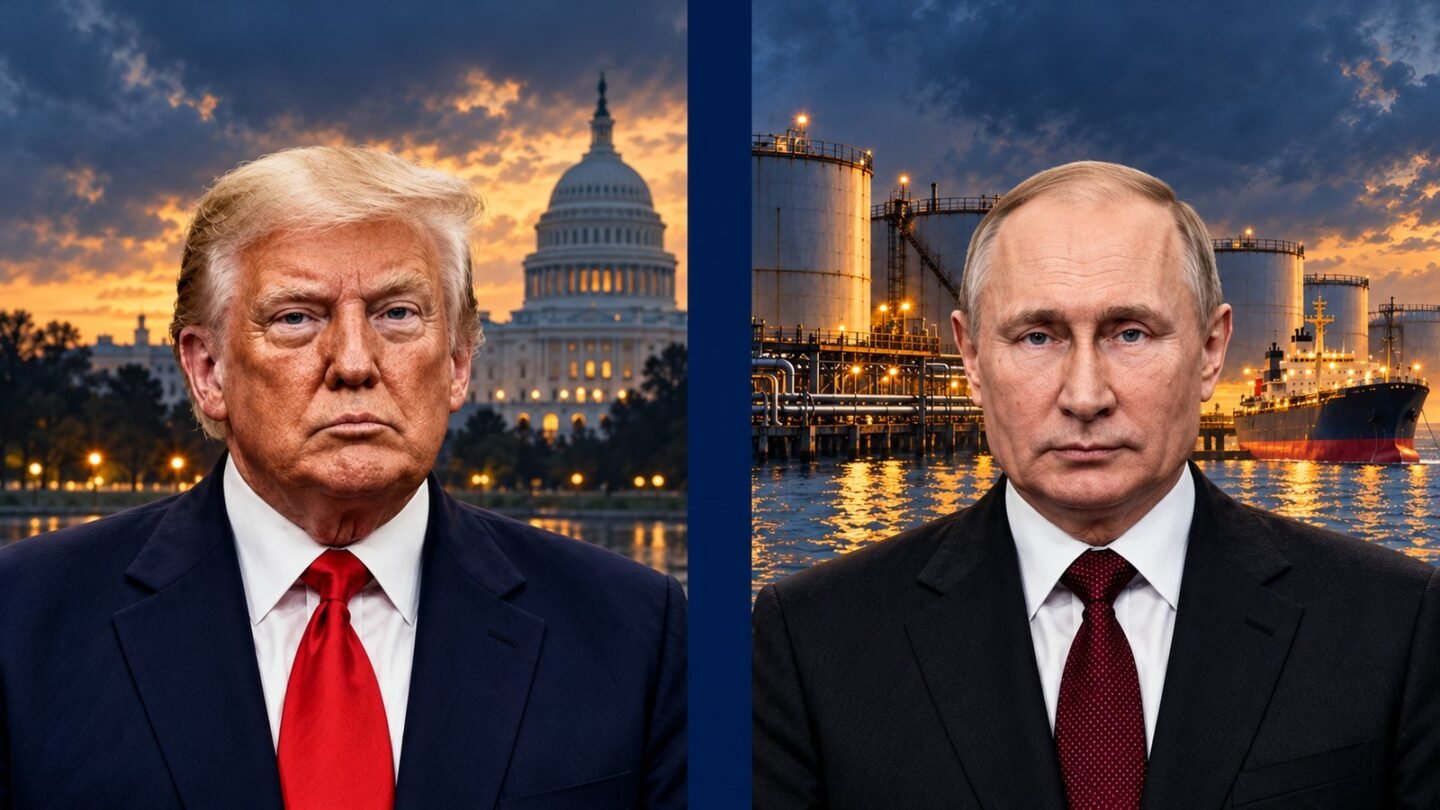
President Donald Trump’s Russian diesel deal faces a bipartisan demand for reversal after 12 U.S. senators warned that easing restrictions on Moscow’s fuel sales would undermine American security and support Russia’s war against Ukraine. Their October 13 letter calls for withdrawing the agreement with President Vladimir Putin and restoring pressure on Russia.
The Russian diesel deal has moved beyond the announcement stage. On October 15, the Kremlin said Russian diesel exports had restarted following the agreement, Reuters reported. Reuters also reported that a tanker carrying 40,000 metric tons of diesel from Primorsk was heading to Morocco. That does not establish delivery of the full announced supply.
Trump has presented the arrangement as a way to increase available fuel and lower prices. The senators argue that its limited potential benefits do not justify giving Russia additional economic room while its invasion continues.
What the Russian diesel deal authorizes
Trump announced the agreement on October 9. The same day, the Treasury Department’s Office of Foreign Assets Control issued General License 135, permitting transactions involving Russian-origin diesel that would otherwise be prohibited under two Russia-related sanctions regulations.
The authorization covers sales, delivery, offloading and imports, including imports into the United States. It runs through 12:01 a.m. Eastern Daylight Time on April 7, 2027.
Its scope has limits. The license does not authorize debiting accounts held at U.S. financial institutions by Russia’s central bank, National Wealth Fund or Ministry of Finance. It is a defined exemption for diesel transactions, rather than the removal of every U.S. sanction against Russia.
The document establishes what Treasury permits. It does not establish the destination of every shipment, the final volume sold or the savings an American fuel buyer will receive.
Why 12 senators want the agreement reversed
The October 13 letter published by Sen. Richard Blumenthal’s office brought together six Republicans and six Democrats. Republican signatories included Mitch McConnell, John Cornyn, Susan Collins and Thom Tillis; Democrats included Blumenthal, Jeanne Shaheen, Chris Coons and Jack Reed.
The lawmakers urged Trump to rescind the Russian diesel deal and General License 135. They also called for implementing sanctions under legislation he signed in September, arguing that pressure on Russia and countries enabling its war would strengthen Washington’s negotiating position.
The senators acknowledged the need to reduce energy costs but predicted little relief from the arrangement. Their assessment of its security consequences and likely price effects is an argument against the policy, not a completed measurement of its results.
Hourly Times previously examined the earlier dispute over Russian diesel sanctions relief. The new letter documents additional bipartisan opposition after that coverage.
What Washington and Moscow say the deal can achieve
Trump’s stated objective is to bring more diesel to U.S. and global markets and reduce fuel costs. His administration’s argument centers on supply: allowing additional fuel to be traded could ease pressure on buyers.
Moscow has presented the arrangement as an opening for broader cooperation. Kremlin envoy Kirill Dmitriev said on October 14 that the diesel agreement could lead to further economic ties, according to Reuters. He also said Russia would overcome sanctions-related difficulties to deliver the fuel.
Those statements describe the two governments’ expectations. They do not demonstrate that lower retail prices or a diplomatic breakthrough have followed.
The historical comparison remains a political judgment
The claim that no American president has supported Putin as strongly as Trump requires a defined standard and a comparison across administrations. The diesel agreement alone cannot establish that sweeping conclusion.
The narrower policy dispute is documented: the administration is relaxing specified restrictions to pursue fuel-price relief, while bipartisan critics say that choice weakens pressure on Moscow. Whether it undermines American leadership remains an assessment of the consequences.
What comes next
The next practical tests are documented deliveries and measurable price effects. Treasury’s published authorization remains scheduled to expire on April 7, 2027; the senators are asking Trump to end it sooner.