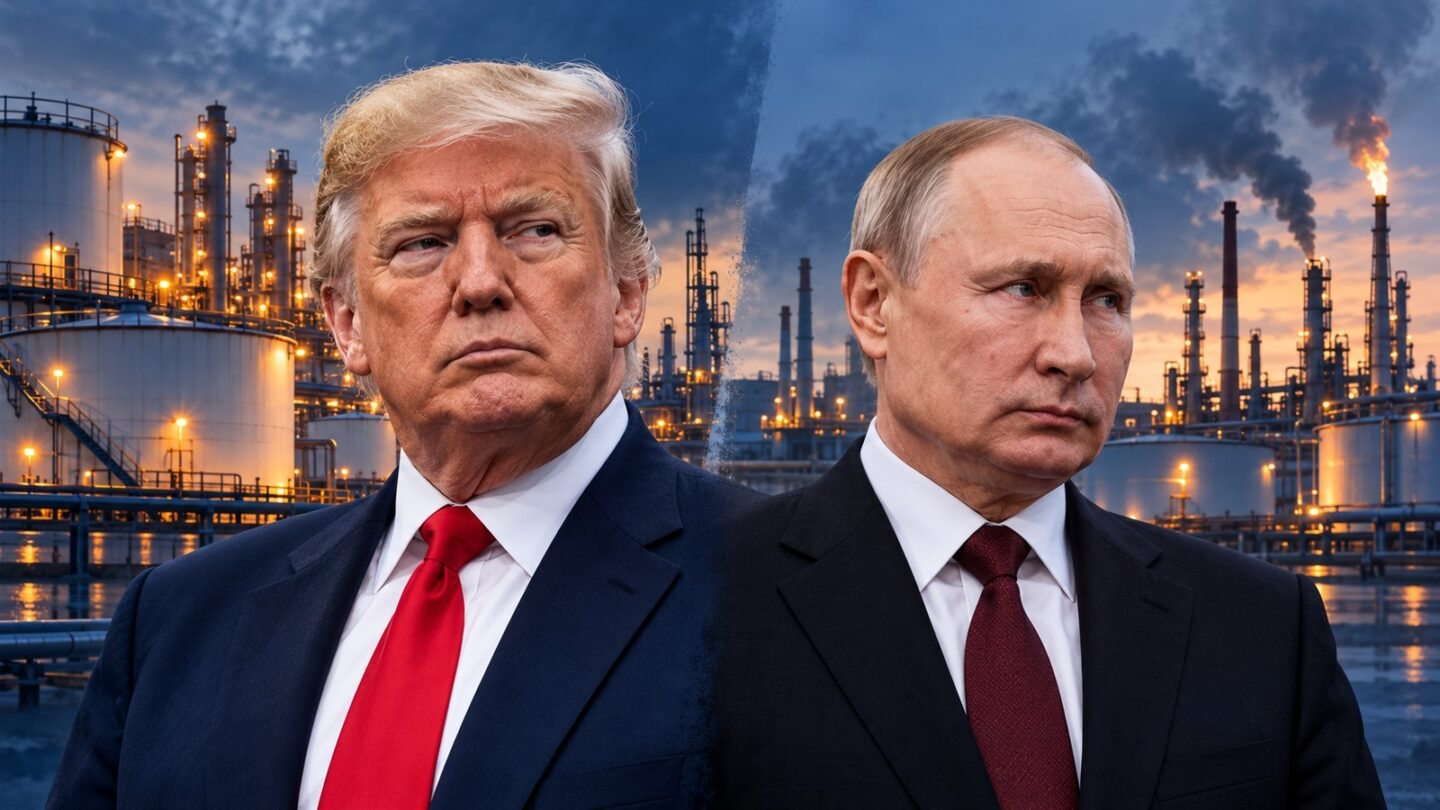
President Donald Trump’s Russian diesel agreement faces bipartisan opposition after seven senators urged his administration to reverse sanctions relief that they say could give Moscow a financial lifeline during its war against Ukraine. Trump defended the decision on October 12, saying it would serve American interests by addressing high fuel costs.
The dispute follows Trump’s October 9 announcement that Russia would supply additional diesel to U.S. and global markets. His administration issued a temporary authorization for transactions involving the fuel, including imports into the United States.
The senators argue that the arrangement conflicts with restrictions Congress imposed on Russian energy imports. The administration disputes that interpretation. The reviewed sources establish a disagreement over legal authority, rather than a court ruling that the agreement is unlawful.
What the Russian diesel authorization permits
The Treasury Department’s Office of Foreign Assets Control issued General License 135 on October 9. It authorizes specified transactions involving the sale, delivery, offloading and importation of diesel originating in Russia.
The license runs through 12:01 a.m. Eastern Daylight Time on April 7, 2027. Its text covers transactions otherwise prohibited under two Russia-related sanctions regulations, making it a defined exemption rather than an announcement ending all sanctions against Moscow.
It does not authorize debits to accounts at U.S. financial institutions belonging to Russia’s central bank, National Wealth Fund or Ministry of Finance. That restriction is important when describing the scope of the authorization.
The document establishes what Treasury has permitted. It does not, by itself, prove how much fuel has arrived, how much buyers have paid or whether the arrangement will produce lasting price reductions.
Seven senators challenge the decision
In an October 11 joint statement published by the Senate Foreign Relations Committee, four Republicans and three Democrats called for the administration to reverse its decision.
The signatories were Republicans Susan Collins, Lisa Murkowski, Thom Tillis and John Curtis, and Democrats Jeanne Shaheen, Richard Blumenthal and Ron Wyden.
They said Congress banned Russian energy imports in 2022 to prevent American money from supporting Putin’s war. They also accused the administration of failing to consult Congress or explain its decision as required by statute.
“The United States should not provide Putin with a financial lifeline while Russia continues to kill Ukrainian civilians,” the senators wrote.
The statement is direct evidence of bipartisan opposition and the lawmakers’ legal argument. It does not resolve the administration’s competing interpretation or establish that every Republican opposes the agreement.
The administration argues it can lower costs
Trump stood by the Russian diesel deal on October 12, according to ABC News and Reuters. He presented it as a decision intended to benefit Americans facing expensive fuel.
Treasury Secretary Scott Bessent separately defended the administration’s legal authority in an October 11 Fox News interview, Reuters reported. He maintained that existing powers permitted the arrangement and argued that it would bring prices down.
That is the administration’s stated policy case. Whether the expected relief occurs depends on implementation and market conditions, not simply on the announcement of an agreement.
Hourly Times’ earlier coverage of European diesel-reserve discussions and U.S. pressure for additional supplies provides background on the broader fuel-cost dispute.
Revenue for Russia and price relief remain separate questions
Reuters estimated that exports of 300,000 metric tons of diesel could generate roughly $400 million. It said only a small portion would reach Russia’s state budget because Russia mainly taxes oil production rather than fuel exports.
That estimate describes potential sales revenue, not a confirmed transfer or a documented payment for a particular military operation. The distinction does not eliminate concerns about Russia’s economy benefiting, but it limits what can be claimed about a specific cash flow.
Associated Press reporting on October 12 said Zelenskyy remained open to an energy ceasefire if Russia stopped attacks on Ukraine’s power grid. He said Russian attacks continued despite Trump’s announcement of an energy truce.
The Russian diesel controversy therefore remains tied to unresolved security and implementation questions. The authorization expires April 7, 2027; confirmed deliveries, actual revenues and any reciprocal halt to energy attacks will determine what the agreement achieves.