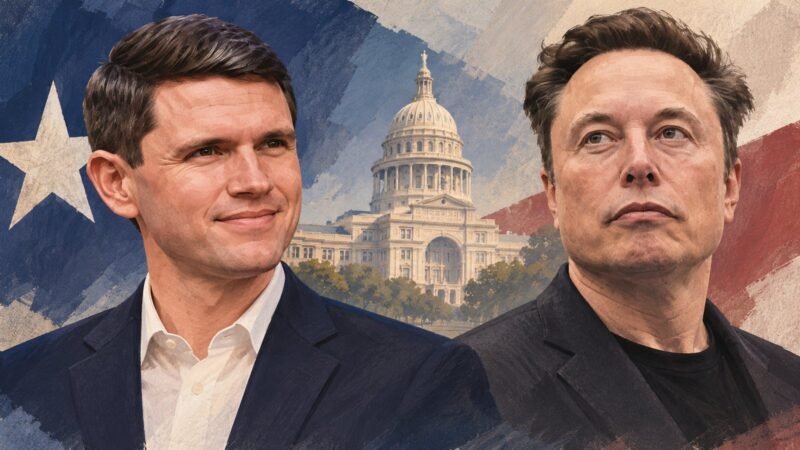
The Electoral College debate puts Pete Buttigieg’s support for a nationwide popular vote alongside Donald Trump’s defense of the existing system. Their positions are documented, but the statements commonly shared together come from different dates, including remarks made during the 2020 presidential campaign.
Buttigieg renewed his support for choosing the candidate with the most votes at an Iowa Democratic fundraiser on July 12, 2026, according to Iowa Capital Dispatch. Trump’s statement that the current system was better for the country appears in archived posts from March 2019.
Neither statement means the presidential election system has changed. The debate concerns which rules should determine the winner and what legal steps would be needed to replace or modify those rules.
Where Buttigieg and Trump stand
Buttigieg said the system “needs to go” in a January 31, 2019, CBS interview.
He explained his position further during a CNN town hall on March 10 that year. His argument was that the candidate receiving the most votes should win and that voters in reliably Republican or Democratic states should have an equal voice in choosing the president.
The July 2026 Iowa report documents the same basic preference. Buttigieg called for a political system that treats votes equally and awards victory to the candidate with the highest vote total. In October, The Dartmouth reported that he again urged reform during a New Hampshire Democratic fundraiser.
Trump’s archived March 2019 posts made a different argument. He said a national popular vote would concentrate campaigning in large states and cities, while the existing structure required candidates to seek support across states.
He described the Electoral College as “far better for the U.S.A.” after acknowledging that he had previously favored a popular vote. Those were Trump’s political assessments of campaign incentives, rather than proof that smaller states would lose all influence under a different system.
What Pew’s Electoral College polling shows
A Pew Research Center survey published in September 2024 found that 63% of U.S. adults preferred changing the system so the nationwide vote winner becomes president. Another 35% favored keeping the existing system.
Pew surveyed 9,720 adults from August 26 through September 2, 2024. Interviews were conducted online and by live telephone through its American Trends Panel, with results weighted to represent the adult population. The full-sample margin of sampling error was plus or minus 1.3 percentage points.
Pew published a chart using those findings in July 2026. The chart’s publication date does not make the underlying interviews a new 2026 poll. The results measure preferences at the time of the survey, not support for a particular amendment or a forecast of future elections.
How the current system chooses a president
The National Archives explains that presidential winners are determined through electoral votes rather than the nationwide popular-vote total. Most states award their entire allocation to the candidate who wins the most votes within that state; Maine and Nebraska use a different allocation method.
A candidate can therefore win the presidency while receiving fewer votes nationally than an opponent. That happened in 2000 and 2016, according to the Archives. Those outcomes illustrate how the rules work without settling the political question of whether they should change.
The distinction also explains why the phrase “most votes” needs context. It can refer to ballots cast nationwide or votes awarded through the state-based presidential selection process.
Abolition and the interstate compact are different
Abolishing the constitutional Electoral College would require an amendment. The usual route requires two-thirds support in each chamber of Congress and ratification by three-fourths of the states, or 38 states.
The National Popular Vote Interstate Compact is a separate approach. Participating states would award their electors to the nationwide vote winner once membership reaches the required 270 electoral votes. It would retain electors rather than delete them from the Constitution.
Hourly Times has previously examined Buttigieg’s reform proposals and the different legal routes. Political endorsements alone do not complete either process.
The next steps depend on specific legislative proposals, additional state action and the legal questions surrounding implementation. Until an effective change occurs, the existing constitutional system remains the basis for presidential elections.