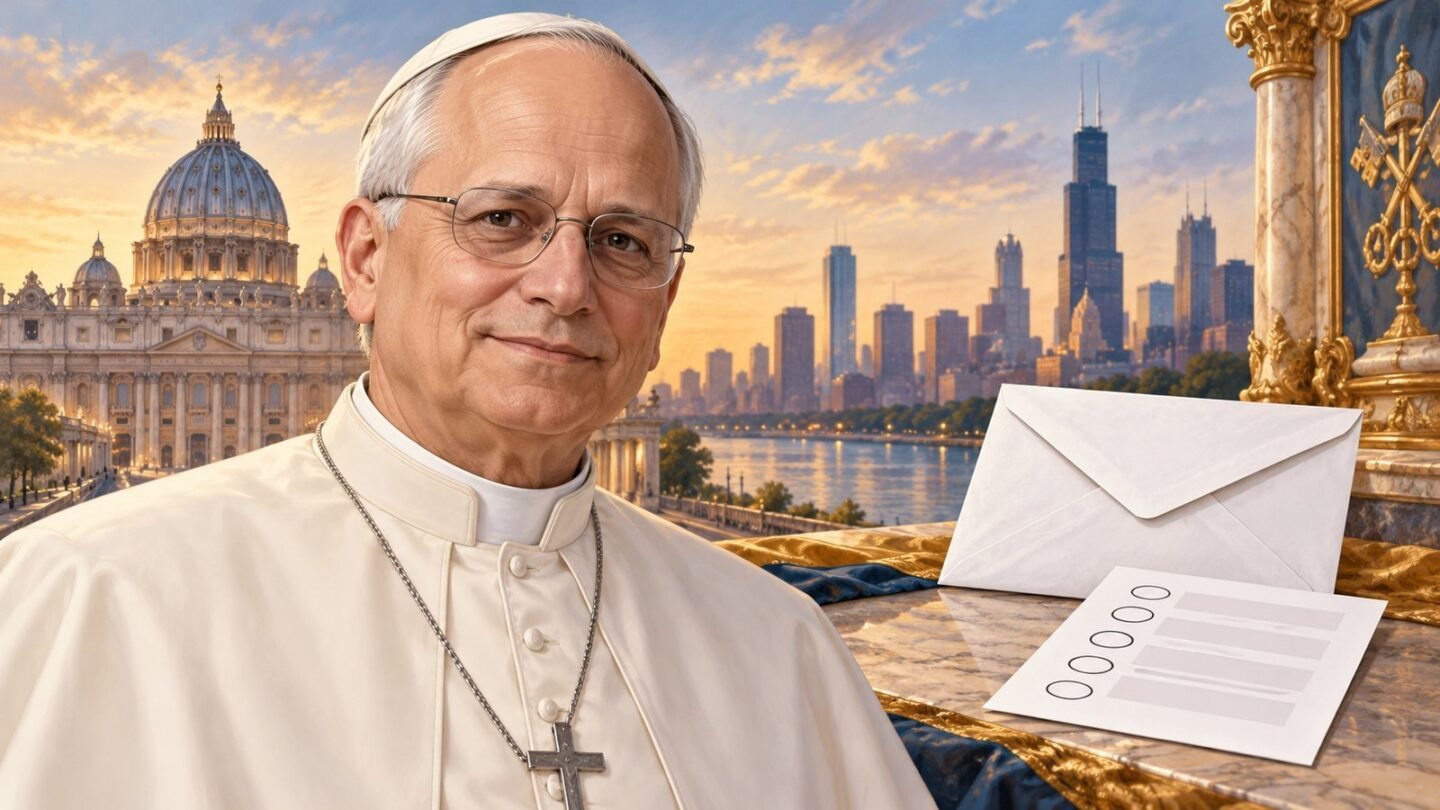
Pope Leo XIV has submitted a mail-in ballot in the U.S. midterm elections, the Vatican confirmed on October 30, marking the first reported participation by a serving pope in a U.S. general election.
The Chicago-born pontiff, formerly Robert Francis Prevost, voted as an American citizen ahead of the November 3 election. The Holy See Press Office described the action as consistent with his established practice of civic participation.
The announcement confirmed submission of a ballot. It did not disclose his candidate choices, the precise date he returned it or a final determination that election officials had accepted and counted it.
What the Vatican confirmed about Pope Leo
In its official account of the announcement, Vatican News reported that the press office said the pontiff had submitted his mail-in ballot in Chicago.
The statement also said he had exercised voting rights while living in Peru whenever he was eligible. It framed both his past participation and his current vote around citizenship and democratic responsibility.
“The Holy Father expresses his belief in the right and the duty of citizens to participate in democratic processes,” the statement said.
The Associated Press described him as the first pope to vote in a U.S. general election. That milestone concerns participation while holding the papacy, rather than his first experience of voting.
How the Illinois ballot request emerged
The Chicago Sun-Times first reported the ballot request on October 29, citing the Will County clerk’s office. Chief of staff Kim Fladhammer told the newspaper that Robert Francis Prevost appeared among people who had requested a mail ballot.
The newspaper reported that he made the request on October 3 and was registered at a New Lenox address. The Vatican’s confirmation the following day moved the story beyond a request to an acknowledged submission.
Those locations describe different parts of the reporting: the Vatican referred broadly to Chicago, while the local newspaper identified a Will County registration. The available announcement did not explain the ballot’s precise delivery route.
His voting history does not reveal his choices
Reporting about Pope Leo includes participation in both Democratic and Republican primaries before his election as pontiff. The Sun-Times listed Democratic primary participation in 2008 and 2010, and Republican primary participation in 2012, 2014 and 2016.
The Associated Press noted that voting records do not identify which candidates he supported. Illinois voters declare a party preference to obtain a primary ballot; no such declaration is required in a general election.
Consequently, selecting a party’s primary ballot in a previous year does not establish which candidates received his vote in the current election. The Vatican announcement supplied no endorsement of a candidate or party.
How overseas voting works
Federal law provides absentee-voting protections for eligible Americans living outside the United States. The Justice Department explains that the Uniformed and Overseas Citizens Absentee Voting Act covers overseas citizens as well as qualifying military voters and their families.
The law requires states and territories to allow covered citizens to register and vote absentee in federal elections. State laws separately govern participation in state and local contests.
DOJ’s guidance describes a Federal Post Card Application that eligible voters can use to register and request a ballot together. It also explains a backup federal write-in ballot, available under specified conditions when a regular ballot has not arrived.
The department also says covered voters must have access to a free system for tracking receipt of absentee ballots.
These are general provisions. The Vatican did not identify which application form the pontiff used or publish a record of each administrative step in his case.
What happens before Election Day
USAGov advises mail voters to follow their state’s requesting and return deadlines, distinguishing between postmark requirements and deadlines for an election office to receive a ballot. Return options also vary by jurisdiction.
Submission, receipt and counting should therefore be described as separate stages. The material reviewed establishes the Vatican’s confirmation of submission, without providing an individual ballot-tracking record.
Pope Leo’s participation comes before the November 3 midterm elections, when Americans will choose members of Congress alongside state and local officials. His selections remain undisclosed.